
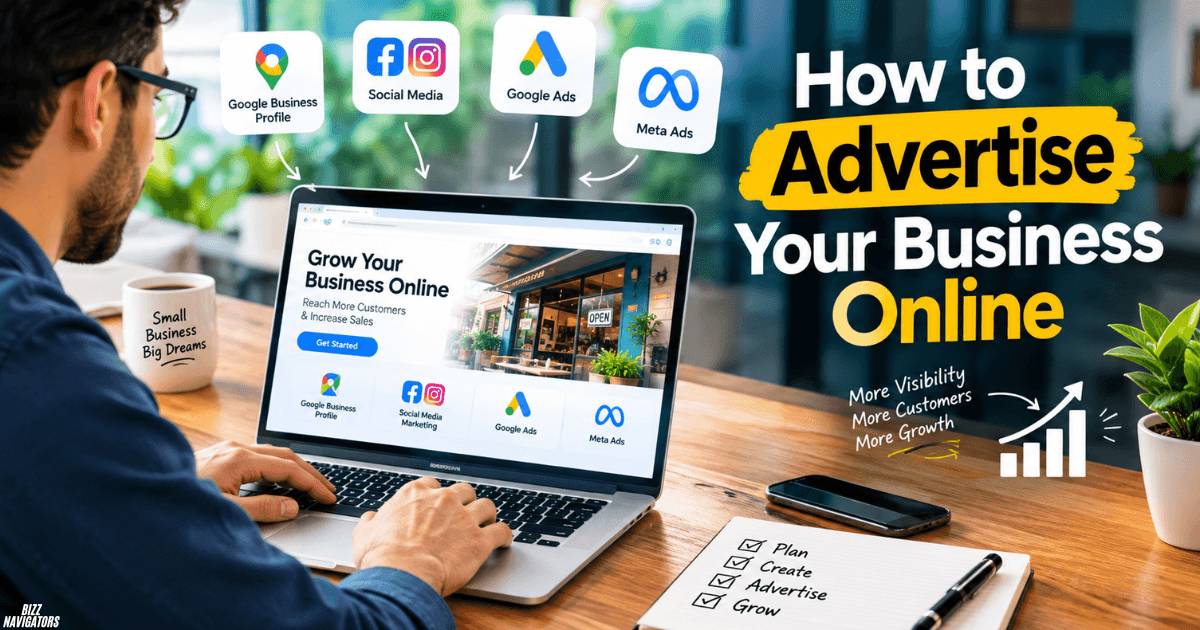
How to Advertise Your Business Online: The best way to advertise your business online is to combine free platforms like Google Business Profile and social media with paid options such as Google Ads and Facebook Ads. Start with the channels your customers use, promote a clear offer, and track leads and sales to identify what works.
Small businesses do not need a large advertising budget to get started. A professional online presence, relevant content, and targeted promotion can help attract potential customers without wasting money on the wrong platforms.
Digital Advertising Basics: Where Should You Start?
Digital advertising means promoting a business through online channels to reach potential customers. It includes paid search ads, social media campaigns, email marketing, and other digital marketing activities.
The best channel depends on your audience, business goals, and budget.
- Free promotion: Google Business Profile, organic social media, and useful website content.
- Paid advertising: Google Ads, Facebook Ads, and Instagram Ads.
- Long-term growth: Search engine optimization (SEO), email marketing, and content marketing.
For example, a local electrician may attract customers through Google Search, while a clothing brand may get better results from Instagram ads. Choose platforms based on customer behavior rather than popularity alone.
1. Create a Professional Website and Google Business Profile
Before advertising, make sure customers can find your business and understand what you offer.
Your website should clearly explain your products or services, pricing where appropriate, contact details, and the next step customers should take. Use clear calls to action, such as “Get a Quote,” “Book Now,” or “Shop Now.”
If you serve a local area, create a Google Business Profile if your business is eligible. Add accurate contact information, opening hours, services, and genuine photos. Keep the profile updated and respond professionally to customer reviews.
This helps potential customers discover your business through relevant Google Search and Maps results.
Best for: Local shops, restaurants, service providers, and businesses that serve customers in specific locations.
2. Promote Your Business Online on Social Media
Social media helps businesses build awareness, communicate with customers, and showcase products. You can start with organic posts before investing in paid campaigns.
Choose platforms that match your audience:
- Facebook: Local businesses, community engagement, and customer enquiries.
- Instagram: Fashion, beauty, food, and visually appealing products.
- TikTok: Short videos, demonstrations, and products suited to video content.
- LinkedIn: Consultants, agencies, and business-to-business services.
- YouTube: Tutorials, product demonstrations, and educational videos.
Share useful tips, answer common questions, demonstrate your products, and explain how your services solve customer problems.
Avoid turning every post into a sales pitch. Helpful content gives people a reason to follow your business and builds familiarity before they make a purchase.
3. Use Google Ads to Reach Customers Who Are Searching
Google Ads allows businesses to advertise alongside relevant search results and across other Google advertising placements. Search campaigns can be especially useful when potential customers are actively looking for a product or service.
For example, a person searching for “emergency plumber near me” may be ready to contact a service provider.
To get started:
- Choose one service or product to advertise.
- Research relevant keywords using Google Keyword Planner.
- Target locations where you can serve customers.
- Write a clear ad with a specific benefit.
- Send visitors to a relevant landing page.
- Track calls, enquiries, purchases, and advertising costs.
Exclude irrelevant search terms and review campaign performance regularly. Clicks alone do not prove that your advertising is generating business.
Best for: Businesses seeking qualified leads, bookings, phone calls, or online sales.
4. Run Facebook and Instagram Ads
Facebook and Instagram ads can help businesses introduce products to potential customers and promote special offers. These platforms are useful when strong images, short videos, or audience targeting can support your campaign.
Start with one clear objective, such as generating enquiries, selling a product, or increasing website conversions.
Use a relevant image or video, explain the offer, and include a direct call to action. Test different creative versions and compare the results.
For example, a beauty business might promote a limited-time service package, while an online store might advertise a new product collection.
Measure qualified leads and completed purchases instead of judging success by likes or impressions alone.
5. Online Advertising for Small Business on a Budget
Small businesses can start with free channels and add paid advertising when they understand their audience and offer.
| Advertising method | Main benefit | Cost |
| Google Business Profile | Local discovery | Free |
| Organic social media | Audience engagement | Free to post |
| SEO and content marketing | Long-term search visibility | Time or professional fees |
| Google Ads | Reach active searchers | Paid |
| Facebook and Instagram Ads | Product promotion and lead generation | Paid |
| Email marketing | Customer retention | Often free at low volumes |
Free methods still require time and consistent effort. Paid campaigns can produce faster exposure, but results are not guaranteed.
If your budget is limited, establish your online presence first. Then test a small campaign with a specific goal. Increase spending only when the results justify it.
6. Improve Your Website’s Search Rankings With SEO
Search engine optimization helps your website appear in relevant unpaid search results. It can attract visitors without charging you for every click, although meaningful results may take time.
Start by identifying the phrases customers use when searching for your products or services. Create useful pages that answer those searches directly.
For example, a web design company could publish service pages targeting small businesses and answer questions about website costs, project timelines, and maintenance.
Improve page titles, headings, mobile usability, loading performance, and internal links. Keep your content accurate and make it easy for visitors to contact you.
For local businesses, accurate business details and relevant local content can also support visibility.
SEO is not an instant solution, but useful content can continue attracting relevant visitors over time.
7. Use Email Marketing and Business Messaging
Email marketing helps you maintain relationships with people who have already shown interest in your business. It can support repeat purchases, product announcements, special offers, and customer retention.
Build an email list through voluntary sign-ups on your website or at checkout. Send useful updates and relevant offers instead of repeatedly sending generic promotions.
WhatsApp Business can also help eligible businesses answer questions, share product information, and follow up with interested customers. Respect customer consent and privacy, and follow the rules of the platform you use.
These channels are particularly useful when customers need more information before buying or may purchase again in the future.
How to Choose the Right Online Advertising Method
The right strategy depends on your immediate business goal.
| Business goal | Recommended starting point |
| Attract nearby customers | Google Business Profile and local SEO |
| Generate service enquiries | Google Search Ads |
| Promote visual products | Instagram and Facebook |
| Build long-term website traffic | SEO and content marketing |
| Increase repeat sales | Email marketing |
| Reach professional clients | LinkedIn and targeted outreach |
You do not need to use every channel at once. Start with one or two options, evaluate the results, and expand when you have a clear reason to do so.
How to Measure Online Advertising Results
Track the metrics that connect advertising activity to business outcomes.
- Click-through rate: The percentage of ad impressions that generate clicks.
- Cost per lead: The average advertising cost for each enquiry.
- Conversion rate: The percentage of visitors who complete a desired action.
- Customer acquisition cost: The average cost of gaining a paying customer.
- Return on ad spend (ROAS): Revenue attributed to advertising divided by advertising spend.
For example, spending $100 to generate $400 in attributed sales gives you a 4x ROAS. However, this is not the same as profit because product costs, fulfilment, and other expenses still matter.
If visitors click your ads but do not buy, review your offer, landing page, pricing, and checkout or contact process before increasing the budget.
Final Recommendation
To advertise your business online effectively, build a trustworthy online presence, choose channels that match your audience, and give potential customers a clear reason to take action.
Start with free foundations, test paid advertising when appropriate, and measure actual business results. The goal is not to advertise everywhere; it is to find the channels that consistently bring you the right customers.
Frequently Asked Questions
Can I advertise my business online for free?
Yes. Start with an eligible Google Business Profile, organic social media, SEO, useful website content, and voluntary email sign-ups. These options do not require payment for every click, but they take time and effort.
What is the cheapest way to promote a small business?
Organic social media and a Google Business Profile are practical starting points for many businesses. The most cost-effective method depends on your audience, industry, location, and ability to convert interest into sales.
Is Google Ads better than Facebook Ads?
Google Ads can reach people actively searching for solutions, while Facebook and Instagram ads can introduce products to targeted audiences. Test the platform that best matches your customers and business objective.
How much should I spend on online advertising?
Start with a budget you can afford to test without affecting essential business expenses. Measure leads, sales, and acquisition costs before increasing spending. There is no single budget that works for every business.

At BizzNavigators, we answer the questions you’re actually searching for, honestly and clearly. We check our facts before we publish anything, and if we’re not sure about something, we tell you instead of guessing. Whatever you’re looking for- a tech fix, a business tip, or a simple how-to- we want to give you an answer you can trust.