What Is the Laser Engraving Industry?
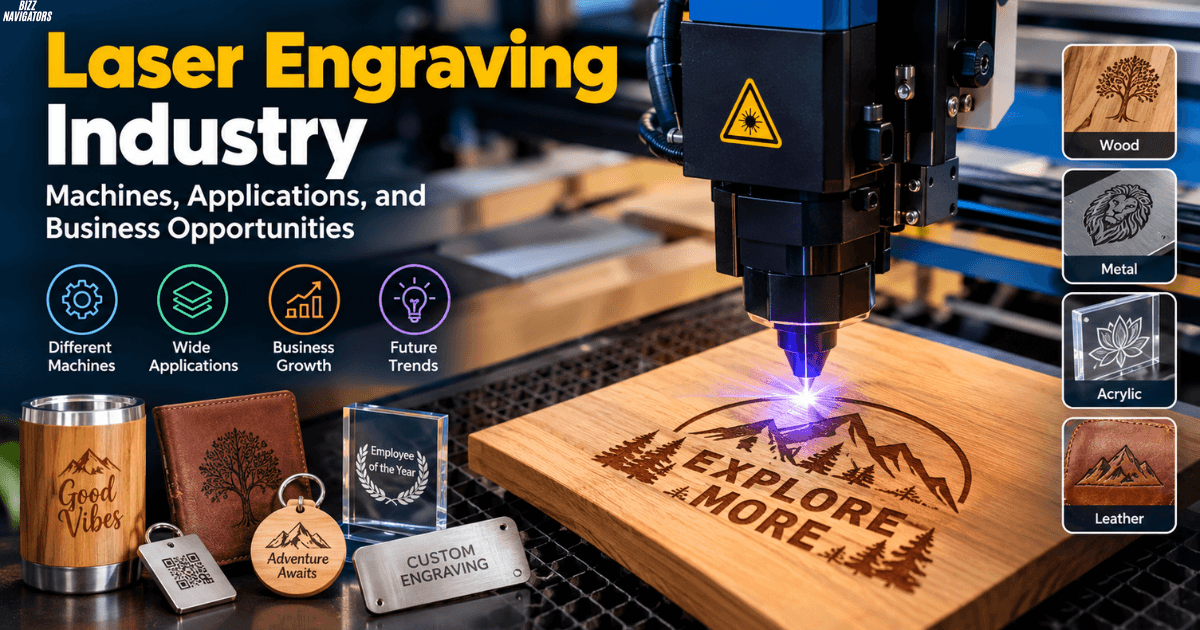
The laser engraving industry covers machines, software, materials, and services used to mark, engrave, cut, and personalize products.
It serves both industrial and consumer markets. Common areas include product identification, signage, manufacturing, personalized gifts, awards, jewelry, and custom products.
The right laser depends mainly on the material, required detail, work area, and production volume.
How Does Laser Engraving Work?
A laser engraving machine focuses a beam of light onto a surface. The heat removes or changes a small amount of material to create a permanent design.
The design normally comes from computer software. The machine then follows the digital artwork.
Two common methods are:
- Raster engraving: Creates images, text, and shaded designs line by line.
- Vector engraving: Follows paths to create lines, shapes, and precise cuts.
This makes laser engraving useful for both detailed artwork and industrial marking.
What Are the Main Types of Laser Engraving Machines?
What Is a Diode Laser?
A diode laser is a compact and relatively affordable option for small businesses, makers, and hobby users.
It works well with materials such as:
- Wood
- Leather
- Cardboard
- Some acrylic
- Slate
- Coated surfaces
It is usually better suited to lighter work than heavy industrial production.
What Is a CO₂ Laser?
A CO₂ laser is widely used for non-metal materials.
It is suitable for:
- Wood
- Acrylic
- Leather
- Glass
- Cardboard
- Certain plastics
- Signage materials
CO₂ systems are a strong choice for businesses producing signs, displays, gifts, and decorative products.
What Is a Fiber Laser?
A fiber laser is designed mainly for metal marking and engraving.
It can work with materials such as:
- Stainless steel
- Aluminum
- Brass
- Copper
- Titanium
- Other compatible metals
Fiber systems are especially useful for industrial identification, serial numbers, barcodes, and permanent part marking.
What Are UV Lasers Used For?
UV lasers are used when a business needs precise marking on sensitive or difficult materials.
They can be useful for electronics, plastics, glass, and detailed product marking.
The main advantage is controlled, fine marking with less heat compared with some other laser sources.
Where Is Laser Engraving Used?
What Are Industrial Laser Engraving Applications?
Industrial laser engraving is commonly used for permanent identification and traceability.
Businesses can mark:
- Serial numbers
- Part numbers
- Barcodes
- Data Matrix codes
- Logos
- Product information
- Identification codes
These marks can remain readable during normal industrial use.
How Is Laser Engraving Used for Personalized Products?
Personalization is one of the biggest consumer applications.
Businesses use laser engraving to customize:
- Tumblers
- Wallets
- Keychains
- Jewelry
- Cutting boards
- Gifts
- Phone accessories
- Awards
- Promotional products
A single machine can handle many designs without creating a new physical mold for every product.
How Is Laser Engraving Used in Signage?
Laser systems can create detailed signs, letters, plaques, displays, and decorative panels.
Common materials include wood, acrylic, leather, coated metals, and other compatible sheet materials.
This makes laser engraving useful for offices, retail stores, events, restaurants, and property signage.
How Is It Used in Manufacturing?
Manufacturers use laser technology for permanent product marking and identification.
It can reduce manual labeling and make marks more consistent.
For repeated production, businesses can save machine settings and digital designs for future jobs.
Which Laser Engraver Is Best for Business?
There is no single best machine for every business.
| Business Need | Suitable Laser |
| Wood crafts | Diode or CO₂ |
| Acrylic signs | CO₂ |
| Leather products | Diode or CO₂ |
| Glass products | CO₂ or specialized laser |
| Metal engraving | Fiber |
| Industrial marking | Fiber |
| Detailed sensitive materials | UV |
| High-volume metal work | Fiber |
The best choice should match the material first and production requirements second.
What Makes the Laser Engraving Business Attractive?
The biggest advantage is flexibility.
A business can offer different products using the same core machine. It can also serve individual customers and B2B clients.
Popular opportunities include:
- Custom gifts
- Corporate awards
- Jewelry personalization
- Promotional products
- Metal part marking
- Signage
- Industrial identification
- Contract engraving
- Small-batch manufacturing
Customization also allows businesses to produce items based on individual orders instead of keeping large quantities of finished products in stock.
What Should You Check Before Buying a Laser?
Start with the material you want to engrave.
Then check:
- Laser type: Diode, CO₂, fiber, or UV.
- Work area: Make sure it fits your products.
- Power: Match it to the required engraving or cutting work.
- Speed: Important for commercial production.
- Precision: Critical for small text and detailed designs.
- Software: Check supported design and control software.
- Exhaust: Required for removing smoke and fumes.
- Maintenance: Consider cleaning and replacement parts.
- Safety: Use proper enclosure, ventilation, and operating procedures.
- Total cost: Include the machine, ventilation, accessories, maintenance, and materials.
Buying the cheapest machine is not always the cheapest business decision. The correct machine should reduce production problems and fit your actual workload.
What Materials Can the Laser Engraving Industry Handle?
The answer depends on the laser source.
Diode lasers commonly handle wood, leather, slate, cardboard, and compatible coated materials.
CO₂ lasers are widely used for wood, acrylic, leather, glass, cardboard, and similar non-metal materials.
Fiber lasers are mainly used for metals and some compatible plastics.
UV lasers are useful for precise marking on selected plastics, glass, electronics, and sensitive materials.
Always check the manufacturer’s material compatibility information before processing an unfamiliar material.
How Is Laser Engraving Technology Changing?
Modern laser engraving technology is becoming easier to automate and control.
Useful developments include:
- Automatic focusing
- Camera-based positioning
- Faster scanning systems
- Improved design software
- Production monitoring
- Automated workflows
- More compact machines
- Better repeatability
These features can reduce setup time and improve consistency.
For commercial users, automation matters because saving a few minutes on every job can make a major difference over hundreds of orders.
Is Laser Engraving Good for a Small Business?
Yes, it can be a practical small-business model when the machine matches the target market.
A small operator can start with personalized products and gradually move into larger B2B orders.
For example, a business could begin with custom gifts and later add:
- Corporate branding
- Employee awards
- Promotional items
- Metal identification
- Signage
- Contract production
The strongest opportunity is usually not selling “laser engraving” itself. It is solving a specific customer need with engraving.
What Are the Biggest Opportunities in the Laser Engraving Industry?
The best opportunity depends on the target customer.
For consumers: personalized gifts and custom products can work well.
For businesses: promotional products, signs, awards, and branded merchandise are strong options.
For manufacturers: permanent part identification and traceability can create recurring B2B work.
For specialized shops: jewelry, electronics, automotive parts, and other precision applications can offer higher-value jobs.
Choosing a specific niche can make marketing easier than trying to serve everyone.
What Is the Future of the Laser Engraving Industry?
The industry is moving toward greater automation, better precision, faster production, and easier customization.
Industrial users will continue to need permanent identification and traceability. Consumer markets will continue to demand personalized products.
The technology will also become more connected to digital design and automated production workflows.
The key trend is simple: businesses want to produce more customized products with less manual work.
Is the Laser Engraving Industry Growing?
Yes. Laser engraving continues to serve a wide range of industrial, commercial, and consumer applications.
Its strength comes from one simple advantage: one technology can handle many different types of marking and personalization work when the correct laser source is selected.
For businesses, the best approach is to choose the target market first, identify the materials involved, and then select the right laser engraving machine.
Final Answer
The laser engraving industry offers opportunities in industrial marking, personalized products, signage, manufacturing, awards, and custom goods.
The most important decision is not choosing the most expensive machine. It is choosing the right laser for the material, application, production volume, and business model.

At BizzNavigators, we answer the questions you’re actually searching for, honestly and clearly. We check our facts before we publish anything, and if we’re not sure about something, we tell you instead of guessing. Whatever you’re looking for- a tech fix, a business tip, or a simple how-to- we want to give you an answer you can trust.