

Introduction
Buying a home for an aging parent or a disabled adult child doesn’t have to mean paying higher investment property rates. A Family Opportunity Mortgage can help eligible borrowers secure more affordable financing while providing a safe home for a loved one. However, many families misunderstand how a Family Opportunity Mortgage works.
Who qualifies and which lender requirements apply. Understanding the eligibility rules, benefits, interest rates, and application process before you apply can help you avoid costly mistakes, save money, and choose the best financing option for your family’s needs.
What Is a Family Opportunity Mortgage?
A Family Opportunity Mortgage is a conventional home loan option that allows a qualified borrower to purchase a residence for an elderly parent or a disabled adult child who cannot independently qualify for financing.
Instead of classifying the property as an investment home, eligible borrowers may receive financing similar to that of a primary residence, depending on the lender and applicable conventional loan guidelines. This distinction can significantly reduce borrowing costs through lower interest rates, smaller down payment requirements, and better overall loan terms.
Unlike a traditional investment property purchase, the primary goal is to provide suitable housing for an immediate family member rather than generate rental income.
Why This Mortgage Exists
Lenders recognize that some families need to purchase homes for relatives who are financially or physically unable to qualify for a mortgage. Rather than forcing borrowers into expensive investment-property financing, conventional lending guidelines may provide a more affordable alternative when specific eligibility conditions are met.
Who Usually Benefits?
A Family Opportunity Mortgage is commonly used by families who want to:
Purchase a home for an elderly parent.
Buy accessible housing for a disabled adult child.
Reduce long-term housing expenses.
Keep family members living independently while remaining close to loved ones.
Avoid higher costs associated with investment property loans.

How a Family Opportunity Mortgage Works
Although the borrower applies for and remains responsible for the mortgage, the purchased home is intended for an eligible family member to occupy.
The borrower owns the property, makes the mortgage payments, and meets the lender’s qualification requirements. Meanwhile, the qualifying parent or adult child lives in the home as their primary residence.
This structure makes the mortgage unique because occupancy is determined according to specific conventional lending guidelines rather than the borrower physically living in the property.
Purchasing a Home for an Elderly Parent
Many adult children choose this financing option when their parents are retired, living on fixed income, or unable to qualify for a mortgage due to age-related financial limitations.
Instead of paying higher interest rates for an investment property, eligible borrowers may qualify for financing that is considerably more affordable.
Purchasing a Home for a Disabled Adult Child
Families caring for an adult child with a qualifying disability may also benefit from this mortgage structure.
The arrangement allows parents to purchase a suitable home that meets accessibility needs while maintaining ownership and responsibility for the loan.
Why Ownership Matters
Even though another family member occupies the property, legal ownership generally remains with the borrower unless ownership changes later through a separate legal process.
Because of this, borrowers should understand their financial responsibilities before applying.
Who Can Qualify for a Family Opportunity Mortgage?
Qualification depends on both the borrower and the family member who will occupy the home.
Every lender follows its own underwriting standards alongside conventional loan guidelines, so approval requirements may vary.
Borrower Requirements
Applicants typically need to demonstrate:
Stable employment history
Reliable and verifiable income
Acceptable credit history
Sufficient assets for the required down payment and closing costs
Ability to repay the mortgage
Meeting these financial requirements remains one of the most important approval factors.
Eligible Family Members
Most qualifying situations involve:
Elderly parents who cannot obtain financing independently
Disabled adult children who meet applicable disability requirements
Other relatives may not qualify under the same financing treatment, making lender verification essential before applying.
Credit Score Expectations
Although minimum credit score requirements differ among lenders, stronger credit generally results in:
Better approval odds
Lower interest rates
Reduced monthly payments
More favorable loan terms
Borrowers with higher credit scores also have access to a wider selection of lending options.
Debt-to-Income Ratio (DTI)
Lenders carefully review the borrower’s debt-to-income ratio to determine affordability.
A lower DTI demonstrates stronger financial stability and improves the likelihood of mortgage approval. Reducing outstanding debt before applying may strengthen an application.

Essential Eligibility Rules You Should Know
Understanding the program guidelines before shopping for a home helps prevent delays during underwriting.
Occupancy Requirements
The purchased property should serve as the primary residence of the qualifying parent or disabled adult child.
Borrowers should never assume occupancy rules are identical across every lender. Confirming requirements in advance can prevent unexpected complications.
Income Verification
Lenders require documentation proving the borrower has sufficient income to repay the mortgage.
Common documents include:
Recent pay stubs
W-2 forms or tax returns
Bank statements
Employment verification
Additional income documentation when applicable
Providing complete documentation early often speeds up the approval process.
Family Relationship Documentation
Borrowers may need to provide evidence confirming the qualifying family relationship.
Depending on the situation, documentation could include:
Birth certificates
Legal guardianship records
Disability documentation when applicable
Other supporting records requested by the lender
Preparing these documents before applying helps reduce underwriting delays.
Property Eligibility
Not every property automatically qualifies.
Lenders generally evaluate factors such as:
Property condition
Residential use
Appraised market value
Location
Compliance with conventional loan requirements
Choosing a property that meets lender standards improves the chances of receiving final approval.
Loan Limits
Most conventional mortgages remain subject to conforming loan limits established for the applicable year.
If the home’s purchase price exceeds those limits, borrowers may need to explore jumbo loan options, which often have stricter qualification requirements.
Understanding the Fannie Mae Family Opportunity Mortgage
One of the biggest misconceptions is that there is an official loan called the Fannie Mae Family Opportunity Mortgage.
In reality, there is no standalone mortgage product with that exact name.
Instead, the term refers to financing situations where conventional lending guidelines associated with Fannie Mae may allow borrowers to receive owner-occupied financing treatment when purchasing a home for an eligible elderly parent or disabled adult child.
Common Misunderstandings
Many online articles incorrectly describe this as a government-sponsored mortgage program with its own application process. The truth is much simpler.
Borrowers apply through conventional mortgage lenders, who evaluate the application using current underwriting guidelines and determine whether the purchase qualifies under applicable occupancy rules.
Why Lender Experience Matters
Not every loan officer handles these transactions regularly.
Working with a lender experienced in Family Opportunity Mortgage scenarios can make the approval process smoother, reduce misunderstandings, and ensure the required documentation is submitted correctly from the beginning.
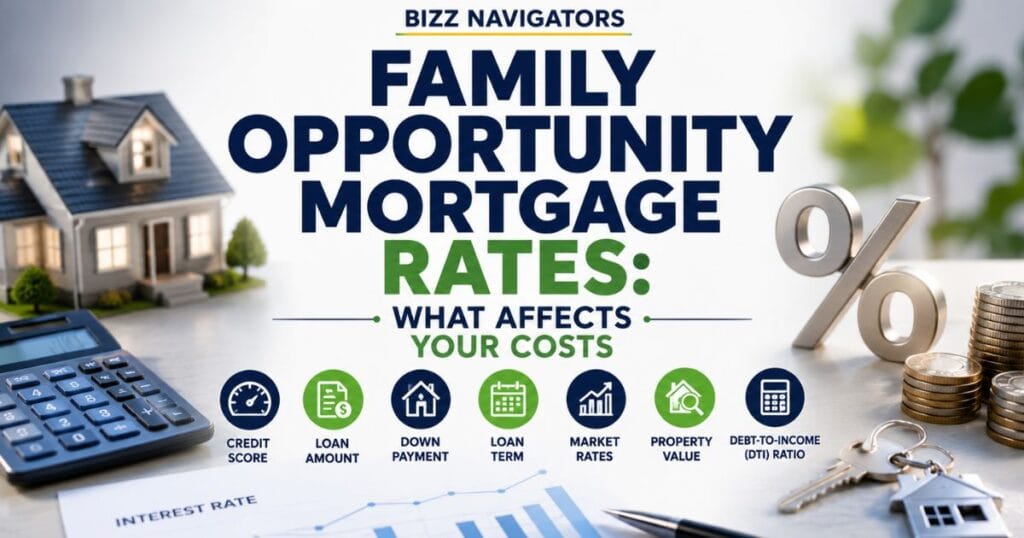
Family Opportunity Mortgage Rates: What Affects Your Costs?
The interest rate you receive can make a significant difference in your total borrowing cost over the life of the loan. Because a qualifying Family Opportunity Mortgage may be treated more favorably than an investment property loan, borrowers often benefit from lower financing costs.
Factors That Influence Mortgage Rates
Several factors determine the rate a lender offers, including:
Credit score and credit history
Debt-to-income (DTI) ratio
Down payment amount
Loan amount
Loan term
Current market interest rates
Property appraisal results
Improving your financial profile before applying can help you secure a more competitive rate.
Primary Residence vs. Investment Property Financing
When a purchase qualifies under Family Opportunity Mortgage guidelines, borrowers may avoid the higher rates commonly associated with investment properties. This difference can reduce monthly payments and lower the total interest paid over time.
Choosing the Right Family Opportunity Mortgage Lender
Finding the right lender is just as important as choosing the right property. Since not every mortgage professional is familiar with this financing approach, comparing multiple lenders is a smart first step.
Where to Look
You may find suitable financing through:
Traditional banks
Credit unions
Mortgage brokers
Online mortgage lenders
Ask each lender whether they have experience with Family Opportunity Mortgage scenarios before starting your application.
Questions Worth Asking
Before moving forward, consider asking:
Have you handled similar loans before?
What documents will I need?
What down payment is required?
What closing costs should I expect?
Are there any occupancy restrictions I should know about?
Clear answers early in the process can help you avoid unexpected delays.
Step-by-Step Application Process
Applying for a Family Opportunity Mortgage follows a process similar to most conventional home loans.
Step 1: Review Your Finances
Check your credit score, calculate your monthly debts, and determine how much home you can comfortably afford.
Step 2: Collect Required Documents
Most lenders request:
Government-issued identification
Income verification
Tax returns
Bank statements
Employment information
Documents supporting the qualifying family relationship
Step 3: Obtain Mortgage Pre-Approval
A pre-approval helps you understand your budget and shows sellers that you’re a serious buyer.
Step 4: Choose an Eligible Property
Select a home that satisfies both your family’s needs and the lender’s property requirements.
Step 5: Complete Underwriting
The lender reviews your financial information, orders an appraisal, and verifies all supporting documentation before making a final lending decision.
Step 6: Close on the Home
After final approval, you’ll sign the mortgage documents, complete the purchase, and receive the keys.

Advantages of a Family Opportunity Mortgage
This financing option offers several practical benefits for eligible families.
Lower Borrowing Costs
Borrowers may qualify for better financing terms than they would receive on an investment property.
Affordable Monthly Payments
Lower interest rates often translate into reduced monthly mortgage payments.
Greater Financial Flexibility
Instead of relying on expensive rental housing or assisted living in some situations, families can provide stable housing while building home equity.
Long-Term Investment Potential
Although the primary purpose is housing a loved one, the property may also become a valuable long-term family asset.
Potential Limitations to Consider
Despite its advantages, this mortgage is not suitable for every situation.
Some common challenges include:
Strict qualification requirements
Extensive documentation
Limited eligibility scenarios
Responsibility for all mortgage payments remains with the borrower
Approval depends on lender-specific underwriting policies
Understanding these factors before applying helps set realistic expectations.
Family Opportunity Mortgage vs. Other Home Loan Options
| Feature | Family Opportunity Mortgage | Investment Property Loan | FHA Loan | Conventional Owner-Occupied Loan |
| Intended Occupant | Parent or disabled adult child | Tenant | Borrower | Borrower |
| Interest Rates | Often lower | Usually higher | Competitive | Competitive |
| Down Payment | May be lower | Often higher | Lower minimum available | Varies |
| Occupancy Rules | Special qualifying circumstances | Rental property | Borrower occupancy required | Borrower occupancy required |
| Best For | Helping immediate family | Rental income | First-time buyers and eligible borrowers | Primary residences |
This comparison highlights why many eligible families explore a Family Opportunity Mortgage before considering investment-property financing.
Tax Considerations
Mortgage-related tax rules vary depending on your personal financial situation.
Possible considerations include:
Mortgage interest deductions
Property tax deductions
Future capital gains implications
Estate planning considerations
Because tax laws change and every situation is different, consult a qualified tax professional before making financial decisions based on potential tax benefits.
Common Mistakes That Can Delay Approval
Many borrowers experience unnecessary delays because they overlook important details.
Avoid these common mistakes:
Assuming every lender offers identical guidelines.
Applying before checking your credit report.
Forgetting to gather required documentation.
Misunderstanding occupancy requirements.
Choosing a property that doesn’t meet lending standards.
Taking on new debt before closing.
Preparing in advance can make the approval process much smoother.
Expert Tips for a Stronger Mortgage Application
If you want to improve your chances of approval, consider these practical recommendations:
Improve your credit score before applying.
Pay down existing debts to lower your DTI ratio.
Save additional funds for closing costs.
Compare offers from multiple lenders.
Keep employment and income stable during the application process.
Organize all financial documents before submitting your application.
Small improvements can lead to better loan terms and fewer underwriting issues.
Frequently Asked Questions
Can I buy a house for my parents using a Family Opportunity Mortgage?
Yes. If you meet the lender’s eligibility requirements and your parents qualify under applicable guidelines, this financing option may be available.
Can I use this mortgage for siblings?
Generally, this financing structure is intended for qualifying elderly parents or disabled adult children. Other family relationships may not qualify under the same rules.
Is a down payment required?
Yes. The required amount depends on the lender, your financial profile, and the specific loan program.
Do all lenders offer Family Opportunity Mortgage financing?
Not necessarily. Some lenders have more experience with these transactions than others, so comparing lenders is recommended.
Can I refinance later?
In many cases, refinancing is possible if you meet the lender’s qualification requirements at that time.
Can the property become a rental in the future?
That depends on your mortgage agreement and the lender’s policies. Review your loan terms before making occupancy changes.
Key Takeaways
A Family Opportunity Mortgage can help eligible borrowers purchase a home for an elderly parent or a disabled adult child.
It may provide more favorable financing than an investment property loan.
Approval depends on conventional lending guidelines, lender requirements, and the borrower’s financial qualifications.
Comparing experienced lenders, preparing documents early, and maintaining strong credit can improve approval chances.
Understanding occupancy rules and eligibility requirements before applying helps avoid costly mistakes.
Final Thoughts
A Family Opportunity Mortgage can be a valuable solution for families who want to provide safe, stable housing for an aging parent or a disabled adult child without facing the higher costs often associated with investment-property financing. By understanding the eligibility requirements and comparing lenders.
By improving your financial profile and preparing the necessary documentation, you can approach the mortgage process with greater confidence. Before making a final decision, speak with an experienced mortgage professional to confirm that this financing option fits your family’s needs and long-term financial goals.

At BizzNavigators, we answer the questions you’re actually searching for, honestly and clearly. We check our facts before we publish anything, and if we’re not sure about something, we tell you instead of guessing. Whatever you’re looking for- a tech fix, a business tip, or a simple how-to- we want to give you an answer you can trust.