
Why Is the Heat Not Working in Your House?
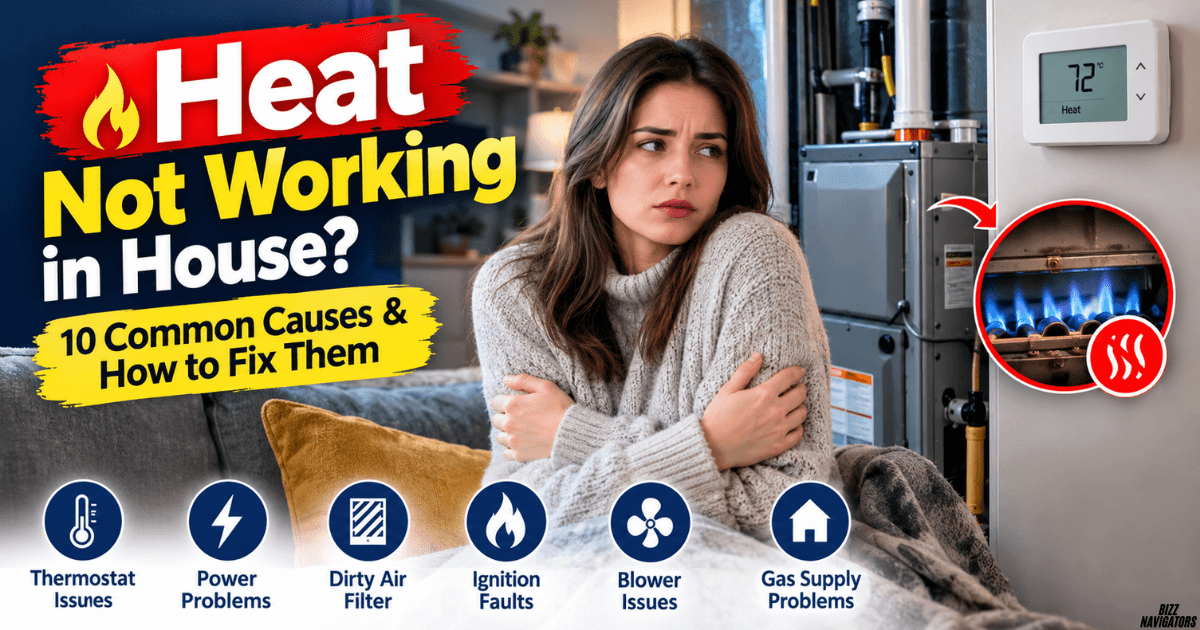
If the heat is not working in your house, start with the thermostat, furnace power, air filter, and vents. Common causes include an incorrect thermostat setting, dead batteries, a tripped breaker, a clogged filter, ignition problems, or a furnace safety shutdown. (Carrier)
The fastest way to find the problem is to check the simple things first. Do not start taking apart the furnace or replacing internal components without knowing what has failed.
If you smell gas, hear unusual combustion noises, or repeatedly trip a breaker, stop troubleshooting and contact a qualified professional.
1. Check the Thermostat First
The thermostat tells your heating system when to run. If its settings are wrong, the furnace may never receive a proper call for heat.
Set the thermostat to HEAT, then raise the temperature several degrees above the current room temperature. Set the fan to AUTO rather than leaving it on continuously.
If the thermostat has batteries, replace them if the display is weak, blank, or behaving strangely.
A thermostat that says “Heat On” but no heat can indicate a problem beyond the thermostat, including restricted airflow, ignition failure, or a furnace safety shutdown.
2. Check the Furnace Power
A gas furnace still needs electricity to operate its controls, blower, and ignition system.
Look for the furnace power switch, which often resembles a normal light switch near the unit. Make sure it is switched on.
Next, check the electrical panel for a tripped breaker labeled Furnace, Heating, or something similar.
If the breaker has tripped, you can reset it once. If it trips again, do not keep resetting it. Repeated tripping can indicate an electrical or equipment problem that needs professional diagnosis.
3. Replace a Dirty Air Filter
A clogged air filter is one of the most common reasons a furnace struggles to heat a home.
When the filter becomes heavily blocked, less air can move through the system. Restricted airflow can cause the furnace to overheat and activate a safety limit, shutting the burners down.
Remove the filter and inspect it. If it is visibly dirty or heavily covered with dust, replace it with the correct size recommended for your system.
Make sure the airflow arrow on the new filter points in the correct direction.
4. Make Sure the Vents Are Open
If your furnace runs but some rooms remain cold, check the supply vents and return grilles.
Make sure furniture, rugs, curtains, or other objects are not blocking them. Closed or obstructed vents can reduce airflow and contribute to heating problems.
If only one room is cold while the rest of the house reaches the thermostat setting, the problem may be related to airflow or heat distribution rather than the furnace itself.
5. The Furnace May Have an Ignition Problem
Modern furnaces commonly use electronic ignition instead of a traditional standing pilot light.
If the thermostat calls for heat but the burners never ignite, possible causes include a failed igniter, flame-sensing problem, control issue, or another safety-related fault.
Older furnaces may use a standing pilot light. If that pilot is out, the burners cannot produce heat.
For pilot-light procedures, follow the instructions supplied with your specific furnace. Do not attempt to relight a furnace if you smell gas. Carrier specifically advises leaving the home and contacting the gas utility or emergency services from a safe location when gas is suspected.
6. Why Is My Heater Blowing Cold Air?
A heater blowing cold air does not always mean the entire heating system has failed.
First, check whether the thermostat fan is set to ON. With this setting, the blower can continue running between heating cycles, which may make the air feel cool.
A dirty filter can also restrict airflow and cause a furnace to overheat and shut its burners off. The blower may continue operating while the system cools down.
Other possibilities include ignition failure, a flame-sensor problem, gas-supply issues, or a malfunctioning furnace component. (Airlucent)
7. Check the Gas Supply if You Have a Gas Furnace
A gas furnace cannot produce heat if its fuel supply is interrupted.
If you have a gas furnace and other gas appliances are also not working, there may be a broader gas-supply issue.
Do not investigate a suspected gas leak yourself. If you smell gas, leave the house and contact the appropriate gas utility or emergency service from outside. Do not operate electrical switches or attempt to relight the furnace.
8. What If the Furnace Is Running but the House Is Still Cold?
A furnace can run without adequately warming the house.
Start by checking the filter, vents, and returns. If airflow feels weak, restricted circulation could be contributing to the problem.
If the air coming from the vents is warm but certain rooms remain cold, look at ductwork, blocked registers, insulation, room size, and heat loss.
A system can also struggle when the home loses heat faster than the heating equipment can replace it. This is particularly noticeable around poorly insulated rooms, large windows, exterior walls, or additions.
9. What If the Heat Keeps Turning On and Off?
Frequent starting and stopping is called short cycling.
A dirty filter can restrict airflow and cause the furnace to overheat, triggering its safety limit. Incorrect thermostat placement, equipment problems, or other airflow issues can also contribute to repeated cycling.
Do not repeatedly restart a furnace that keeps shutting itself down.
Replace an obviously dirty filter and confirm that vents and returns are unobstructed. If the problem continues, professional diagnosis is appropriate.
10. Heat Pump Problems Are Different
Not every home uses a gas furnace. If your house uses a heat pump, the troubleshooting process can be different.
A heat pump normally moves heat rather than generating it through combustion. Outdoor-unit problems, airflow restrictions, thermostat issues, electrical faults, or refrigerant-related problems can affect heating performance.
If the indoor blower operates but the system does not provide adequate heat, avoid opening the equipment or attempting refrigerant work yourself.
A qualified HVAC technician can determine whether the issue is with the indoor unit, outdoor unit, controls, or another component.
Quick Heat Not Working in House Checklist
| What you notice | Possible cause | First check |
| Furnace does not start | Thermostat or power problem | Thermostat and breaker |
| Thermostat is blank | Dead batteries or power issue | Batteries/power |
| Heat says ON, but nothing happens | Furnace or control problem | Power switch and filter |
| Heater blows cold air | Fan setting or heating failure | Fan AUTO and filter |
| Furnace starts then stops | Restricted airflow or safety limit | Air filter |
| No flame on older furnace | Pilot problem | Pilot-light instructions |
| Only some rooms are cold | Airflow/distribution issue | Vents and returns |
| Breaker keeps tripping | Electrical/equipment fault | Stop resetting and call a professional |
| Gas smell is present | Possible gas leak | Leave the house immediately |
When Should You Call an HVAC Professional?
Call an HVAC professional when the basic checks do not solve the problem or when the issue involves internal furnace components.
Professional service is especially appropriate when you have repeated breaker trips, ignition failures, persistent short cycling, unusual furnace noises, a suspected gas problem, or a system that repeatedly shuts itself down.
Do not attempt to repair gas valves, electrical components, burners, ignition systems, or other internal parts unless you are properly qualified.
Final Thought
When the heat is not working in your house, check the thermostat, furnace power, air filter, and vents first. These simple checks can identify several common problems quickly.
If the furnace still will not heat, the problem may involve ignition, flame sensing, the blower, gas supply, safety controls, or another internal component.
The key is to separate simple homeowner checks from problems that require professional HVAC service. This approach saves time and avoids unnecessary or unsafe repairs.

At BizzNavigators, we answer the questions you’re actually searching for, honestly and clearly. We check our facts before we publish anything, and if we’re not sure about something, we tell you instead of guessing. Whatever you’re looking for- a tech fix, a business tip, or a simple how-to- we want to give you an answer you can trust.