
Introduction
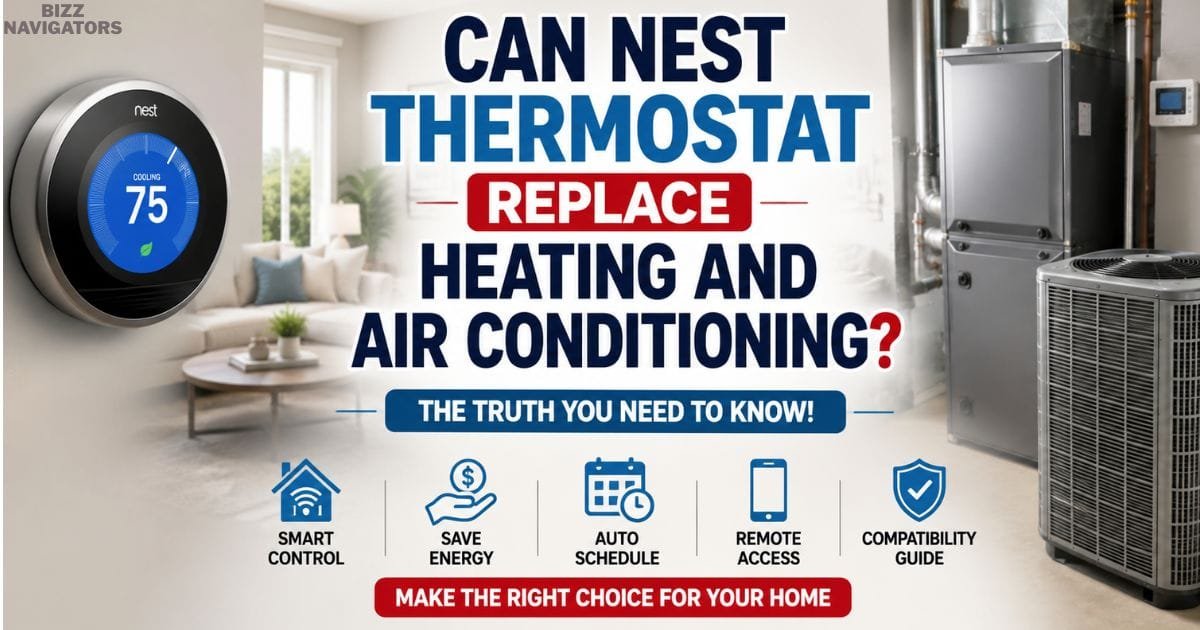
If you’re wondering can Nest thermostat replace heating and air conditioning, the simple answer is no, but there’s more to know before you decide. A Nest thermostat doesn’t replace your furnace, air conditioner, or heat pump. Instead, it controls your existing HVAC system to improve comfort, automate temperature settings, and help reduce energy waste.
Many homeowners mistakenly believe a smart thermostat upgrades their entire heating and cooling system. In reality, it only manages when your HVAC equipment runs, while the furnace or air conditioner still produces the heating or cooling.
Before buying a Nest thermostat, it’s important to understand how it works, which HVAC systems it supports, and whether it’s compatible with your home’s wiring. This guide covers everything you need to make the right decision.
Understanding What a Nest Thermostat Actually Does
A Nest thermostat is a smart temperature controller designed to replace a traditional wall thermostat. It communicates with compatible HVAC equipment and manages indoor temperatures based on your preferences.
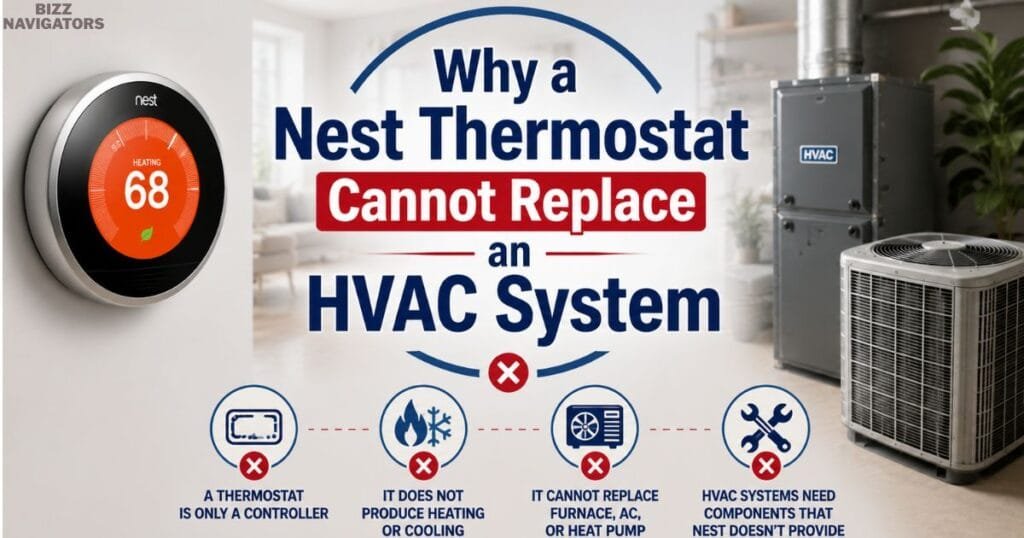
Unlike a furnace or an air conditioner, it does not create heat or cold air. It simply sends signals that tell your HVAC system when heating or cooling is needed.
How a Nest Thermostat Controls Your Home’s Temperature
When the indoor temperature moves above or below your preferred setting, the Nest thermostat detects the change through its built-in sensors.
It then sends a low-voltage electrical signal to the HVAC system, instructing it to start heating or cooling. Once the desired temperature is reached, it tells the system to stop operating.
This automated communication happens continuously throughout the day, helping maintain a comfortable indoor environment with minimal effort from the homeowner.
What the Nest Thermostat Controls
Depending on your HVAC setup, a Nest thermostat may control:
Central air conditioning
Gas furnaces
Electric furnaces
Heat pumps
Boilers
Radiant heating systems
Fan operation
Humidifiers and dehumidifiers (on supported systems)
The thermostat controls these systems—it does not replace them.
Why a Nest Thermostat Cannot Replace an HVAC System
A common misconception is that replacing an old thermostat with a smart one eliminates the need for heating and cooling equipment.
That isn’t how HVAC systems work.
Your heating and cooling system consists of several major components working together:
Heating equipment (furnace, boiler, or heat pump)
Cooling equipment (air conditioner or heat pump)
Air handler or blower
Ductwork (where applicable)
Thermostat
The thermostat represents only one small part of the entire system.
Without a furnace, boiler, or air conditioner, a Nest thermostat has nothing to control.
Think of it like a television remote. Replacing the remote with a smarter version doesn’t replace the television itself. It simply gives you better control over the existing device.
Which Heating and Cooling Systems Work Best With Nest?
Nest thermostats support many low-voltage residential HVAC systems, making them suitable for millions of homes.
However, compatibility varies depending on wiring and equipment type.
Conventional Heating and Cooling Systems
Most homes with a standard central heating and cooling system can use a Nest thermostat without significant modifications.
These systems typically include:
Gas furnace
Central air conditioner
Electric furnace
Forced-air heating
These are among the easiest systems to install with a Nest thermostat.
Heat Pump Systems
Heat pumps are fully supported by most Nest thermostat models.
Whether your heat pump provides heating, cooling, or both, Nest can intelligently switch between operating modes based on your preferred temperature.
Many homeowners choose Nest specifically because of its ability to optimize heat pump efficiency throughout changing seasons.
Dual-Fuel HVAC Systems
Homes that combine a heat pump with a gas furnace can also benefit from Nest compatibility.
The thermostat automatically determines which heating source should operate depending on outdoor conditions, helping improve comfort while reducing unnecessary energy consumption.
Boilers and Radiant Heating
Many low-voltage boiler systems work well with Nest thermostats.
Radiant floor heating may also be compatible, although wiring configurations vary between installations.
If your system uses specialized controls, checking compatibility before purchasing remains the safest option.
HVAC Systems That May Not Support a Nest Thermostat
Although Nest works with many residential systems, not every HVAC setup is compatible.
Understanding these exceptions can prevent installation problems later.
Communicating HVAC Systems
Some premium HVAC manufacturers use communicating technology.
Instead of relying on traditional thermostat wiring, these systems exchange digital information between the thermostat and equipment.
Because of this proprietary communication, replacing the factory thermostat with a Nest model may disable advanced system functions or prevent normal operation altogether.
High-Voltage Electric Baseboard Heating
Nest thermostats are designed for low-voltage (24V) systems.
Most electric baseboard heaters operate using 120V or 240V line voltage, making them incompatible without additional equipment specifically designed for those applications.
Proprietary Manufacturer Thermostats
Certain HVAC brands require their own dedicated smart thermostat to access advanced features such as:
Variable-speed compressors
Adaptive humidity control
Smart airflow balancing
Equipment diagnostics
Replacing these proprietary controllers with a Nest thermostat may reduce functionality.
Some Variable-Speed HVAC Systems
Variable-speed systems provide outstanding comfort because they adjust heating and cooling output gradually rather than simply turning fully on or off.
Basic heating and cooling functions often continue to work with Nest, but some premium features may no longer be available if the manufacturer requires its own communicating thermostat.
For this reason, homeowners with high-end HVAC equipment should verify compatibility before installation.
Nest Thermostat Compatibility at a Glance
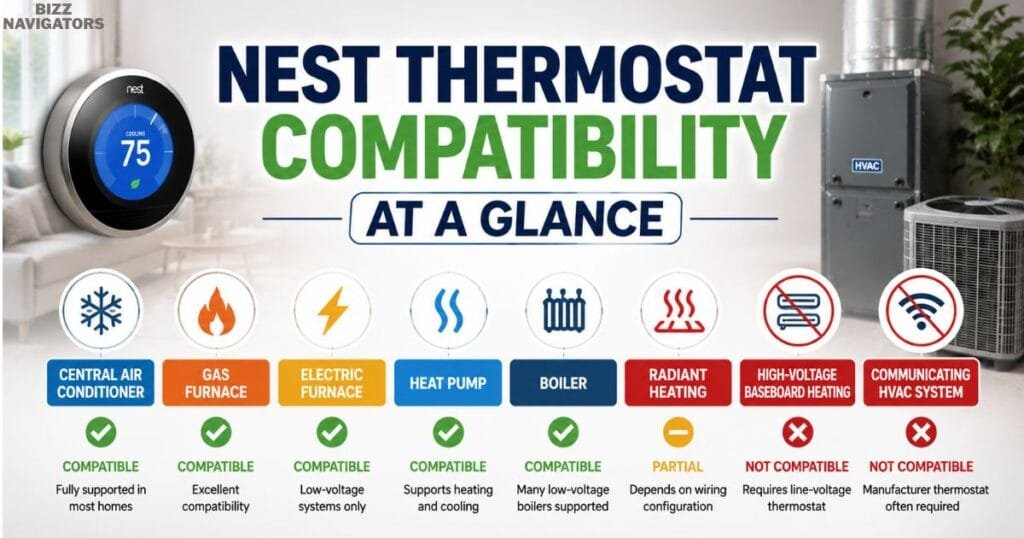
| HVAC System | Nest Compatible | Notes |
| Central Air Conditioner | ✅ Yes | Fully supported in most homes |
| Gas Furnace | ✅ Yes | Excellent compatibility |
| Electric Furnace | ✅ Yes | Low-voltage systems only |
| Heat Pump | ✅ Yes | Supports heating and cooling |
| Boiler | ✅ Yes | Many low-voltage boilers supported |
| Radiant Heating | ✅ Partial | Depends on wiring configuration |
| High-Voltage Baseboard Heating | ❌ No | Requires line-voltage thermostat |
| Communicating HVAC System | ❌ Usually No | Manufacturer thermostat often required |
How to Check Whether Your HVAC System Is Compatible
Before buying a Nest thermostat, spend a few minutes confirming compatibility.
Start by removing the cover of your existing thermostat and identifying the connected wires. Most compatible systems use standard low-voltage terminals such as R, Rc, Rh, W, Y, G, C, and O/B.
Next, determine what type of heating and cooling equipment your home uses. Standard furnaces, central air conditioners, and many heat pumps are typically compatible, while communicating systems and line-voltage heating require additional attention.
Finally, verify that your HVAC system supports the number of heating and cooling stages offered by your Nest thermostat model. Taking these simple steps before purchasing can save both installation time and unexpected costs.
Do You Need a C Wire for a Nest Thermostat?
One of the most common questions homeowners ask is whether a C wire is required.
A C wire (common wire) supplies continuous power to a smart thermostat. Some Nest thermostat models can operate without one by drawing small amounts of power from the HVAC system. However, this doesn’t work equally well in every installation.
Homes with older wiring or complex HVAC systems may experience issues such as battery drain, Wi-Fi disconnections, or short cycling if a C wire is missing.
When a Nest Power Connector Helps
If your system doesn’t include a C wire, Google offers the Nest Power Connector. This accessory provides a stable power source without requiring new thermostat wiring in many homes.
Although not every installation needs it, using a Power Connector can improve reliability for compatible systems.
Nest Thermostat Models Compared
Choosing the right model depends on your home’s HVAC system and the features you want.
| Nest Model | Best For | Key Advantages |
| Nest Learning Thermostat | Large homes and advanced HVAC systems | Learns schedules automatically, premium design, more HVAC support |
| Nest Thermostat | Most homeowners | Affordable, energy-saving features, remote control |
| Nest Thermostat E* | Older installations where available | Simple interface and easy operation |
*Availability varies by region.
No matter which model you choose, remember that every Nest thermostat controls compatible HVAC equipment rather than replacing it.
Can You Install a Nest Thermostat Yourself?
Many homeowners successfully install a Nest thermostat without professional assistance.
If you’re replacing a standard low-voltage thermostat with similar wiring, installation is usually straightforward.
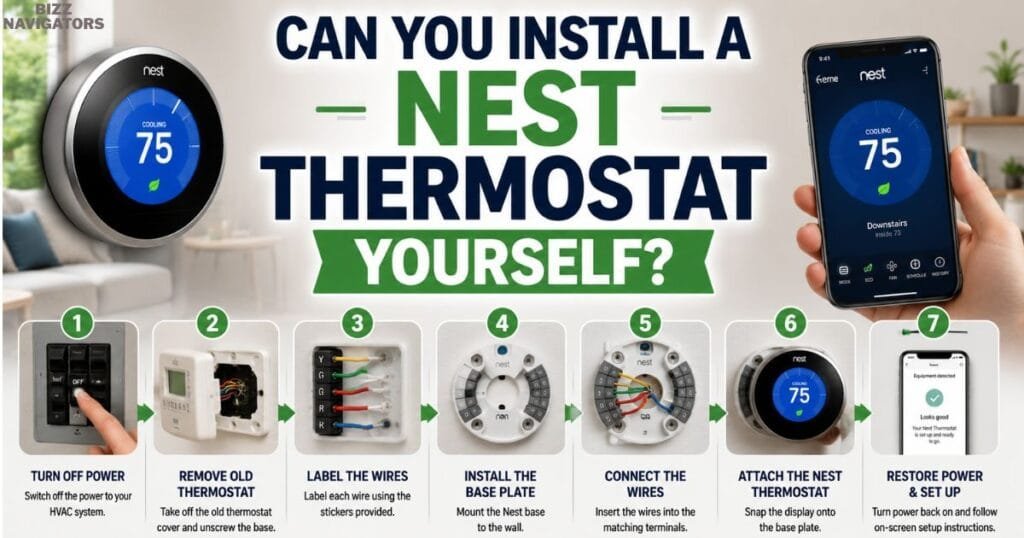
Basic Installation Steps
1. Turn off power to the HVAC system.
2. Remove the existing thermostat.
3. Label each wire before disconnecting it.
4. Mount the Nest base plate.
5. Connect the wires to the matching terminals.
6. Attach the thermostat display.
7. Restore power and complete the setup using the on-screen instructions.
When Professional Installation Is Recommended
Consider hiring an HVAC technician if:
Your wiring doesn’t match standard labels.
You own a communicating HVAC system.
Your home has multiple heating or cooling zones.
You’re installing a new HVAC system at the same time.
You are unsure about electrical connections.
Professional installation helps avoid wiring mistakes that could affect system performance.
Smart Features That Make a Nest Thermostat Worth Buying
Although a Nest thermostat cannot replace heating and air conditioning equipment, it can significantly improve how your system operates.
Automatic Scheduling
The Nest Learning Thermostat observes your temperature preferences and gradually builds a schedule that reduces manual adjustments.
Remote Temperature Control
Using the Google Home app, you can change your home’s temperature from almost anywhere with an internet connection.
This feature is especially useful when traveling or returning home after work.
Home and Away Automation
Nest detects whether someone is home and automatically adjusts the temperature to reduce unnecessary energy use.
Energy Usage Insights
The thermostat provides reports showing how your heating and cooling system is being used.
These insights help homeowners identify opportunities to lower energy consumption.
Voice Assistant Integration
Nest works with supported smart home ecosystems, allowing temperature adjustments through voice commands and home automation routines.
Can a Nest Thermostat Help Reduce Energy Bills?
A Nest thermostat doesn’t make your HVAC equipment more powerful, but it can help it operate more efficiently.
Instead of running longer than necessary, your heating and cooling system follows optimized schedules based on your habits and preferences.
Potential energy savings depend on several factors, including:
The age of your HVAC system
Your local climate
Home insulation
Daily temperature settings
Household occupancy
Homes with inconsistent thermostat usage often benefit the most because automation reduces unnecessary heating and cooling cycles.
Keep in mind that no thermostat can compensate for an aging furnace, clogged air filter, leaking ductwork, or poorly maintained air conditioner.
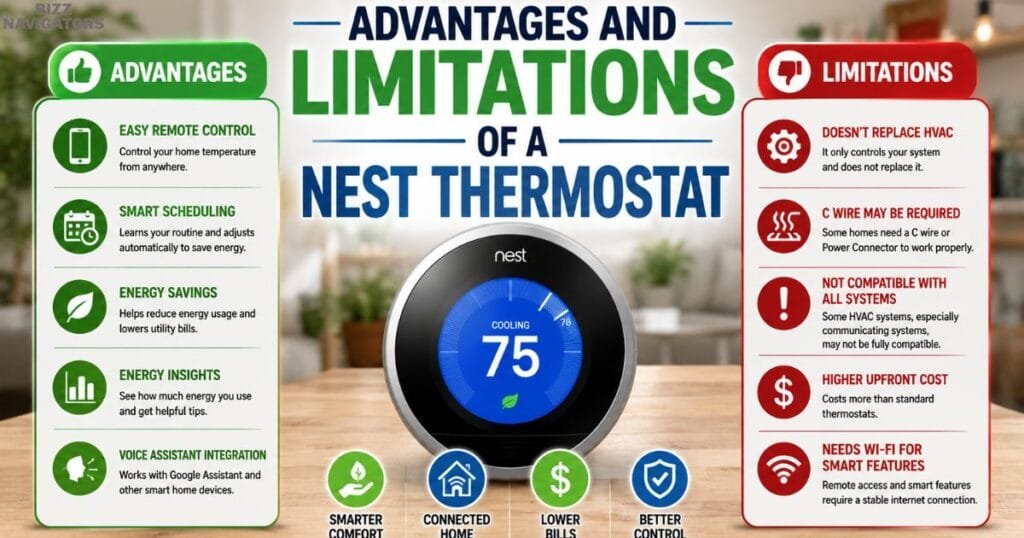
Advantages and Limitations of a Nest Thermostat
| Advantages | Limitations |
| Easy remote control | Doesn’t replace HVAC equipment |
| Smart scheduling | Not compatible with every system |
| Potential energy savings | Some homes need a C wire or Power Connector |
| Modern interface | Premium features vary by HVAC type |
| Supports many HVAC systems | Communicating systems may require factory thermostats |
Understanding both the strengths and limitations helps homeowners make an informed purchasing decision.
Real-Life Situations Where a Nest Thermostat Makes Sense
A Nest thermostat is an excellent choice for many households.
For example, a family with a standard gas furnace and central air conditioner can automate temperature schedules and remotely adjust settings while away from home.
A homeowner using a heat pump can improve comfort by allowing Nest to manage heating and cooling transitions automatically.
Even many older homes can benefit after verifying wiring compatibility or adding a Nest Power Connector when necessary.
However, homeowners with premium communicating HVAC systems should confirm compatibility before replacing their existing thermostat.
Mistakes to Avoid Before Buying
Many installation problems result from assumptions rather than equipment defects.
Avoid these common mistakes:
Assuming every HVAC system works with Nest.
Ignoring thermostat wiring before purchasing.
Buying a thermostat without checking compatibility.
Expecting the thermostat to replace heating or cooling equipment.
Skipping professional help when dealing with advanced HVAC systems.
Spending a few minutes checking compatibility can prevent unnecessary expenses later.
Final Verdict
If you’re still wondering whether Can nest thermostat replace heating and air conditioning, the answer is no. A Nest thermostat controls your existing HVAC system, but it cannot replace your furnace, air conditioner, boiler, or heat pump. Its real value lies in improving comfort, automating temperature control, and helping reduce energy consumption on compatible systems.
Before buying one, confirm your HVAC system’s compatibility, check your thermostat wiring, and determine whether you need a C-wire or a Nest Power Connector. Choosing the right Nest thermostat for your existing HVAC system ensures reliable performance and the best long-term results.
Frequently Asked Questions
Can a Nest thermostat replace heating and air conditioning?
No. A Nest thermostat controls compatible HVAC equipment but does not replace a furnace, air conditioner, boiler, or heat pump.
Can Nest control both heating and cooling?
Yes. Compatible Nest thermostats can manage both heating and cooling from a single device.
Does Nest work with older HVAC systems?
Many older low-voltage systems are compatible, provided the wiring and equipment meet Nest’s requirements.
Is a C wire always required?
No. Some installations work without one, while others perform better with a C wire or Nest Power Connector.
Can I keep my Nest thermostat after replacing my HVAC system?
Usually yes, as long as the new HVAC equipment is compatible with your Nest thermostat.
Does Nest improve HVAC efficiency?
Nest helps optimize system operation through smart scheduling and automation, but it cannot repair or upgrade aging HVAC equipment.
Does Nest work without Wi-Fi?
Yes. Basic heating and cooling controls continue to function, but remote access, software updates, and smart features require Wi-Fi.
Can Nest work with multi-zone HVAC systems?
Yes, many multi-zone systems are supported, although each zone typically requires its own compatible thermostat.

At BizzNavigators, we answer the questions you’re actually searching for, honestly and clearly. We check our facts before we publish anything, and if we’re not sure about something, we tell you instead of guessing. Whatever you’re looking for- a tech fix, a business tip, or a simple how-to- we want to give you an answer you can trust.