
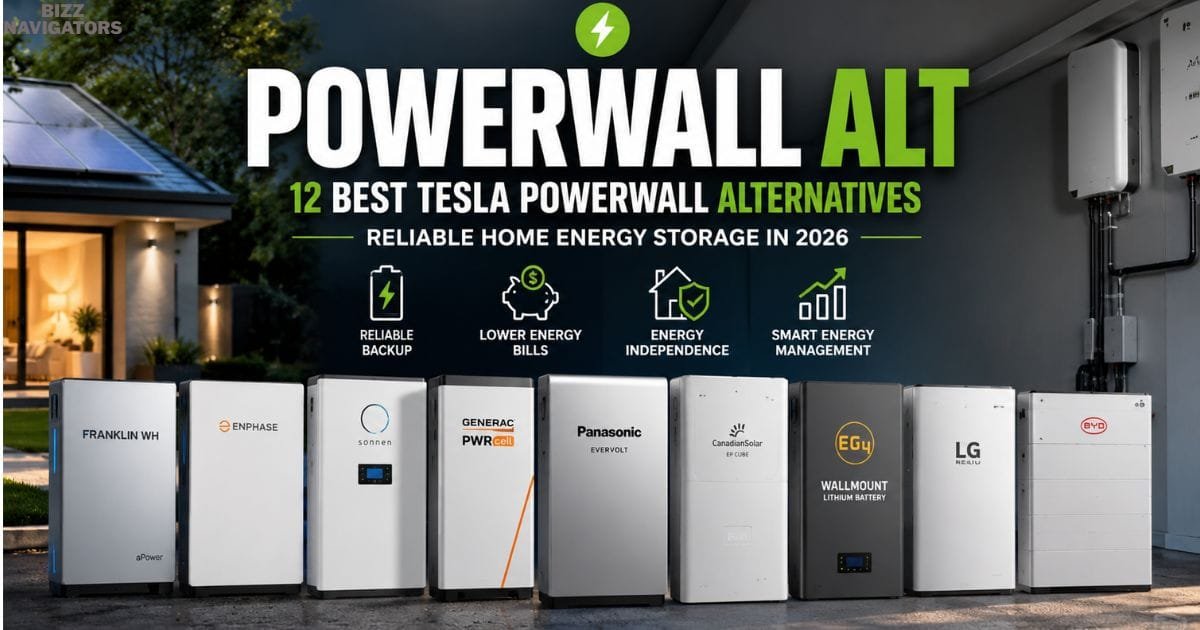
Why More Homeowners Are Looking for a Powerwall Alt
As electricity costs rise and power outages become more common, choosing the right home battery is more important than ever. If you’re searching for the best Powerwall alt, you’re likely looking for a solution that offers reliable backup power, lower energy bills, and better value than the Tesla Powerwall. Fortunately, today’s market includes several high-performance alternatives with flexible installation, smart energy management, and scalable storage.
This guide compares the best Tesla Powerwall alternatives for 2026, explains the key features to evaluate before buying, and helps you choose the ideal battery system based on your home’s energy needs, budget, and long-term goals.
Understanding What a Powerwall Alt Really Means
A Powerwall alt refers to any residential battery storage system that can perform the same core functions as the Tesla Powerwall. These batteries store excess electricity generated by solar panels or the electrical grid and supply power when demand is high or during outages.
Modern home batteries do much more than provide backup electricity. Many include intelligent energy management software, mobile monitoring apps, automatic outage detection, and expandable storage that grows with your household’s energy needs.
Unlike earlier battery systems, today’s alternatives are designed to integrate with a wide range of solar inverters, making them suitable for both new solar installations and existing systems.
Why homeowners compare alternatives
People consider alternatives for several practical reasons:
Lower installation costs
Greater battery capacity
Better compatibility with non-Tesla solar systems
Longer warranty options
Easier product availability
Flexible expansion for future energy needs
Choosing the best battery isn’t about selecting the most popular brand. Instead, it involves finding the solution that best matches your home’s energy requirements.
What to Evaluate Before Choosing a Home Battery
Every battery storage system offers different strengths. Comparing only the purchase price can lead to an expensive mistake, so it is important to understand the features that affect long-term value.
Battery Storage Capacity
Battery capacity, measured in kilowatt-hours (kWh), determines how much electricity the system can store.
Smaller homes often require moderate storage, while larger households with electric vehicles, heat pumps, or extensive solar installations generally benefit from higher-capacity batteries.
Continuous Power Output
Storage capacity is only part of the equation.
Continuous power output determines how many appliances can operate simultaneously during an outage. A battery with higher output can comfortably support refrigerators, lighting, internet equipment, HVAC systems, and other essential household devices.
Battery Chemistry
Most premium systems now use Lithium Iron Phosphate (LFP) batteries because they offer:
Longer lifespan
Improved thermal stability
Better safety
Lower maintenance requirements
Some older batteries still use Nickel Manganese Cobalt (NMC) chemistry, which provides excellent energy density but typically has different performance characteristics.
Round-Trip Efficiency
Efficiency measures how much stored electricity can be recovered after charging.
Higher efficiency means less energy is lost during charging and discharging, improving overall savings throughout the battery’s lifetime.
Expandability
Many homeowners install additional solar panels or purchase electric vehicles later.
Choosing a modular battery system allows you to increase storage capacity without replacing the original installation.
Backup Performance
Some batteries only power selected circuits during outages, while others can supply electricity to an entire home when properly configured.
Understanding your backup expectations helps narrow the available options.
Warranty and Product Support
Battery warranties generally range from 10 to 15 years.
Review not only the warranty duration but also the guaranteed capacity retention and local installer support before making a purchase.
Leading Powerwall Alt Options Worth Considering
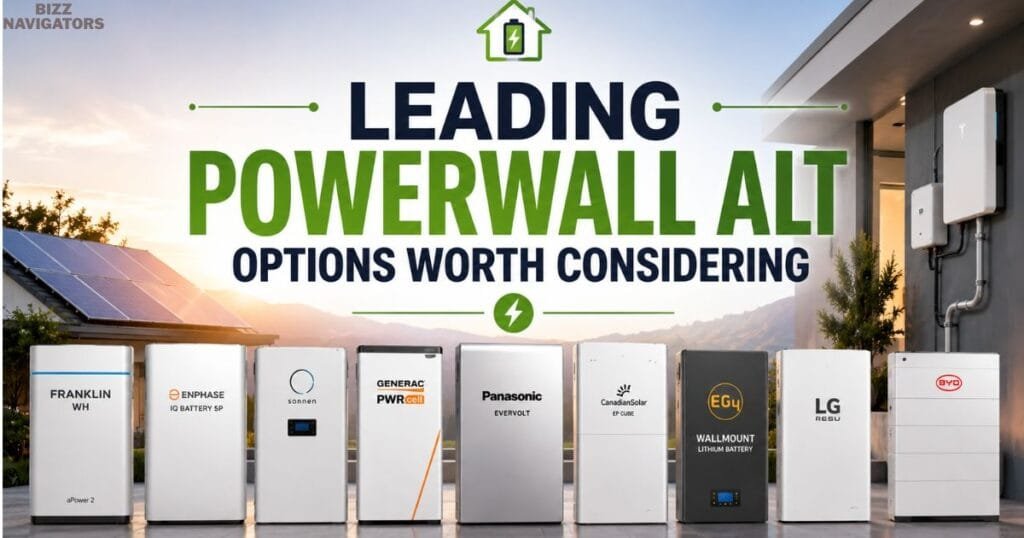
Several manufacturers now compete directly with Tesla by offering advanced battery storage systems with unique advantages. The following products consistently rank among the strongest alternatives available today.
FranklinWH aPower 2
FranklinWH has quickly become one of the most respected names in residential energy storage.
The aPower 2 is designed for whole-home backup, making it an excellent choice for homeowners who experience frequent power outages. Its intelligent energy management platform automatically prioritizes essential loads and works efficiently with many existing solar installations.
Best for:
Whole-home backup
Large families
Smart energy automation
Key advantages
High usable storage capacity
Excellent backup performance
Advanced energy management software
Flexible system expansion
Enphase IQ Battery 5P
The Enphase IQ Battery 5P is particularly attractive for homeowners already using Enphase microinverters.
Its modular design allows users to begin with a smaller battery and expand storage over time. The system also provides detailed energy monitoring through one of the industry’s most user-friendly mobile applications.
Best for:
Existing Enphase solar systems
Modular installations
Homeowners seeking detailed energy monitoring
Key strengths
Highly scalable
Fast installation
Reliable backup capability
Excellent software ecosystem
Sonnen Home Battery
Sonnen focuses heavily on intelligent energy optimization rather than simple energy storage.
Its software learns household energy usage patterns and automatically adjusts charging behavior to maximize efficiency and reduce electricity costs.
Many homeowners appreciate Sonnen’s emphasis on long-term sustainability and dependable performance.
Ideal for
Smart homes
Energy-conscious households
Long-term efficiency
Highlights
Intelligent energy management
Reliable battery lifespan
Quiet operation
Premium build quality
Generac PWRcell
Generac has decades of experience in residential backup power, and the PWRcell reflects that expertise.
Its modular architecture supports larger energy demands and integrates well with solar installations designed for maximum energy independence.
Homeowners needing substantial backup capacity often place the PWRcell near the top of their shortlist.
Best suited for
Larger properties
Homes with frequent outages
High daily electricity usage
Main benefits
Expandable battery capacity
Strong power output
Reliable outage protection
Trusted backup power reputation
Panasonic EVERVOLT
Panasonic combines battery storage with one of the company’s long-standing strengths: dependable solar technology.
EVERVOLT supports both AC-coupled and DC-coupled installations, providing installers with greater flexibility for new systems and retrofit projects.
Its balanced combination of performance, warranty coverage, and compatibility makes it one of the most versatile Powerwall alternatives currently available.
Recommended for
Existing solar systems
New residential installations
Homeowners seeking installation flexibility
Key advantages
Excellent compatibility
Reliable long-term performance
Flexible installation options
Strong manufacturer reputation
Canadian Solar EP Cube
The Canadian Solar EP Cube is built around a modular design that allows homeowners to increase storage capacity as their energy needs grow. It is compatible with many residential solar systems and offers an easy-to-use monitoring platform.
Best for:
Growing households
Future battery expansion
Flexible solar installations
Key advantages
Modular storage design
Reliable backup performance
User-friendly monitoring
Scalable capacity
EG4 WallMount Series
The EG4 WallMount Series has become popular among homeowners looking for dependable performance at a competitive price. It offers solid storage capacity, LFP battery chemistry, and compatibility with many inverter brands.
Best for:
Budget-conscious buyers
DIY-friendly installations (where permitted)
Off-grid and hybrid systems
Key advantages
Excellent value for money
Long battery lifespan
Safe LFP chemistry
Expandable design
LG Energy Solution RESU
The LG RESU series remains a trusted option for homeowners seeking a compact yet efficient battery. Although newer competitors have entered the market, LG continues to offer reliable performance backed by years of battery manufacturing experience.
Best for:
Homes with limited installation space
Daily energy savings
Reliable long-term operation
BYD Battery-Box
BYD is one of the world’s largest battery manufacturers and has earned a strong reputation in residential energy storage. The Battery-Box series is known for its flexibility, high efficiency, and compatibility with numerous inverter brands.
Best for:
International markets
Large residential systems
Modular battery expansion
PointGuard Home Battery
PointGuard focuses on safety, intelligent monitoring, and dependable backup performance. Its battery system is designed for homeowners who value advanced protection features alongside efficient energy storage.
Best for:
Safety-focused households
Smart home integration
Reliable backup power
SunPower Storage Solution
SunPower’s storage system is designed to work seamlessly with the company’s solar ecosystem. It offers efficient energy management and dependable backup for homeowners investing in a premium solar solution.
Best for:
Existing SunPower customers
Premium residential installations
Electriq PowerPod
The Electriq PowerPod provides expandable storage and intelligent energy management for homeowners planning to increase their energy independence over time.
Best for:
Expandable home energy systems
Long-term solar investments
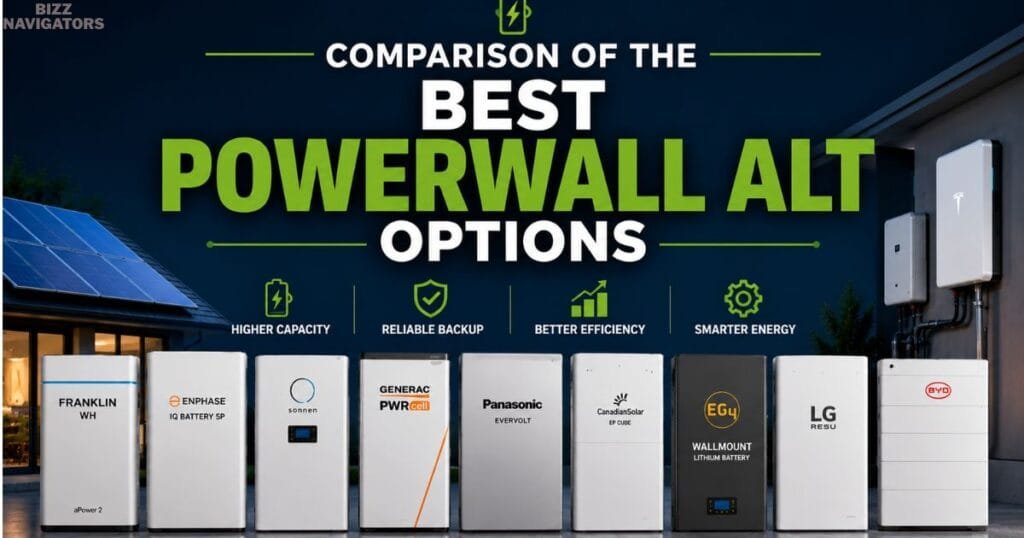
Comparison of the Best Powerwall Alt Options
| Battery System | Battery Chemistry | Expandable | Whole-Home Backup | Best For |
| FranklinWH aPower 2 | LFP | Yes | Yes | Large homes |
| Enphase IQ Battery 5P | LFP | Yes | Yes | Enphase users |
| Sonnen Battery | LFP | Yes | Yes | Smart energy management |
| Generac PWRcell | LFP | Yes | Yes | High energy demand |
| Panasonic EVERVOLT | LFP | Yes | Yes | Flexible installation |
| Canadian Solar EP Cube | LFP | Yes | Yes | Future expansion |
| EG4 WallMount | LFP | Yes | Yes | Budget buyers |
| LG RESU | NMC/LFP (model dependent) | Limited | Partial | Compact installations |
| BYD Battery-Box | LFP | Yes | Yes | International users |
| PointGuard | LFP | Yes | Yes | Safety-focused homes |
| SunPower Storage | LFP | Yes | Yes | Premium ecosystems |
| Electriq PowerPod | LFP | Yes | Yes | Expandable systems |
Tesla Powerwall vs. Other Home Batteries
Although the Tesla Powerwall remains a strong product, today’s alternatives often match or exceed its capabilities in specific areas.
Capacity and Performance
Several competitors now offer similar or greater usable storage capacity, making them suitable for households with higher electricity consumption.
Compatibility
Unlike Tesla, many alternative batteries work with a broader selection of inverters and solar equipment. This flexibility can reduce installation costs and simplify upgrades.
Smart Energy Management
Most premium batteries now include intelligent software that monitors energy production, predicts household usage, and automatically optimizes charging schedules.
Scalability
Many alternatives offer highly modular systems, allowing homeowners to increase storage capacity as their energy needs change.
How Much Does a Powerwall Alt Cost?
The total cost of a home battery depends on several factors, including storage capacity, installation complexity, and local labor rates.
Typical price ranges include:
Entry-level systems: $6,000–$8,000
Mid-range systems: $8,000–$12,000
Premium whole-home solutions: $12,000–$18,000+
Installation costs vary depending on electrical upgrades, inverter compatibility, permits, and battery configuration.
While lower-priced systems may seem attractive, evaluating lifetime value, warranty coverage, and expected performance often leads to better long-term savings.
Will These Batteries Work With Existing Solar Panels?
In many cases, yes.
Most modern battery systems are designed to integrate with existing residential solar installations. However, compatibility depends on factors such as:
Inverter Type
Some batteries require a compatible hybrid inverter, while others can connect through AC-coupled systems.
Existing Electrical Setup
Older solar installations may require additional equipment to support battery storage.
Backup Requirements
Whole-home backup usually requires additional electrical configuration compared to powering only essential circuits.
A qualified installer can assess compatibility before installation begins.
Advantages and Drawbacks of Choosing a Powerwall Alternative
Benefits
More competitive pricing
Greater product availability
Flexible installation options
Wider inverter compatibility
Modular expansion
Advanced energy management
Possible Limitations
Software quality varies between brands.
Local installer availability may differ.
Some systems require additional hardware for full-home backup.
Common Buying Mistakes
Avoid these mistakes before investing in a battery system:
Choosing the cheapest option without comparing features.
Ignoring inverter compatibility.
Buying insufficient storage capacity.
Overlooking warranty conditions.
Forgetting future expansion plans.
Hiring installers without battery experience.
Making an informed decision now can prevent expensive upgrades later.
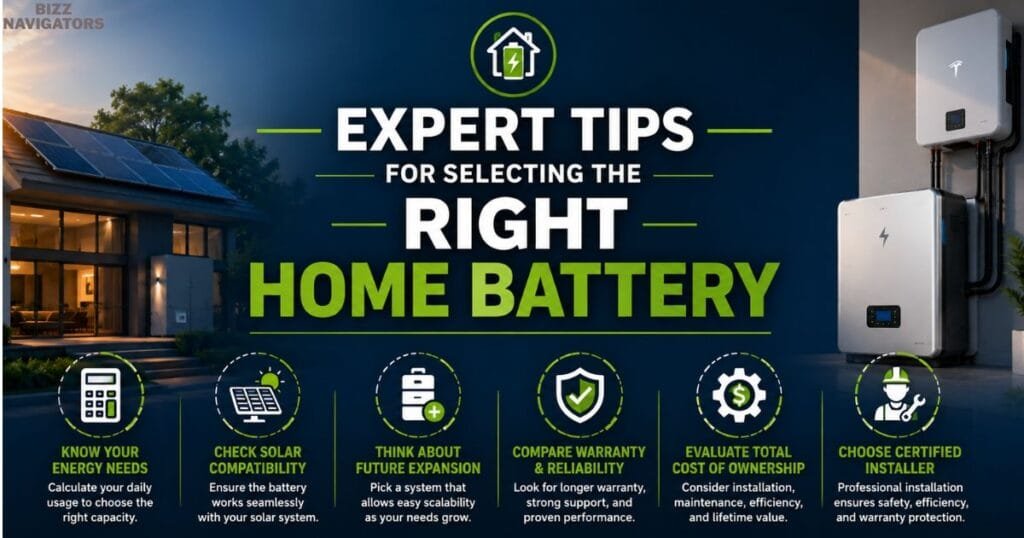
Expert Tips for Selecting the Right Home Battery
Start by calculating your household’s average daily electricity consumption.
Think about future needs, such as adding an electric vehicle, expanding your solar array, or increasing backup capacity.
Compare warranty terms alongside battery specifications rather than focusing only on purchase price.
Finally, choose an experienced installer who understands both solar and battery storage systems to ensure safe and efficient installation.
Final Thoughts
Choosing the best Powerwall alt isn’t just about picking the biggest brand; it’s about finding a battery that fits your home’s energy needs, budget, and solar setup. While the Tesla Powerwall remains a popular choice, alternatives like FranklinWH, Enphase, Panasonic, Generac, BYD, and Canadian Solar offer excellent performance, reliable backup, and flexible expansion.
Compare storage capacity, efficiency, warranty, and compatibility before making your decision. Investing in the right home battery today can lower electricity costs, increase energy independence, and provide dependable backup power for years to come.
Frequently Asked Questions
What is the best Powerwall alt in 2026?
FranklinWH aPower 2, Enphase IQ Battery 5P, Panasonic EVERVOLT, and Generac PWRcell are among the strongest alternatives, depending on your home’s energy requirements.
Is there a cheaper alternative to Tesla Powerwall?
Yes. Products such as the EG4 WallMount Series and Canadian Solar EP Cube often provide competitive performance at a lower overall cost.
Can I use a home battery without solar panels?
Yes. Many battery systems can charge directly from the electrical grid and provide backup power during outages.
Which battery chemistry is the safest?
Lithium Iron Phosphate (LFP) is generally considered one of the safest and longest-lasting battery chemistries for residential energy storage.
Can I expand my battery system later?
Many modern batteries feature modular designs, allowing homeowners to add storage capacity as energy demands increase.
How long do home batteries typically last?
Most premium residential batteries are designed to last between 10 and 15 years, depending on usage patterns and manufacturer specifications.

At BizzNavigators, we answer the questions you’re actually searching for, honestly and clearly. We check our facts before we publish anything, and if we’re not sure about something, we tell you instead of guessing. Whatever you’re looking for- a tech fix, a business tip, or a simple how-to- we want to give you an answer you can trust.