
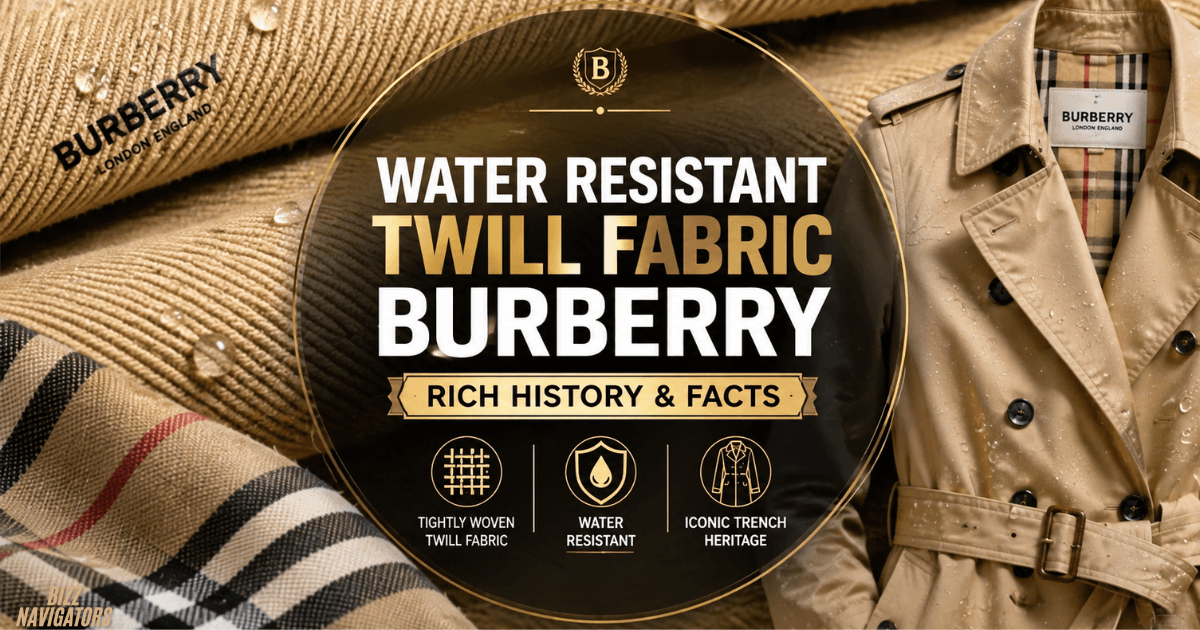
What Is Water Resistant Twill Fabric Burberry?
Water resistant twill fabric Burberry is best known as gabardine—the tightly woven fabric behind Burberry’s iconic trench coats. Developed by Thomas Burberry in 1879 and patented in 1888, gabardine offered a lighter, more breathable alternative to traditional waterproof clothing while still resisting light rain.
The key difference is simple: twill describes the weave, while gabardine describes the fabric. Its dense diagonal construction gives it the durability, structure, and weather resistance that made it ideal for classic outerwear.
Burberry still uses gabardine today, including structured and water-resistant versions of its signature trench fabric. That long history makes water resistant twill fabric Burberry more than a fashion term—it represents one of the most recognizable fabric innovations in modern outerwear.
Why Burberry Gabardine Became So Important
Before gabardine, rainwear often relied on waxed, oiled, or rubberised fabrics. These materials could provide strong protection from rain but were often heavy, stiff, and uncomfortable.
Thomas Burberry approached the problem differently. His tightly woven gabardine was designed to provide weather resistance without sacrificing as much flexibility and breathability. Burberry says the fabric transformed rainwear because it was lighter, more flexible, and durable.
That combination eventually became closely connected with the Burberry trench coat.
Is Burberry Fabric the Same as Gabardine?
Not exactly. Burberry is a brand, while gabardine is a fabric type.
Gabardine can be produced by different mills and brands, and it can contain different fibres depending on its intended use. Burberry’s historical importance comes from its development and use of gabardine, particularly in rainwear.
This distinction matters when shopping for fabric. A seller describing material as “Burberry fabric” does not automatically mean it is an authentic Burberry-made textile. The phrase can simply describe a fabric style associated with the brand’s famous trench coats.
For a genuine Burberry garment, the safest reference is the product’s official material description rather than the generic name used by a fabric seller.
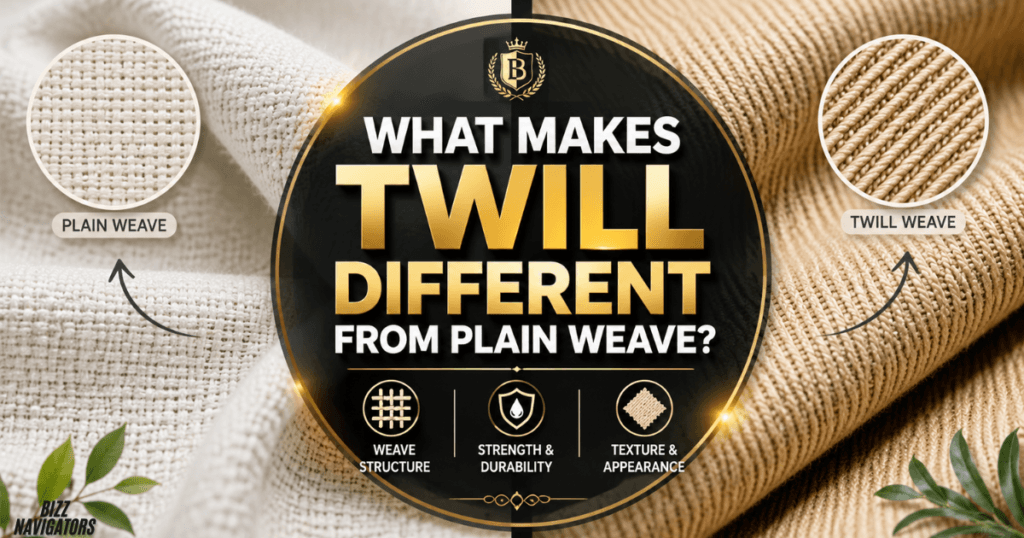
What Makes Twill Different From Plain Weave?
Twill is identified by its diagonal weave pattern. Instead of crossing threads in the simple over-under arrangement associated with plain weave, twill creates a stepped diagonal structure.
This construction can produce fabrics that are strong, relatively durable, and capable of having a smooth or subtly textured surface.
Gabardine typically uses a steep twill structure and a dense weave. That construction is one reason it became useful for coats and other garments that need durability and protection from weather.
However, twill itself does not automatically mean water resistant. A cotton twill shirt, for example, may absorb water readily. Water resistance depends on the fibre, density, finishing treatment, construction, and intended use.
How Does Water Resistant Twill Fabric Repel Rain?
Water resistance in a tightly woven fabric comes partly from its construction. A dense weave leaves less open space for water to pass through, while the surface and any additional treatment can improve resistance further.
Burberry describes its gabardine as a fabric that repels the elements while allowing the body to breathe. Its current product descriptions also identify some trench coats as being made from water-resistant gabardine.
That does not mean every gabardine fabric is waterproof.
There is an important difference between water resistant and waterproof. Water-resistant fabric can handle rain or showers to a certain degree, but prolonged or heavy exposure can eventually allow moisture through.
This distinction is particularly important when comparing a traditional trench fabric with technical waterproof materials designed specifically for severe weather.
Does Burberry Still Use Gabardine?
Yes. Burberry continues to use gabardine in its trench coats and other outerwear.
The company currently describes its Heritage Trench Coats as gabardine garments and says its Burberry Mill in Keighley, Yorkshire, produces a newer “structured gabardine” with a textured twill.
Burberry also currently sells trench coats described as being made from water-resistant gabardine. One example is the Fitzrovia trench, which the brand says is made in Yorkshire from water-resistant gabardine treated for a soft finish.
So, although Burberry has introduced different materials and interpretations over the years, gabardine remains an important part of its outerwear identity.
What Fabric Does Burberry Use?
Burberry uses several fabrics across its collections, but gabardine remains its signature fabric for trench coats.
The exact composition can vary between garments. Traditional gabardine has been made from fibres such as wool or cotton, while modern versions can use different fibre combinations depending on the design and performance requirements.
For example, Burberry’s current product range includes cotton gabardine garments, while its heritage material story continues to focus on the tightly woven gabardine developed by Thomas Burberry.
Therefore, it is better to check the fibre composition of an individual garment instead of assuming every Burberry gabardine item has exactly the same material content.
What Is Twilled Fabric Called?
A fabric made using a twill construction is generally called twill fabric. More specific names can describe particular types of twill, depending on the fibre, weight, weave structure, and finishing.
Gabardine is one well-known type of twill fabric.
Other familiar twill fabrics include denim, chino fabric, drill, and some suiting materials. They can look different and perform very differently despite sharing the basic twill principle.
This is why calling something simply “twill” does not tell you enough about its water resistance, softness, weight, or durability.
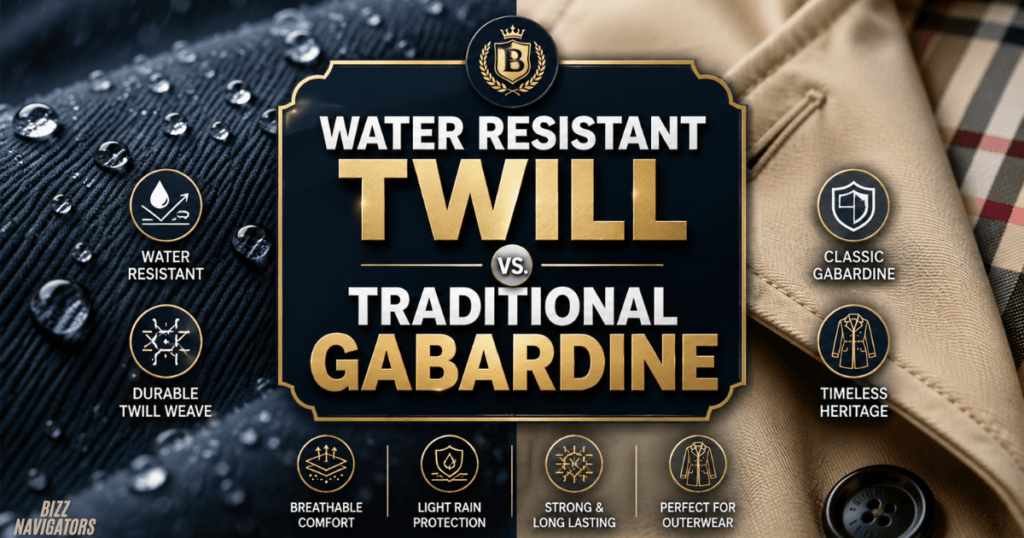
Water Resistant Twill vs. Traditional Gabardine
| Feature | Water-Resistant Twill | Burberry-Style Gabardine |
| Basic construction | Twill weave | Dense twill weave |
| Water resistance | Depends on construction and finish | Designed for weather-resistant outerwear |
| Appearance | Varies widely | Characteristic diagonal texture |
| Breathability | Depends on fibre and density | Traditionally valued for balancing protection and comfort |
| Typical uses | Jackets, trousers, uniforms, coats | Trench coats and outerwear |
| Waterproof? | Not necessarily | Not necessarily |
The key point is that water resistance is a performance characteristic, not simply the name of a weave.
A tightly woven gabardine may perform better against light rain than a loosely constructed twill, but actual performance depends on the specific fabric.
What Are the Advantages of Burberry-Style Gabardine?
The appeal of gabardine comes from the balance it can provide.
Durability: Its dense construction makes it suitable for garments that need to withstand regular wear.
Weather resistance: Tightly woven gabardine can help shed light rain and protect the wearer from changeable weather.
Structure: The fabric can hold the shape of a coat effectively without necessarily becoming extremely stiff.
Appearance: Its diagonal texture gives garments a distinctive finish associated with classic tailoring and outerwear.
Versatility: Depending on its fibre and weight, gabardine can work in coats, trousers, uniforms, and other structured garments.
These characteristics explain why the material became particularly successful for trench coats.
What Are the Disadvantages of Twill Fabric?
Twill fabric is not perfect for every situation.
One disadvantage is that water resistance is not guaranteed. A regular cotton twill may absorb moisture despite having the same basic weave family as a weather-resistant fabric.
Twill can also be heavier than lightweight plain-weave fabrics, particularly when manufacturers use thick yarns or a dense construction. That can make some versions less suitable for hot weather.
Another consideration is maintenance. Some tightly woven or specially finished fabrics require careful cleaning to preserve their appearance and performance.
Finally, the diagonal structure can make the fabric behave differently from plain weave in terms of drape, surface texture, and how it responds to wear. The best choice therefore depends on the garment rather than the word “twill” alone.
Is Burberry Gabardine Waterproof or Water Resistant?
Burberry gabardine should generally be described as water resistant or shower resistant rather than automatically waterproof.
Burberry itself describes its trench fabric as gabardine that repels the elements and identifies current garments made from “water-resistant gabardine.”
That wording matters.
A water-resistant trench can protect against ordinary rain, but it should not be treated as equivalent to a fully waterproof technical shell. Heavy rainfall, prolonged exposure, damaged fabric, or worn finishes can reduce protection.
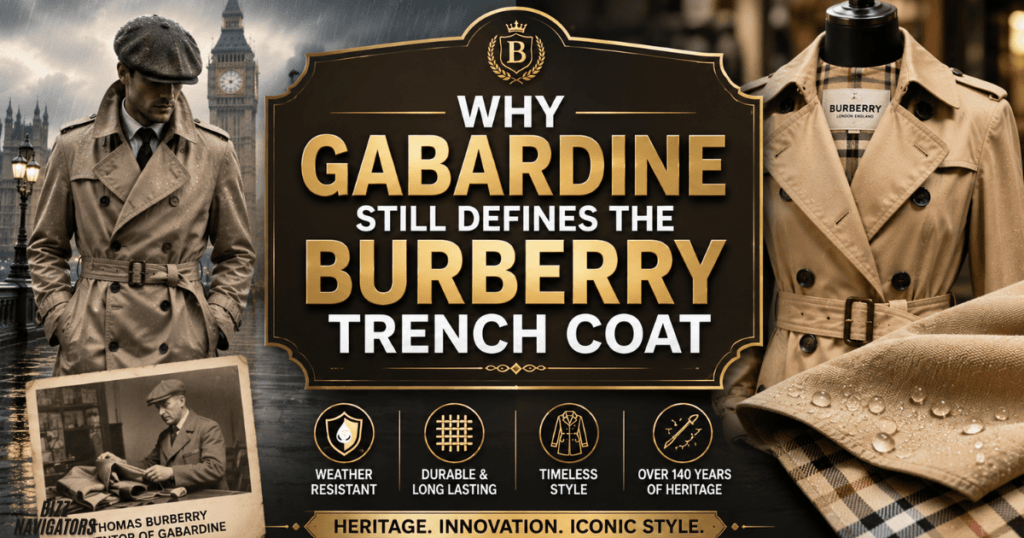
Why Gabardine Still Defines the Burberry Trench Coat
The relationship between Burberry and gabardine is more than a marketing association. The fabric was developed specifically to address the limitations of traditional rainwear, and Burberry has continued to build its trench-coat heritage around it.
The company says gabardine was invented by Thomas Burberry in 1879 and patented in 1888. More than a century later, the brand continues to develop the material, including structured versions with textured twill constructions. (Burberry)
That evolution is important. Burberry is not simply preserving an old fabric unchanged; it continues to reinterpret gabardine for contemporary outerwear.
Frequently Asked Questions
What fabric does Burberry use?
Burberry uses many materials, but gabardine remains its signature fabric for trench coats. Current Burberry products include water-resistant gabardine and cotton gabardine, with exact compositions varying by garment. (Burberry)
What is twilled fabric called?
It is generally called twill fabric. Gabardine is a specific type of tightly woven twill, while denim, drill, and chino fabrics are other examples of twill-based textiles.
Does Burberry still use gabardine?
Yes. Burberry continues to use gabardine for trench coats and describes newer versions, including structured gabardine, as part of its ongoing trench development. (Burberry)
What are the disadvantages of twill fabric?
Twill is not automatically water resistant, and some versions can feel heavier than plain-weave fabrics. Its performance depends on fibre, density, weight, and finishing.
Is water-resistant twill the same as waterproof fabric?
No. Water-resistant twill can repel or resist moisture for a limited period, while waterproof fabrics are engineered to provide a much higher level of protection against water penetration.
Final Takeaway
Water resistant twill fabric Burberry is most closely associated with gabardine, the dense twill fabric that transformed the brand’s approach to rainwear. Its strength comes from the combination of weave, fabric construction, and finishing rather than from the word “twill” alone.
Burberry still uses gabardine today, including water-resistant and structured versions for contemporary trench coats.
For anyone researching Burberry fabric, the most important distinction is simple: twill describes the weave, gabardine identifies a specific fabric construction, and water resistance describes performance. Understanding those three terms makes it much easier to identify what a fabric can actually do. We can say with confidence that you have received the information you needed and will continue to receive it in the future. Thanks for visiting our site, Bizz Navigators.

At BizzNavigators, we answer the questions you’re actually searching for, honestly and clearly. We check our facts before we publish anything, and if we’re not sure about something, we tell you instead of guessing. Whatever you’re looking for- a tech fix, a business tip, or a simple how-to- we want to give you an answer you can trust.