
What Is the Langtang Valley Trek?
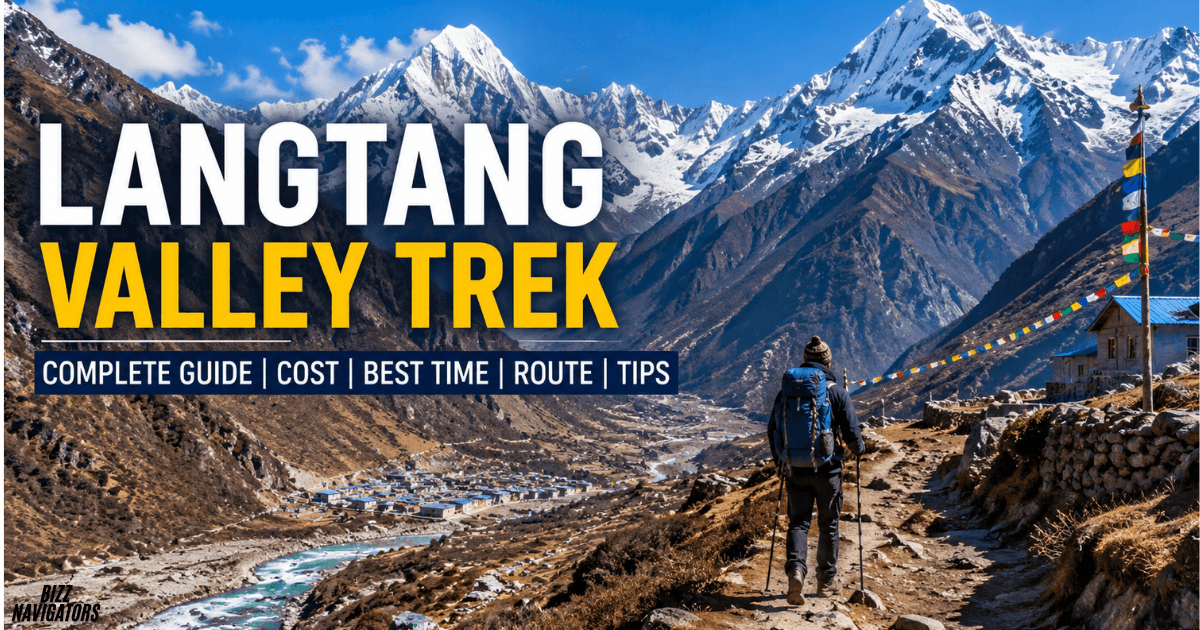
The Langtang Valley Trek is a moderate Himalayan trek in Nepal that combines mountain views, Tamang culture, forests, glaciers, and high-altitude landscapes. It is a strong choice for trekkers who want a real Himalayan experience without the longer commitment of Everest Base Camp or other extended routes.
The trek takes you into Langtang National Park, north of Kathmandu and close to the border with Tibet. Langtang Lirung dominates the region, while the route also passes through traditional Tamang settlements and alpine landscapes.
Quick answer: Langtang is best for trekkers who want a scenic, culturally rich and moderately challenging Himalayan trek within a relatively short itinerary.
Is Langtang Valley Trek Difficult?
The Langtang Valley Trek is moderately difficult, not technically difficult. You do not need mountaineering skills for the standard route, but you need enough fitness to walk uphill for several hours on multiple days.
The biggest challenge is altitude rather than technical terrain. The higher you go, the more important your pace, hydration, and acclimatization become.
Difficulty: Moderate
Technical climbing: No for the standard route
Fitness level: Moderate
Main challenge: Altitude and long uphill sections
For a fit beginner, Langtang is achievable with proper preparation.
Is Langtang Trek Easy for Beginners?
Yes, but it is not an easy walk.
Beginners can complete the trek if they regularly exercise and prepare for several consecutive days of uphill walking. You should not choose the shortest itinerary simply to save a day or two.
A slower itinerary gives your body more time to adjust to altitude and makes the experience more comfortable.
How Long Does the Langtang Trek Take?
A typical Langtang Valley Trek takes around 7–10 trekking days, although the exact duration depends on the itinerary, transport, rest days and optional hikes.
A simple trip usually follows this pattern:
| Part of Trek | What to Expect |
| Kathmandu → Trailhead | Road journey |
| Lower Langtang | Forests and villages |
| Langtang Valley | Mountain scenery and settlements |
| Kyanjin | Main high-altitude base |
| Upper valley | Optional viewpoints and hikes |
| Return | Walk back toward the road |
| Kathmandu | Road journey |
You can shorten the trip, but rushing a high-altitude trek is usually a poor trade-off.
Which Month Is Best for Langtang Trek?
The best months are March to May and October to November. Nepal Tourism Board lists these as the main favorable seasons for the Langtang region.
October and November are especially attractive if clear mountain views are your priority.
March to May is a good choice for spring scenery and rhododendron blooms.
June to September brings monsoon conditions, which can mean rain, clouds, and slippery trails.
December to February can bring snow and very cold conditions at higher elevations.
Best Month for Clear Mountain Views
October and November are usually the safest picks if your main goal is clear Himalayan scenery.
Best Month for Spring Scenery
April and May are excellent choices if you want greener trails and spring flowers while still enjoying mountain views.
How High Is the Langtang Valley Trek?
The main trek reaches Kyanjin, at roughly 3,870 metres above sea level. Optional hikes can take you higher.
This altitude is high enough that altitude sickness becomes a genuine concern. Your body needs time to adjust, so a sensible itinerary is more important than simply reaching the destination quickly.
The trek’s altitude is one reason Langtang should be treated as a Himalayan trek rather than an ordinary hiking holiday.
Can You Do Langtang Valley Trek Alone?
You should check and follow Nepal’s current trekking regulations before planning to trek alone.
Nepal Tourism Board currently lists Langtang Trek among the routes where trekkers must be accompanied by a licensed trekking guide and carry an agency-issued TIMS Card. The current TIMS guidance says these arrangements should be made through a government-registered trekking agency.
Older travel guides may say that independent trekking is possible in Langtang, but regulations can change. For a current trip, follow the latest Nepal Tourism Board requirements rather than relying on an old blog post.
How Much Does Langtang Valley Trek Cost?
There is no single fixed price for the Langtang Valley Trek. Your total cost depends on the trekking company, number of days, guide, transport, accommodation, food and equipment.
Your budget normally includes:
- Guide and trekking services
- TIMS Card
- Langtang National Park entry fee
- Transport from Kathmandu
- Teahouse accommodation
- Food and drinks
- Travel insurance
- Trekking equipment
- Personal expenses
For foreigners, Nepal Tourism Board currently lists the Langtang National Park entry fee at NPR 3,000. The fee for SAARC nationals is currently NPR 1,500. (Nepal Tourism Board)
The current TIMS guidance lists a fee of NPR 2,000 for non-SAARC trekkers and NPR 1,000 for SAARC trekkers.
Because trekking packages vary widely, compare what each package actually includes instead of choosing the cheapest headline price.
What Is the Langtang Valley Trek Route Like?
The route moves from lower forested areas into the higher Langtang Valley before reaching Kyanjin.
You start with greener landscapes and villages. As the altitude increases, the scenery becomes more alpine, with larger mountain views and a colder environment.
The route’s biggest advantage is variety. You get forests, villages, rivers, mountain landscapes, and high-altitude terrain within one relatively compact trek.
Why Is Langtang Valley Trek So Popular?
Langtang offers mountains and culture without requiring an extremely long Himalayan journey.
The region lies about 130 km north of Kathmandu and is known for Langtang Lirung, glaciers, high-altitude lakes, and Tamang culture. Nepal Tourism Board also highlights the area’s wildlife and diverse vegetation.
The cultural side is equally important. Traditional Tamang villages make the trek different from a trip focused only on mountain viewpoints.
That combination is what gives Langtang its identity.
Is Langtang Valley Trek Safe?
It can be safe for properly prepared trekkers, but high-altitude trekking always carries risk.
The main concerns are altitude sickness, sudden weather changes, slippery or difficult trails, and limited access to emergency services in remote areas.
The best safety practices are simple:
- Do not rush the itinerary.
- Allow time for acclimatization.
- Monitor altitude symptoms.
- Carry suitable clothing and basic medical supplies.
- Have travel insurance that covers trekking.
- Follow local weather and trail advice.
- Use a licensed guide where required.
Safety is less about eliminating every risk and more about managing predictable risks properly.
What Should You Pack for Langtang Valley Trek?
Pack for cold, rain, and changing temperatures.
Essential items include:
- Waterproof trekking jacket
- Warm layers
- Trekking boots
- Gloves and warm hat
- Sunglasses
- Sunscreen
- Water bottles
- Personal medicines
- First-aid kit
- Headlamp
- Power bank
- Trekking poles
- Suitable sleeping bag
Avoid overpacking. A heavy backpack becomes a much bigger problem when you are walking uphill at altitude.
Langtang vs Everest Base Camp: Which Is Better?
Neither trek is automatically better. They suit different travelers.
| Factor | Langtang Valley | Everest Base Camp |
| Overall challenge | Moderate | More demanding |
| Trek length | Shorter | Longer |
| Mountain experience | Excellent | Iconic |
| Culture | Strong Tamang influence | Sherpa culture |
| Main attraction | Langtang Valley and peaks | Everest Base Camp |
| Best for | Shorter Himalayan adventure | Classic Everest experience |
Choose Langtang if you want a shorter and less demanding Himalayan experience.
Choose Everest Base Camp if reaching the world’s most famous mountain base camp is your main goal.
Is Langtang the Most Beautiful Trek in Nepal?
There is no objective answer because beauty depends on what you want from a trek.
Langtang is one of Nepal’s strongest options for a balance of mountain scenery, culture, forests and accessibility. Nepal Tourism Board lists Langtang among Nepal’s major traditional trekking regions alongside Everest and Annapurna.
If you want Everest views, choose Everest Base Camp.
If you want varied landscapes over a longer route, Annapurna may suit you better.
If you want a compact Himalayan adventure with strong cultural and natural variety, Langtang is difficult to overlook.
What Is the Easiest Trek for Beginners in Nepal?
The easiest trek depends on your fitness, altitude tolerance, and available time.
For a first Himalayan trip, a shorter and lower-altitude trek is generally easier than Langtang. Poon Hill, for example, is often a better fit for someone who wants a shorter introduction to Nepal’s mountains.
Langtang is better for beginners who are ready for a more serious multi-day mountain trek.
What Is the Hardest Trek in Nepal?
There is no single officially recognized hardest trek in Nepal.
High-altitude routes with difficult passes, remote terrain, extreme weather, and long walking days can be much harder than the standard Langtang Valley Trek.
So if your goal is maximum difficulty, Langtang is not Nepal’s toughest trekking option.
What Is the Most Challenging Trek in Pakistan?
Pakistan has several extremely demanding trekking and mountaineering routes in the Karakoram and Himalayas.
The answer depends on whether you mean a non-technical trek, a high-pass route or a technical climbing expedition. Routes involving extreme altitude, glaciers and technical climbing can be far more demanding than standard trekking routes.
Therefore, there is no useful single answer without defining what “challenging” means.
Key Takeaways
- Langtang Valley Trek difficulty: Moderate.
- Typical duration: Around 7–10 trekking days.
- Best season: March–May and October–November.
- Best for beginners: Yes, if properly prepared.
- Technical climbing: Not required on the standard route.
- Main challenge: Altitude and sustained walking.
- Main attraction: Mountains, Tamang culture and varied landscapes.
- Current guide requirement: Langtang Trek is currently listed under Nepal’s mandatory licensed-guide and TIMS rules.
- National Park fee: NPR 3,000 for foreigners and NPR 1,500 for SAARC nationals, according to the current Nepal Tourism Board listing.
Final Answer: Is Langtang Valley Trek Worth It?
Yes. Langtang Valley Trek is worth choosing if you want a moderately challenging Himalayan adventure that combines impressive mountain scenery, Tamang culture and a manageable trekking timeframe.
It is not the easiest trek in Nepal, and it is not the hardest. That middle ground is actually its biggest advantage.
For a fit beginner or experienced hiker who wants a genuine Himalayan experience without committing to a very long expedition, Langtang is one of Nepal’s most balanced trekking choices.

At BizzNavigators, we answer the questions you’re actually searching for, honestly and clearly. We check our facts before we publish anything, and if we’re not sure about something, we tell you instead of guessing. Whatever you’re looking for- a tech fix, a business tip, or a simple how-to- we want to give you an answer you can trust.