
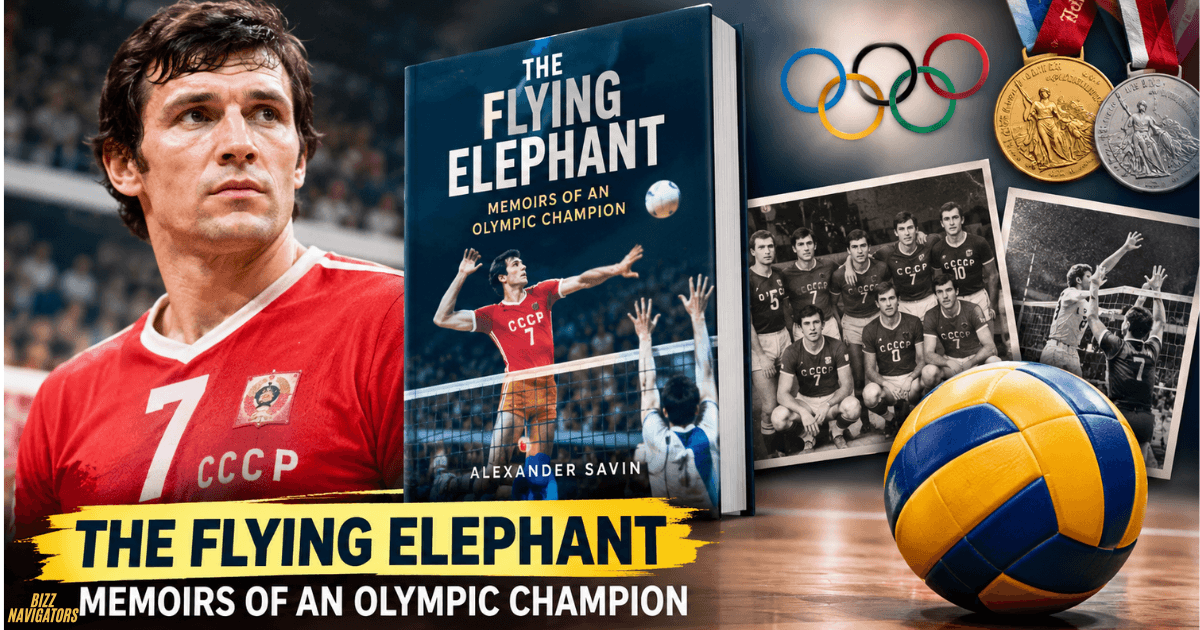
What Is The Flying Elephant Memoirs of an Olympic Champion?
The Flying Elephant: Memoirs of an Olympic Champion is a sports memoir by Alexander Savin, a Soviet volleyball player and 1980 Olympic champion. The book covers his career, Olympic experiences, teammates, Soviet volleyball, and the people he met during his years in elite sport. Current listings describe the English edition as a 514-page Kindle book with more than 240 photographs.
Savin’s story is especially notable because he experienced two different Olympic results.
He won silver at the 1976 Montreal Olympics and gold at the 1980 Moscow Olympics.
That makes the memoir useful for readers who want more than a simple record of his medals.
The Book at a Glance
| Detail | Information |
| Title | The Flying Elephant: Memoirs of an Olympic Champion |
| Author | Alexander Savin |
| Sport | Volleyball |
| Author’s nationality/sporting background | Soviet volleyball |
| Olympic silver | 1976 Montreal |
| Olympic gold | 1980 Moscow |
| Format reported | Kindle edition |
| Reported length | 514 pages |
| Photographs | 240+ |
Availability and edition details can vary by Amazon marketplace, so readers should check the current listing before buying.
Who Is Alexander Savin?
Alexander Savin was a prominent Soviet volleyball player who competed for the USSR at the highest international level.
His Olympic career included two Games.
At Montreal in 1976, the Soviet Union won silver. Four years later, the USSR won gold at the Moscow Olympics.
Savin was also associated with CSKA Moscow and the Soviet national team. His career places him inside one of the most important periods of Soviet volleyball.
Savin is therefore not simply the author of an Olympic book.
He is writing about a sporting career he experienced himself.
What Is The Book About?
The book is mainly about Savin’s life and career in volleyball.
It covers the people, teams, competitions, training, and experiences that shaped him as an elite player.
The memoir also looks at his time with CSKA Moscow and the USSR national team. Current descriptions highlight stories involving teammates, coaches, international competition, and the Soviet volleyball environment.
The main subjects include:
- Olympic volleyball
- Soviet national-team life
- CSKA Moscow
- Teammates and coaches
- Training and competition
- International tournaments
- Savin’s personal memories
- Lessons from an elite playing career
- The history of Soviet volleyball
This makes the book relevant to both volleyball fans and readers interested in Olympic history.
What Olympic Medals Did Alexander Savin Win?
Alexander Savin won two Olympic volleyball medals.
He won silver at the 1976 Montreal Olympics and gold at the 1980 Moscow Olympics.
The difference between those two Games is an important part of his sporting story.
Montreal ended with silver.
Moscow ended with Olympic gold.
The 1980 victory also came on home soil for the Soviet team, giving that achievement additional historical context.
Savin’s Olympic record is one of the clearest reasons the memoir attracts readers searching for his career and achievements.
What Happened to the Soviet Team at the 1980 Olympics?
The Soviet Union won the men’s volleyball gold medal at the 1980 Moscow Olympics.
The USSR defeated Bulgaria 3–1 in the final.
Savin was part of the Soviet team that won the championship.
The victory came four years after the Soviet team had taken silver in Montreal.
For readers, this provides a simple way to understand Savin’s Olympic journey:
1976 — Silver
1980 — Gold
That progression gives his memoir a clear competitive storyline.
What Does The Book Say About Soviet Volleyball?
The memoir provides a personal view of Soviet volleyball rather than simply presenting historical results.
Savin was part of the system as a player.
That means the book can show how elite volleyball looked from the athlete’s side, including relationships with teammates, coaches, competition, and national-team life.
This is one of the book’s strongest points for readers interested in sports history.
Instead of only asking who won a tournament, the memoir focuses on the people who were there.
Does The Flying Elephant Include Photographs?
Yes.
Current descriptions of the English edition report more than 240 photographs from private and public archival material.
The photographs are an important part of the book because the memoir deals with an earlier period of international volleyball.
They help document:
- Players
- Teams
- Competitions
- Training
- Olympic moments
- Coaches
- Personal memories
This gives the book a visual-history element in addition to its memoir format.
Is The Book Available in English?
Yes.
Current online sources describe an English Kindle edition of The Flying Elephant: Memoirs of an Olympic Champion. The English version was developed as a family translation project involving Savin’s relatives and translators.
The Kindle format makes the memoir available to readers who do not read Russian.
Availability can vary by Amazon country or region, so the current Amazon listing is the best place to confirm access.
How Long Is The Flying Elephant?
Current listings report the Kindle edition at 514 pages.
That makes it a detailed memoir rather than a short athlete profile.
The reported length also includes the book’s large collection of photographs.
Because digital editions can change, the page count should be treated as the current listed figure rather than a permanent specification.
What Makes This Memoir Useful for Volleyball Fans?
The biggest value is the first-person perspective.
Savin was not writing about an era he studied later.
He was part of it.
He played for the Soviet Union and competed at the Olympics. He also spent part of his career with CSKA Moscow.
That gives readers access to a personal account of a volleyball generation that is now part of sports history.
The photographs add another layer by preserving people and moments from that period.
What Can Readers Expect From The Book?
Readers can expect a combination of personal memories and volleyball history.
The book is particularly suited to people who want to understand:
- What elite Soviet volleyball looked like
- How Savin experienced international competition
- Who surrounded him during his career
- What his Olympic journey looked like
- How teammates and coaches influenced his career
- Why that generation remains important to volleyball history
It is less useful if someone only wants a short list of Savin’s statistics.
The memoir’s main value is the story behind those statistics.
Who Should Read The Flying Elephant?
The book is a good fit for:
Volleyball fans: It provides a first-person connection to an important period in the sport.
Olympic-history readers: Savin’s 1976 and 1980 Olympic experiences provide a clear historical angle.
Sports memoir readers: The book focuses on an athlete’s own career rather than an outside biography.
Coaches and athletes: Savin’s experiences can provide useful insight into elite competition, teamwork, and long-term development.
Readers interested in Soviet sports: The memoir offers a personal perspective on Soviet-era volleyball.
Is The Flying Elephant Worth Reading?
Yes, especially if you are interested in volleyball, Olympic history, or Soviet-era sport.
The strongest reasons to read it are simple:
- It is written by an Olympic volleyball champion.
- Savin experienced both Olympic defeat and victory.
- It covers his career and team life.
- It includes stories connected with Soviet volleyball.
- The reported edition contains more than 240 photographs.
- The English Kindle edition makes the memoir accessible to English-speaking readers.
If you only want a short biography, the book may be more detailed than necessary.
If you want Savin’s story and the volleyball history around it, it is a much better fit.
Final Answer
The Flying Elephant: Memoirs of an Olympic Champion is Alexander Savin’s memoir about his life in elite Soviet volleyball. It covers his career, Olympic experiences, teammates, coaches, and the volleyball environment of his era.
Savin won Olympic silver in 1976 and gold in 1980. The English Kindle edition is currently described as a 514-page book with more than 240 photographs.
For anyone searching for The Flying Elephant memoirs of an Olympic Champion, the key point is simple: it is a firsthand sports memoir that connects Alexander Savin’s Olympic career with the people and history of Soviet volleyball.
Frequently Asked Questions
Who wrote The Flying Elephant: Memoirs of an Olympic Champion?
Alexander Savin wrote the memoir. He was a Soviet volleyball player who won Olympic silver in 1976 and gold in 1980.
What sport is The Flying Elephant about?
It is about volleyball, particularly Savin’s career in Soviet and international volleyball.
What Olympic medal did Alexander Savin win in 1980?
Savin won the gold medal with the Soviet men’s volleyball team at the 1980 Moscow Olympics.
Did Alexander Savin win an Olympic medal before 1980?
Yes. He won silver at the 1976 Montreal Olympics.
How many photographs are in the book?
Current descriptions report more than 240 photographs from private and public archival sources.
Is The Flying Elephant available on Kindle?
Yes. Current sources describe an English Kindle edition. Regional availability should be confirmed through the current Amazon listing.

At BizzNavigators, we answer the questions you’re actually searching for, honestly and clearly. We check our facts before we publish anything, and if we’re not sure about something, we tell you instead of guessing. Whatever you’re looking for- a tech fix, a business tip, or a simple how-to- we want to give you an answer you can trust.
1 thought on “The Flying Elephant Memoirs of an Olympic Champion”