
Why RWD Tire Rotation Matters More Than Many Drivers Realize
RWD tire rotation is one of the simplest yet most effective maintenance procedures for preserving tire performance, extending tread life, and maintaining safe vehicle handling. In a rear-wheel-drive vehicle, the rear tires are responsible for transferring engine power to the road. Because of this added workload, they often wear differently on the front tires.
Without a proper rotation schedule, uneven tread wear can develop quickly. This can reduce traction, affect braking performance, and force you to replace tires sooner than necessary. Understanding how rear-wheel-drive RWD tire rotation works helps drivers protect their investment while ensuring a smoother and safer driving experience.
How Tire Wear Differs on Rear-Wheel-Drive Vehicles
The rear tires on an RWD vehicle handle acceleration forces, while the front tires primarily manage steering and a large portion of braking forces. These different responsibilities create unique wear patterns.
Factors that influence tire wear include:
Driving style
Road conditions
Vehicle weight distribution
Suspension condition
Tire pressure maintenance
Regular RWD tire rotation helps distribute wear evenly across all four tires.
Understanding the Correct Rotation Method for RWD Vehicles
Using the proper RWD tire rotation pattern is critical. Applying the wrong pattern can reduce the benefits of rotation and may even accelerate uneven wear.
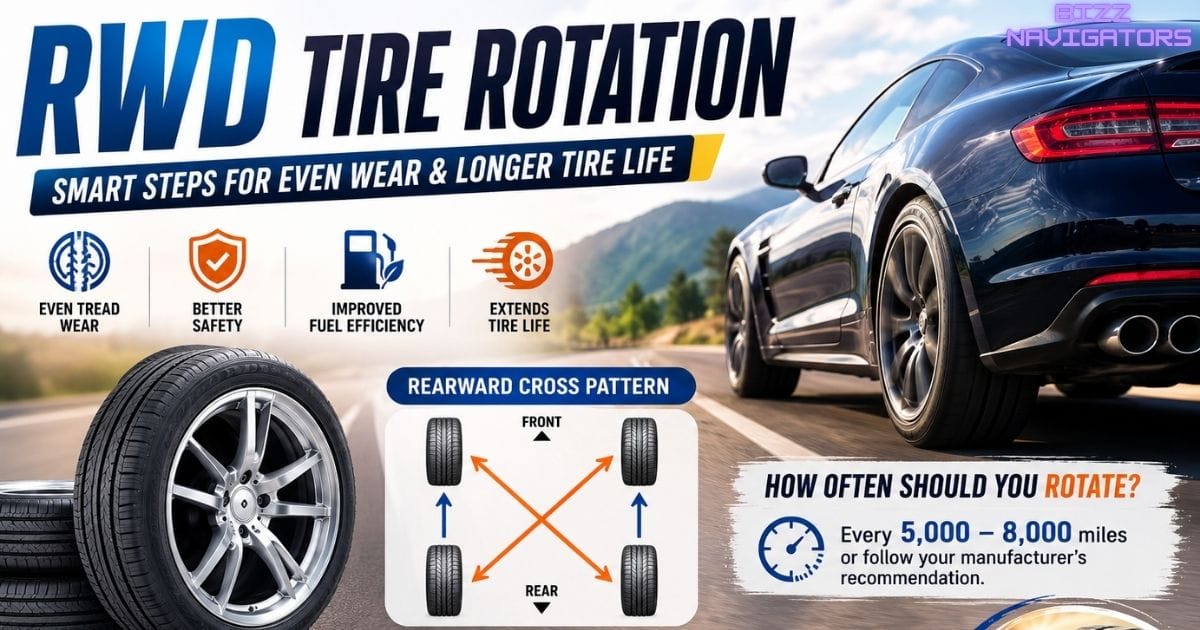
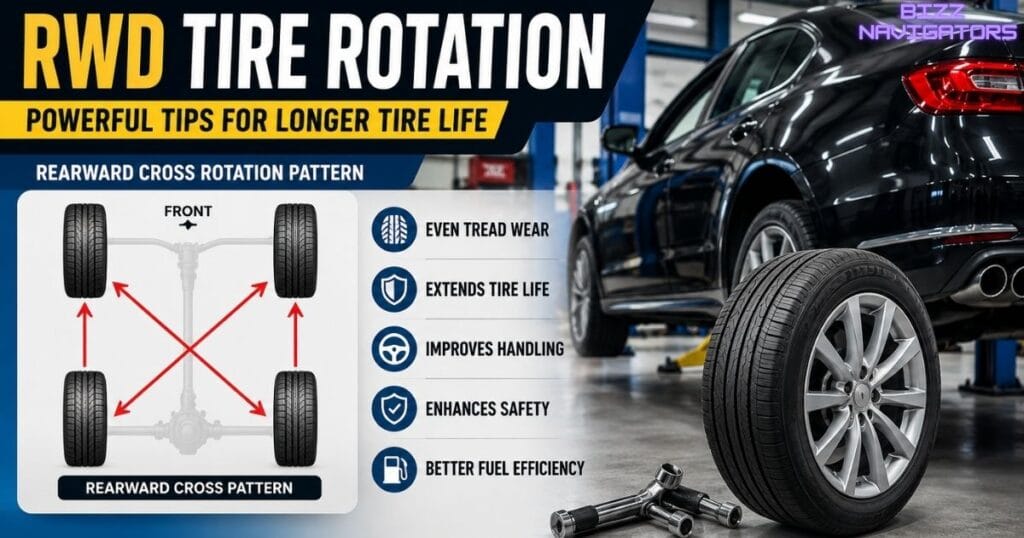
Rearward Cross Rotation Pattern
The most common pattern for non-directional tires on rear-wheel-drive vehicles is the rearward cross method.
In this arrangement:
The rear left tire moves to the front left position.
The rear right tire moves to the front right position.
The front left tire moves to the rear right position.
The front right tire moves to the rear left position.
This pattern helps equalize wear while maintaining balanced vehicle performance.
Alternative X-Pattern Rotation
Some tire manufacturers approve an X-pattern rotation for non-directional tires.
With this method:
Front left moves to rear right.
Front right moves to rear left.
Rear left moves to front right.
Rear right moves to front left.
Always confirm the recommended pattern in your vehicle owner’s manual before proceeding.
Special Tire Configurations That Require Extra Attention
Not every vehicle uses identical tires on all four corners. Certain setups require modified rotation procedures.
Directional Tires
Directional tires are engineered to rotate in only one direction. Their tread pattern is designed to improve water evacuation and traction.
For directional tires:
Front and rear tires switch positions on the same side.
Cross-rotation is typically not allowed.
Staggered Tire Setups
Many sports cars use wider rear tires than front tires. This is known as a staggered setup.
Because the tire sizes differ:
Front-to-rear rotation is generally impossible.
Tires may only be rotated side to side if they are non-directional.
Vehicles Equipped With a Full-Size Spare
If your vehicle includes a matching full-size spare tire, manufacturers may recommend incorporating it into the rotation cycle.
Doing so can:
Spread wear across five tires.
Extend overall tire lifespan.
Improve long-term value.
Ideal RWD Tire Rotation Intervals for Vehicles
Many drivers wait until tire wear becomes visible before scheduling a rotation. This approach often leads to uneven tread depth.
Recommended Mileage Interval
Most manufacturers suggest rotating tires every:
5,000 to 8,000 miles
8,000 to 12,000 kilometers
A convenient practice is to rotate tires during every oil change if service intervals align.
Situations Requiring More Frequent Rotation
Certain driving conditions accelerate tire wear.
Examples include:
Frequent towing
Aggressive acceleration
Performance driving
Rough road surfaces
Long-distance highway travel
Under these conditions, more frequent inspections are beneficial.
Warning Signs That Your Tires Need Immediate Rotation
Even if you follow a maintenance schedule, tires should be inspected regularly.
Uneven Tread Wear
One side of the tire wearing faster than the other often indicates rotation or alignment issues.
Increased Road Noise
A tire developing irregular wear patterns can create noticeable humming or vibration.
Reduced Stability During Driving
If the vehicle feels less predictable while cornering or braking, uneven tire wear may be contributing to the problem.
Visible Feathering or Cupping
These tread abnormalities often signal that maintenance should not be delayed.
RWD Tire Rotation Is Only Part of Proper Tire Care
Rotating tires alone cannot solve every tire-related issue.
Check Tire Pressure Regularly
Incorrect tire pressure accelerates tread wear and reduces fuel efficiency.
Drivers should inspect tire pressure at least once per month and before long trips.
Monitor Wheel Alignment
Misalignment causes tires to wear unevenly regardless of rotation frequency.
Common alignment symptoms include:
Vehicle pulling to one side
Off-center steering wheel
Uneven shoulder wear
Balance Tires When Necessary
Wheel balancing helps eliminate vibration and promotes smooth, even tread wear.
Balancing is especially important after installing new tires or noticing unusual vibrations.
Common Mistakes Drivers Make During RWD Tire Rotation
Avoiding these mistakes can maximize the benefits of tire maintenance.
Ignoring Manufacturer Recommendations
Different vehicles may require specific rotation patterns.
Forgetting Lug Nut Torque Specifications
Overtightened or undertightened lug nuts can create safety risks.
Rotating Damaged Tires
Tires with severe wear, sidewall damage, or puncture issues should be inspected before rotation.
Skipping Tire Inspections
Rotation provides an excellent opportunity to identify hidden problems before they become expensive repairs.
Frequently Asked Questions
Can I Rotate RWD Tire Rotation Myself?
Yes. If you have the proper tools, jack stands, and knowledge of the correct rotation pattern, tire rotation can be performed at home. However, professional service ensures safety and accuracy.
What Happens If Tires Are Never Rotated?
Uneven wear develops more rapidly, reducing tire lifespan and potentially affecting handling, traction, and braking performance.
Do Winter Tires Need Rotation?
Yes. Winter tires experience wear patterns similar to all-season tires and should follow the manufacturer’s recommended rotation schedule.
How Long Does a Tire Rotation Take?
A professional RWD tire rotation typically takes between 15 and 30 minutes.
Conclusion
RWD tire rotation is a critical maintenance practice that helps distribute tread wear evenly, improve vehicle stability, and extend tire life. By following the correct rotation pattern, maintaining proper tire pressure, and monitoring alignment and balance.
Drivers can get the most value from their tires while enhancing safety on the road. Consistent maintenance may seem simple, but it delivers significant long-term benefits for every rear-wheel-drive vehicle.

At BizzNavigators, we answer the questions you’re actually searching for, honestly and clearly. We check our facts before we publish anything, and if we’re not sure about something, we tell you instead of guessing. Whatever you’re looking for- a tech fix, a business tip, or a simple how-to- we want to give you an answer you can trust.