
Introduction
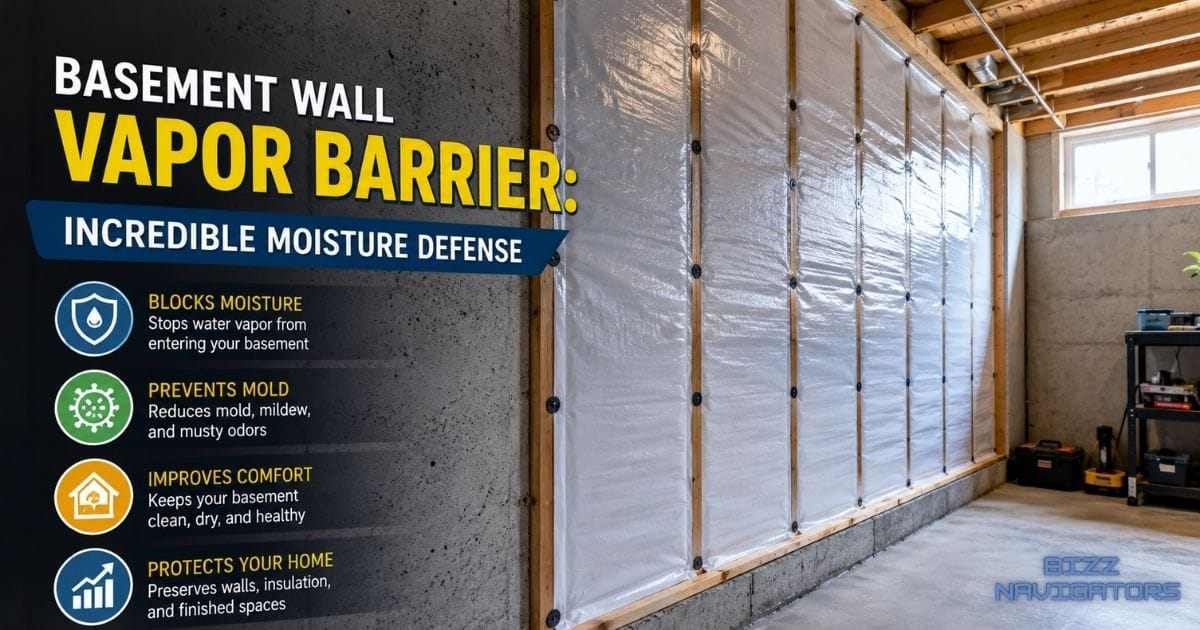
Basements face unique moisture challenges because they remain in constant contact with the surrounding soil. Even if water never enters through visible cracks, moisture can still travel through concrete walls and affect the indoor environment.
A properly installed basement wall vapor barrier helps control water vapor movement, protects building materials, and reduces the risk of mold, mildew, and costly repairs. Whether you are finishing a basement or improving an existing space, understanding vapor control is critical for long-term performance.
Where Basement Moisture Comes From
Moisture can enter a basement from several sources:
Water vapor moving through concrete walls
Groundwater surrounding the foundation
Humid outdoor air is entering the basement
Condensation caused by temperature differences
Poor drainage around the home
Plumbing leaks and indoor humidity
Because multiple moisture sources often exist at the same time, successful protection requires more than a single solution.
Water Vapor vs Liquid Water
Many homeowners confuse water vapor with liquid water.
Liquid water enters through cracks, leaks, or foundation failures. Water vapor, however, moves invisibly through porous materials such as concrete. A vapor barrier controls vapor movement, while waterproofing systems primarily stop liquid water.
Both play important roles in basement protection.
What Is a Basement Wall Vapor Barrier?
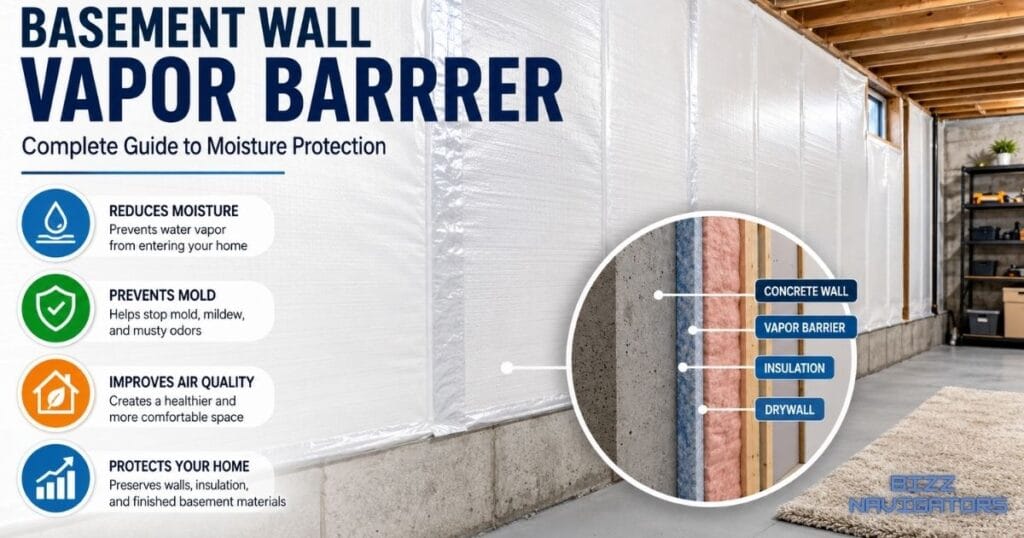
A basement wall vapor barrier is a material designed to reduce or prevent water vapor from passing through foundation walls into the interior of a home.
It creates a protective layer that helps keep basement spaces dry and comfortable.
How a Vapor Barrier Works
Water vapor naturally moves from areas of higher moisture concentration to areas with lower moisture concentration. A vapor barrier slows or blocks this movement, preventing moisture from reaching insulation, drywall, flooring, and other finished materials.
Vapor Barrier vs Moisture Barrier
Although people often use these terms interchangeably, they are not identical.
| Feature | Vapor Barrier | Moisture Barrier |
| Controls Water Vapor | Yes | Limited |
| Blocks Liquid Water | No | Yes |
| Prevents Condensation | Yes | Partially |
| Common Indoor Use | Yes | Sometimes |
| Common Exterior Use | Sometimes | Yes |
The most effective basement systems often combine vapor control with waterproofing measures.
Do You Need a Basement Wall Vapor Barrier?
Not every basement requires the same level of moisture protection. However, many homes benefit from a properly designed vapor-control system.
Signs Your Basement May Need One
Watch for these common warning signs:
Musty odors
Damp walls
Peeling paint
Mold or mildew growth
High humidity levels
Condensation on surfaces
Warped wood materials
Damaged drywall
If you notice multiple symptoms, moisture management should become a priority.
Situations Where a Vapor Barrier Is Highly Recommended
A vapor barrier is often beneficial when:
Finishing a basement
Installing insulation
Living in a humid climate
Experiencing recurring condensation
Storing valuable belongings in the basement
Converting the basement into a living space
Why Basement Walls Are Vulnerable to Moisture Problems
Unlike above-grade walls, basement wall vapor barriers remain surrounded by damp soil for most of the year.
Concrete may appear solid, but it contains microscopic pores that allow moisture movement. As a result, basement walls continuously interact with surrounding moisture conditions.
The Role of Temperature Differences
Basement walls are often cooler than indoor air. When warm, humid air touches a cool wall surface, condensation can form.
Over time, this hidden moisture can damage building materials and encourage mold growth.
Understanding Dew Point and Hidden Condensation
One of the most overlooked basement issues is condensation occurring behind finished walls.
What Is Dew Point?
The dew point is the temperature at which water vapor in the air changes into liquid water.
When basement wall vapor barrier surfaces fall below the dew point, condensation develops.
Why Hidden Condensation Is Dangerous
Condensation behind drywall or insulation often goes unnoticed for months or years. During this time, moisture can:
Damage framing materials
Reduce insulation performance
Create mold-friendly conditions
Cause unpleasant odors
Proper vapor control helps reduce these risks.
Benefits of Installing a Basement Wall Vapor Barrier
Improved Indoor Air Quality
Reducing excess moisture helps limit mold growth and improves overall indoor comfort.
Better Energy Efficiency
Dry insulation performs more effectively than wet insulation. This can help lower heating and cooling costs.
Protection for Finished Basements
Drywall, flooring, trim, furniture, and personal belongings stay protected from moisture-related damage.
Reduced Mold and Mildew Risk
Although no product eliminates mold risk, vapor barriers significantly reduce one of mold’s primary requirements: moisture.
Long-Term Structural Protection
Controlling moisture helps preserve framing materials and other structural components.
Increased Home Value
A dry, well-maintained basement is attractive to potential buyers and may improve resale value.
Best Types of Basement Wall Vapor Barrier Systems
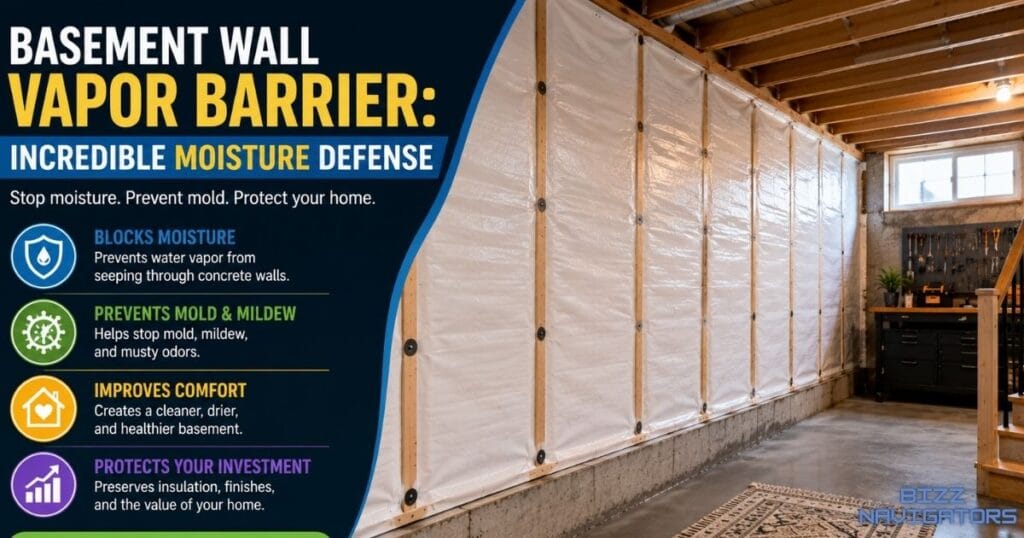
Polyethylene Vapor Barriers
These plastic sheets are affordable and commonly used in residential applications.
Rigid Foam Board Insulation
Rigid foam provides insulation and vapor resistance in a single product.
Reinforced Vapor Membranes
These durable systems offer enhanced strength and long-term performance.
Foil-Faced Insulation Products
These products combine thermal efficiency with vapor-control capabilities.
Spray-Applied Vapor Retarders
These coatings provide seamless coverage and work well in certain applications.
Best Materials for Basement Wall Vapor Barriers
For most modern basement wall vapor barrier projects, professionals commonly recommend:
1. Closed-cell rigid foam insulation
2. Reinforced vapor membranes
3. Six-mil polyethylene sheeting
4. Foil-faced insulation panels
5. Specialized moisture-control membrane systems
The ideal material depends on climate, wall construction, and moisture conditions.
Interior vs Exterior Vapor Barrier Systems
Interior Solutions
Advantages include:
Lower installation costs
Easier access
Suitable for finished basement projects
Faster installation
Exterior Solutions
Advantages include:
Stops moisture before it reaches the wall
Reduces foundation exposure to water
Works well alongside waterproofing systems
Which Option Is Better?
Exterior protection generally provides the most complete moisture defense, but interior systems remain highly effective and more practical for many homeowners.
Pros and Cons of Basement Wall Vapor Barriers
| Pros | Cons |
| Controls moisture movement | Installation costs vary |
| Helps prevent mold growth | Incorrect installation can trap moisture |
| Improves energy efficiency | Does not replace waterproofing |
| Protects finished materials | Some systems require professional installation |
| Improves indoor comfort | May require wall modifications |
How to Choose the Right Vapor Barrier
Consider Your Climate
Humid regions typically require stronger vapor-control strategies.
Assess Existing Moisture Conditions
Address water leaks and drainage problems before installing any barrier.
Evaluate Wall Construction
Concrete block and poured concrete walls often require different approaches.
Balance Cost and Performance
Choose a system that provides long-term value rather than focusing only on upfront costs.
Common Vapor Barrier Installation Mistakes
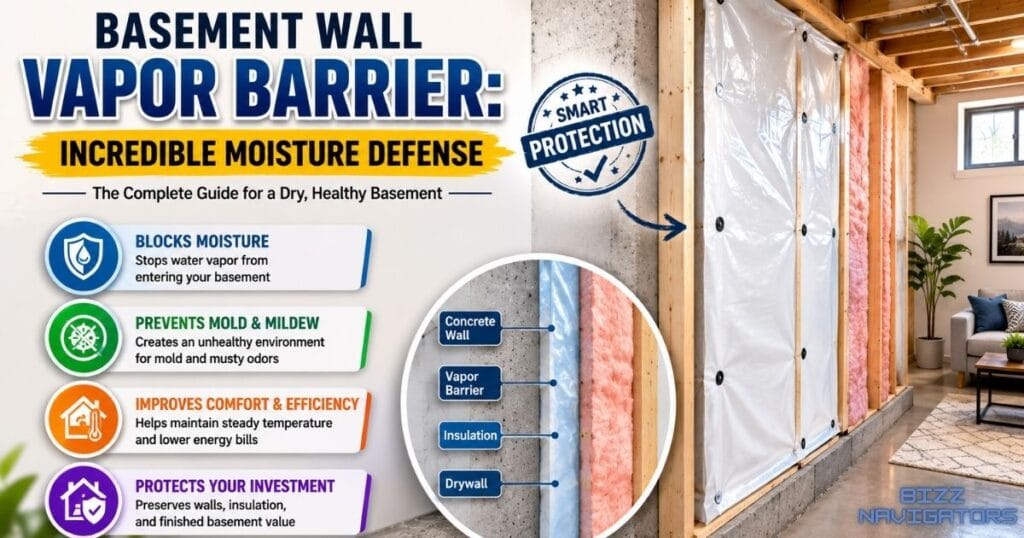
Avoid these common errors:
Installing over active water leaks
Leaving seams unsealed
Using incompatible materials
Ignoring foundation drainage issues
Failing to seal around pipes and openings
Trapping moisture behind finished walls
Professional installation often reduces these risks.
Basement Wall Vapor Barrier Cost
Several factors influence overall costs:
Basement size
Material selection
Existing moisture conditions
Labor requirements
Insulation upgrades
Basic polyethylene systems cost less, while premium membrane systems and professional installations increase overall project expenses.
However, preventing future moisture damage often saves significantly more money over time.
Expert Tips for Maximum Basement Moisture Protection
Maintain Proper Humidity Levels
Keep indoor humidity below 50% whenever possible.
Improve Exterior Drainage
Ensure gutters and downspouts move water away from the foundation.
Repair Foundation Cracks Promptly
Small cracks can become major moisture-entry points.
Use a Dehumidifier
Basements in humid climates often benefit from year-round humidity control.
Inspect Regularly
Annual inspections help identify minor issues before they become expensive repairs.
Conclusion
A basement wall vapor barrier is one of the most effective tools for controlling moisture and protecting your home. By reducing vapor transmission, preventing condensation, and safeguarding finished materials, it contributes to a healthier and more durable basement environment.
The best results come from combining vapor control with proper drainage, waterproofing, insulation, and humidity management. Choosing the right system for your climate and basement conditions ensures long-lasting protection and peace of mind.
Frequently Asked Questions
What is the best basement wall vapor barrier?
Rigid foam insulation combined with a sealed vapor-resistant membrane is often considered one of the most effective solutions.
Should I install a vapor barrier on interior basement walls?
In many cases, yes. The decision depends on local climate, wall type, and moisture conditions.
How much does a basement wall vapor barrier cost?
Costs vary depending on materials, basement size, and installation complexity.
Can I install a vapor barrier myself?
DIY installation is possible for some systems, but professional installation generally provides better long-term performance.
Is a vapor barrier the same as waterproofing?
No. Vapor barriers control water vapor, while waterproofing systems stop liquid water intrusion.
How long does a basement wall vapor barrier last?
High-quality systems can remain effective for several decades when installed correctly.
Can mold grow behind a vapor barrier?
Improper installation may trap moisture and contribute to mold growth. Proper design and installation minimize this risk.
Should basement floors have a vapor barrier too?
Yes. In many basements, floor vapor barriers provide additional moisture protection and improve overall performance.
Is a vapor barrier worth the investment?
For most homeowners, the protection against moisture damage, mold, and energy loss makes it a worthwhile long-term investment.

At BizzNavigators, we answer the questions you’re actually searching for, honestly and clearly. We check our facts before we publish anything, and if we’re not sure about something, we tell you instead of guessing. Whatever you’re looking for- a tech fix, a business tip, or a simple how-to- we want to give you an answer you can trust.