
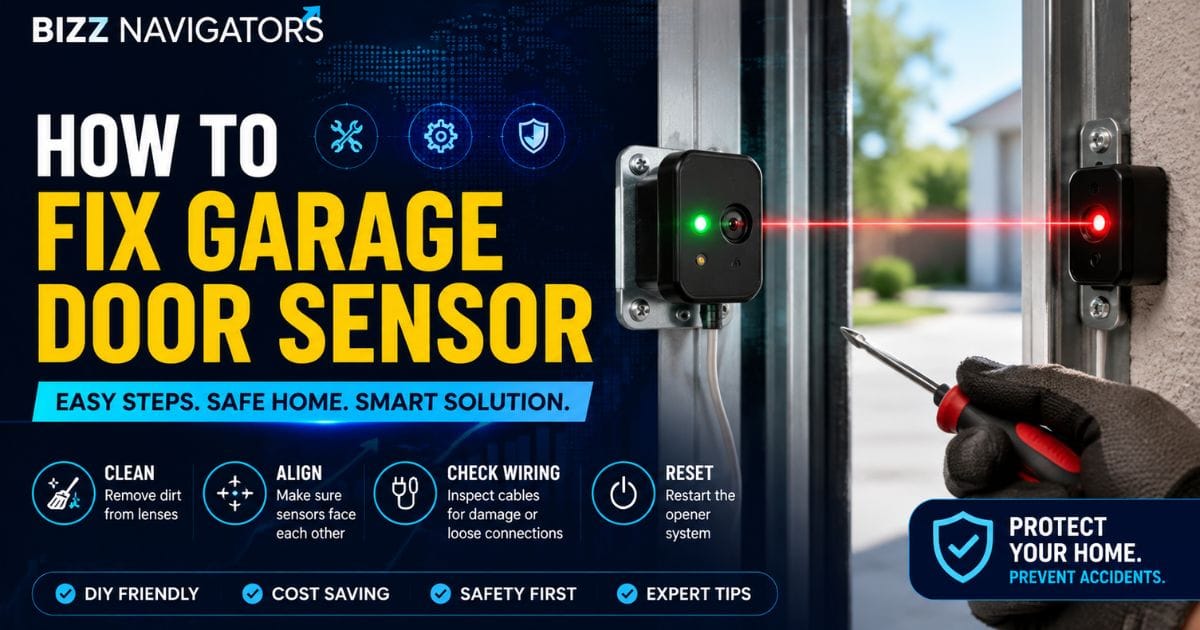
Introduction: Why Garage Door Sensors Matter More Than Most Homeowners Realize
Garage door sensors are one of the most important safety components of an automatic garage door system. Their job is simple but critical: they stop the door from closing if a person, pet, vehicle, or object is in the way.
When these sensors stop working properly, your garage door may refuse to close, reverse unexpectedly, or become a safety risk. Fortunately, many sensor problems can be fixed without replacing the entire system.
This guide explains how to fix garage door sensors, diagnose common failures, and determine when professional assistance is necessary.
Common Signs Your Garage Door Sensor Is Failing
A faulty sensor usually gives clear warning signs before it stops working completely.
Your garage door closes halfway and opens again
The opener assumes an object is blocking the path and automatically reverses the door.
The sensor lights are blinking
Flashing indicator lights usually point to alignment problems, dirty lenses, or wiring issues.
The wall button works, but the remote does not
Many openers force you to hold the wall button continuously when the sensors are malfunctioning.
The door refuses to close at all
This often indicates that the sensor beam is interrupted or the sensors have lost power.
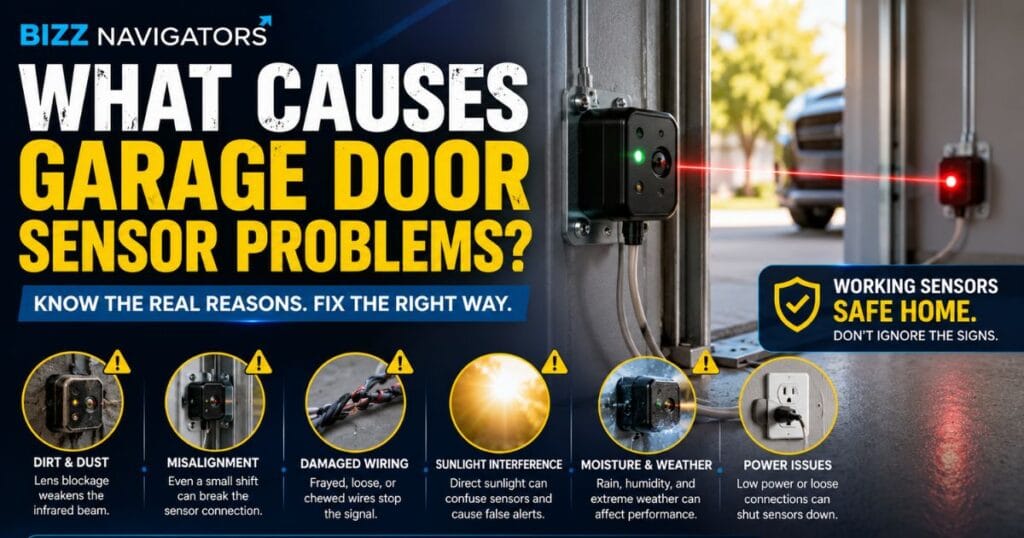
What Causes Garage Door Sensor Problems?
Several issues can interfere with normal sensor operation.
Dust and dirt accumulation
Garage environments collect dust quickly. Even a thin layer on the lens can weaken the infrared beam.
Misaligned sensors
A minor bump from bicycles, tools, or storage boxes can shift the sensor’s position.
Damaged wiring
Staples, rodents, moisture, or age can damage low-voltage sensor wires.
Direct sunlight exposure
Strong afternoon sunlight sometimes overwhelms older sensor systems and creates false readings.
Water damage
Humidity and rain can affect outdoor wiring connections and terminals.
Tools You May Need Before Starting Repairs
Most homeowners only need basic tools:
| Tool | Purpose |
| Microfiber cloth | Cleaning sensor lenses |
| Screwdriver | Adjusting brackets |
| Measuring tape | Checking alignment height |
| Spirit level | Ensuring straight positioning |
| Electrical tape | Protecting exposed wires |
| Multimeter | Testing voltage and continuity |
Safety Steps Before Working on the Sensors
Always unplug the garage door opener before touching wiring.
Keep children and pets away from the work area.
Avoid standing directly beneath the garage door while testing repairs.
If your garage door spring system appears damaged, stop immediately and contact a technician.
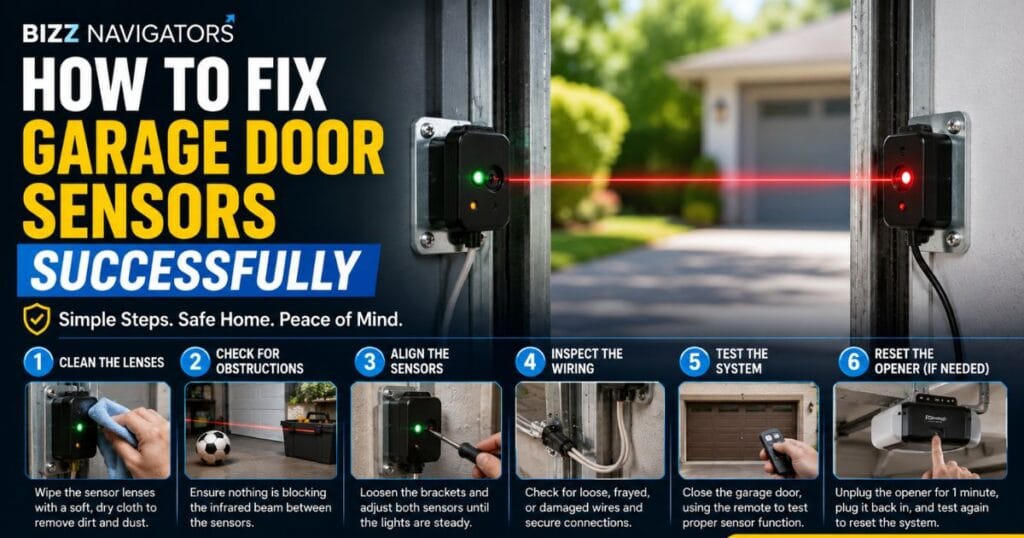
How to Fix Garage Door Sensors Successfully
Most sensor issues can be solved using the following process.
Clean the Sensor Lenses Properly
One of the simplest fixes is also the most overlooked.
Use a dry microfiber cloth to remove dust, cobwebs, and dirt from both sensor lenses.
Avoid spraying cleaners directly onto the sensor because moisture can damage internal electronics.
After cleaning, test the door again before moving to the next step.
Check for Objects Blocking the Sensor Beam
The sensors communicate using an invisible infrared beam.
Small objects can interrupt this signal without being immediately noticeable.
Check for:
Garden tools
Children’s toys
Storage boxes
Leaves and debris
Vehicle bumpers
Remove any obstruction and test the system again.
How to Fix Garage Door Sensor Alignment Issues
Misalignment is responsible for a large percentage of sensor failures.
If the sensors are not facing each other directly, the beam breaks and the opener refuses to close.
Loosen the mounting brackets slightly
Do not remove the screws completely.
Adjust both sensors until the lights become steady
Most models display a solid green or red light when alignment is correct.
Verify both sensors sit at the same height
Use a measuring tape to ensure equal positioning from the floor.
This method often solves problems related to how to fix a garage door sensor without requiring replacement parts.
Inspect the Wiring Carefully
Damaged wires prevent communication between the sensors and the opener.
Look for:
Loose wire connections
Frayed insulation
Corrosion
Rodent damage
Pinched cables
If you discover minor damage, use wire connectors and electrical tape for repairs.
Severely damaged wiring should be replaced completely.
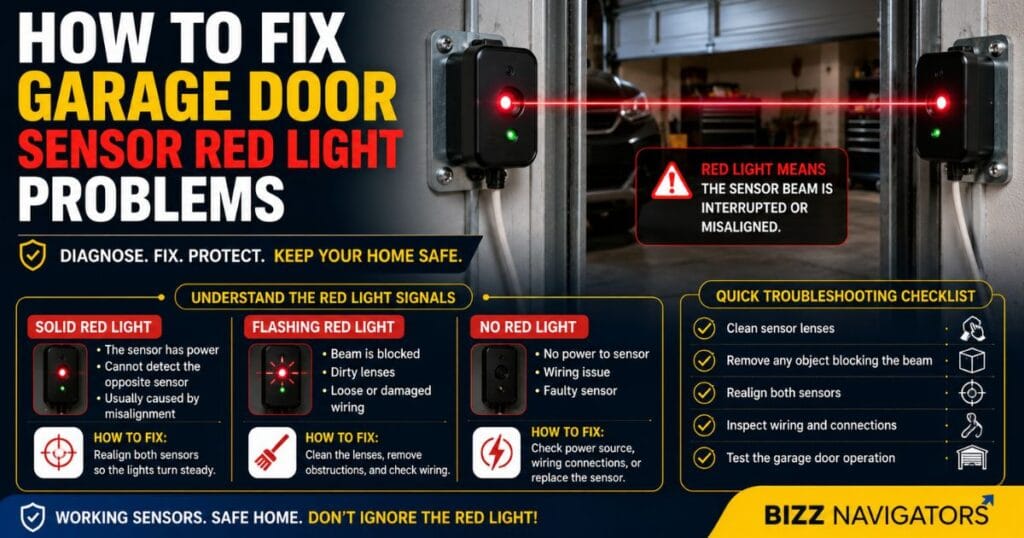
How to Fix Garage Door Sensor Red Light Problems
A red indicator light provides valuable diagnostic information.
Solid red light
This usually means the sensor has power but cannot detect the opposing sensor.
Alignment is often the cause.
Flashing red light
Blinking lights often indicate a blocked beam or an unstable wiring connection.
No red light at all
The sensor may have lost power or failed internally.
Understanding these signals makes troubleshooting significantly easier.
What If Both Garage Door Sensors Have No Lights?
When neither sensor illuminates, the issue usually extends beyond alignment.
Check the following areas:
Circuit breaker
A tripped breaker can disconnect power from the opener.
Power outlet
Plug another device into the outlet to verify electricity is available.
Opener control board
If the opener itself has no power output, the control board may require replacement.
This situation often occurs in searches for how to fix the sensors on a garage door when homeowners find both lights completely off.
Resetting the Garage Door Opener System
Some issues disappear after a complete reset.
Disconnect the opener from power for approximately one minute.
Reconnect the power and allow the system to restart fully.
Operate the door several times to confirm normal behavior.
Many modern openers also include dedicated reset buttons in the control panel.
Repair or Replace? Knowing When Sensors Are Beyond Repair
Not every sensor problem can be fixed economically.
Replacement becomes the smarter option when:
The sensor housing is cracked.
Water entered the electronics.
Internal circuitry failed.
Problems return repeatedly after repairs.
Most sensors last between 10 and 15 years under normal conditions.
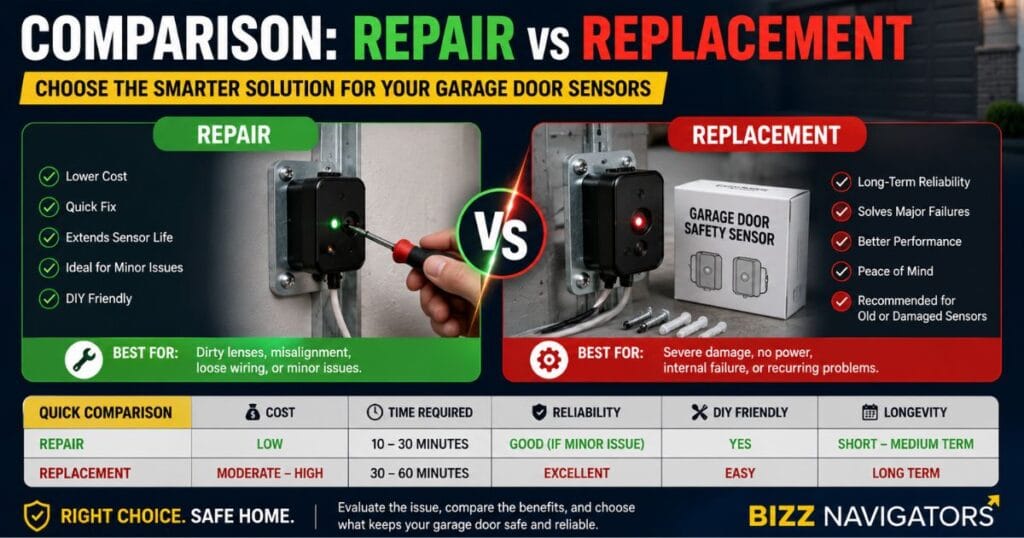
Comparison: Repair vs Replacement
| Factor | Repair | Replacement |
| Cost | Lower | Higher |
| Time Required | Faster | Longer |
| Best For | Minor issues | Severe damage |
| Expected Lifespan | Depends on condition | Full service life |
Mistakes That Often Make Sensor Problems Worse
Many homeowners accidentally create additional issues during repairs.
Avoid these mistakes:
Tightening brackets too aggressively.
Ignoring damaged wiring.
Using incorrect replacement parts.
Cleaning lenses with harsh chemicals.
Bending sensor mounts forcefully.
Small mistakes can lead to expensive opener repairs later.
Preventive Maintenance Tips for Long-Term Reliability
Preventive care reduces future problems significantly.
Clean the sensors every month.
Inspect wiring every season.
Check alignment after moving storage items near the garage door.
Keep the sensor area free from clutter and moisture.
Simple maintenance usually prevents the majority of service calls.
When Should You Call a Professional?
DIY repairs are effective for many situations, but some problems require expert help.
Contact a garage door technician if:
The opener board appears defective.
Electrical testing is required.
Wiring damage is extensive.
The garage door springs are involved.
Sensor failures continue after replacement.
Professional diagnosis often saves time and prevents unnecessary part purchases.
Conclusion
Learning how to fix garage door sensor problems can save money and prevent unnecessary service visits. In most cases, cleaning the lenses, correcting alignment, or repairing loose wiring restores normal operation.
If troubleshooting fails or electrical components appear damaged, replacing the sensors or consulting a professional is the safest long-term solution.
If you’d like, I can also create an SEO title, meta description, FAQ schema, and image prompts for each major heading.
Frequently Asked Questions
Can I use my garage door without sensors?
Most modern systems require functional sensors for safety compliance and proper operation.
How long do garage door sensors usually last?
Quality sensors generally last between 10 and 15 years.
Can sunlight interfere with garage door sensors?
Yes. Direct sunlight can occasionally overwhelm older infrared sensors.
How much does sensor replacement cost?
Most homeowners spend between $30 and $100 for replacement sensors, excluding labor.
Is sensor replacement difficult?
Most replacements are straightforward if the wiring and opener are still functional.

At BizzNavigators, we answer the questions you’re actually searching for, honestly and clearly. We check our facts before we publish anything, and if we’re not sure about something, we tell you instead of guessing. Whatever you’re looking for- a tech fix, a business tip, or a simple how-to- we want to give you an answer you can trust.