
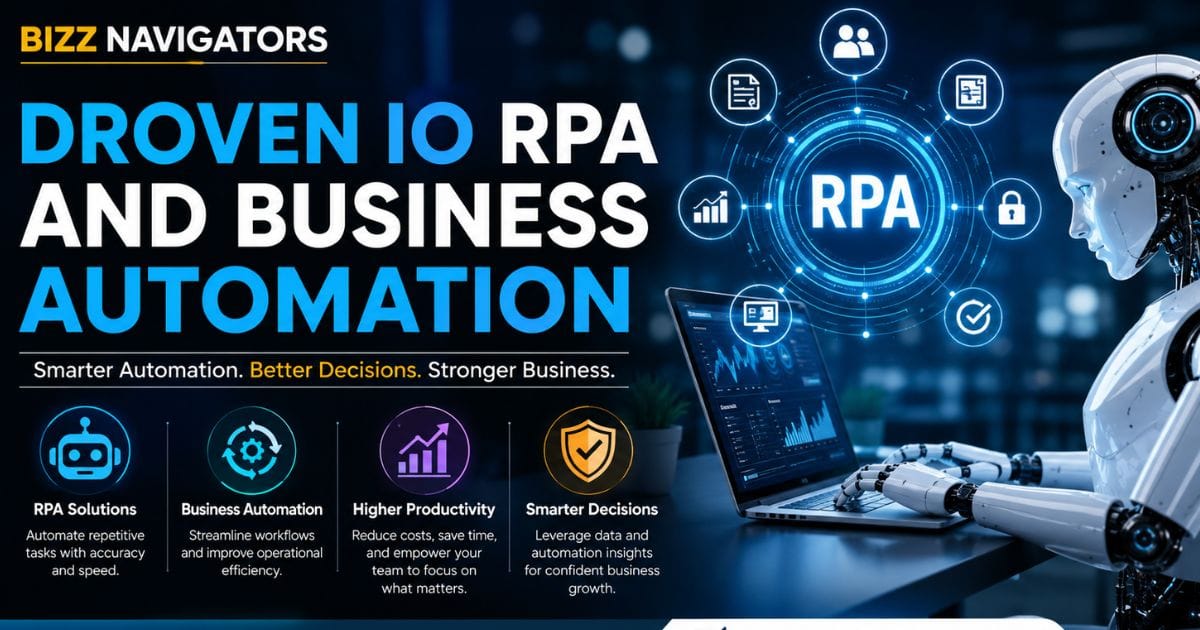
Introduction: Why Businesses Are Reassessing Automation Investments
Droven Io RPA and Business Automation is no longer a luxury reserved for large enterprises. Rising operational costs, increasing customer expectations, and repetitive administrative work have pushed companies of all sizes to rethink how work gets done.
Many organizations invest in automation tools expecting instant efficiency gains, only to discover that selecting the wrong technology creates new challenges instead of solving old ones.
This is where platforms such as Droven.Io attract attention. Rather than selling software, they help businesses understand automation technologies before making expensive implementation decisions.
What Is Droven.Io?
Droven.Io is an educational technology platform focused on artificial intelligence, workflow automation, digital transformation, and software evaluation.
Its objective is to help business leaders, IT teams, and developers compare solutions, understand implementation requirements, and identify technologies that align with their operational goals.
Unlike software vendors, the platform concentrates on research, analysis, and practical insights instead of product sales.
This independent approach allows businesses to make more informed decisions.
Understanding Droven.Io RPA Coverage
One of the most valuable areas covered by Droven.Io RPA research is robotic process automation assessment.
The platform helps organizations evaluate:
Automation capabilities
Integration requirements
Scalability options
Licensing models
Industry suitability
Long-term maintenance costs
Many companies purchase automation software based on impressive demonstrations without assessing whether their internal processes are suitable for automation.
Droven.Io encourages businesses to solve this problem before implementation begins.
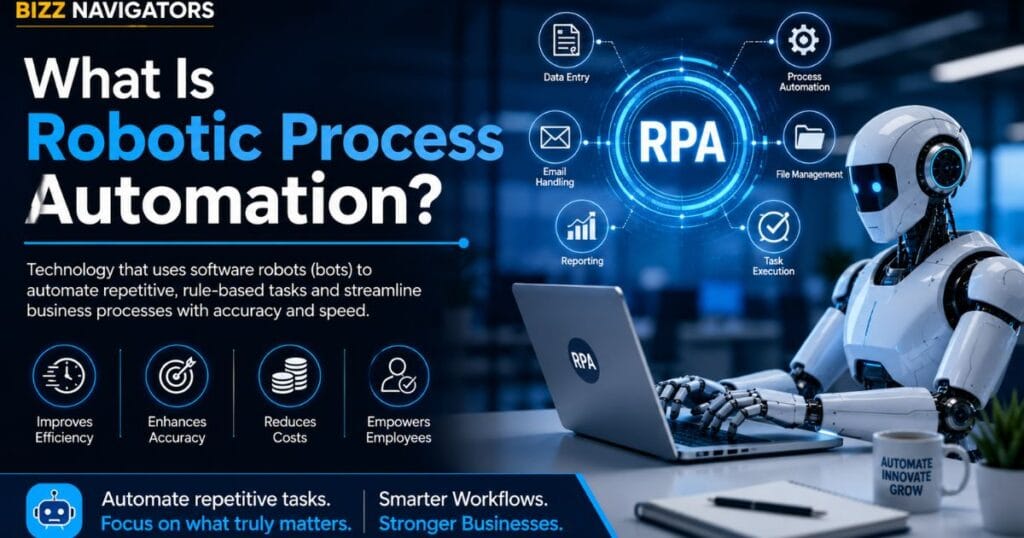
What Is Robotic Process Automation?
Robotic Process Automation, commonly called RPA, uses software bots to perform repetitive, rules-based tasks that employees previously handled manually.
These digital workers can interact with existing software applications in the same way humans do.
Typical examples include:
Invoice processing
Data migration
Customer onboarding
Report generation
Payroll support
Order processing
Because RPA often works with existing systems, organizations can improve productivity without replacing their current infrastructure.
How RPA Performs Tasks
RPA follows a structured workflow.
Trigger Identification
The automation begins when a predefined event occurs.
Data Collection
The bot gathers information from emails, databases, forms, or business applications.
Rule Processing
Business rules determine the actions the bot should take.
Output Delivery
The bot updates records, sends notifications, or generates reports.
Tasks that previously required hours can often be completed within minutes.
Droven Io RPA and Business Automation Are Different Technologies
Many decision-makers use both terms interchangeably. However, they address different operational challenges.
| Technology | Main Objective | Example |
| RPA | Automate repetitive tasks | Data entry |
| Business Automation | Automate complete workflows | Employee onboarding |
| AI Automation | Support decision-making | Fraud detection |
RPA focuses on tasks.
Business automation focuses on processes.
AI automation focuses on intelligence and prediction.
Modern organizations frequently combine all three approaches.
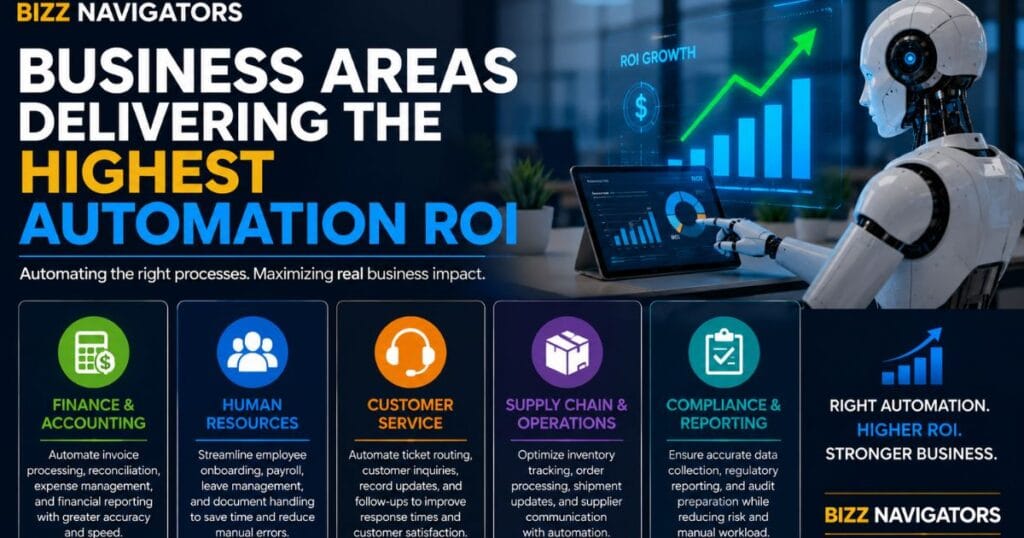
Business Areas Delivering the Highest Automation ROI
Some departments consistently generate stronger returns from automation investments.
Finance and Accounting
Invoice matching, reconciliation, payment validation, and expense approvals can be automated with high accuracy.
Human Resources
Employee onboarding, leave requests, and payroll administration become faster and more consistent.
Customer Service
Automation can classify support requests, update records, and route tickets to the correct departments.
Supply Chain Operations
Inventory monitoring and shipment tracking benefit significantly from automation.
Compliance and Reporting
Regulatory reporting becomes more reliable while reducing manual effort.
The Four Stages of Process Automation
Businesses rarely move directly from manual work to intelligent automation. Most organizations progress through four stages.
Stage 1: Manual Operations
Employees perform every task manually.
Stage 2: Assisted Automation
Basic tools and scripts reduce repetitive work.
Stage 3: Robotic Process Automation
Software bots execute repetitive business activities.
Stage 4: Intelligent Automation
Artificial intelligence and machine learning support decision-making and optimization. Understanding these stages helps organizations create realistic implementation plans.
How Businesses Can Determine Automation Readiness
Not every process should be automated. Successful projects usually share several characteristics.
Processes suitable for automation typically have:
Clear business rules
High transaction volume
Repetitive actions
Stable workflows
Structured data
If a process changes every week, automation may create more problems than benefits.
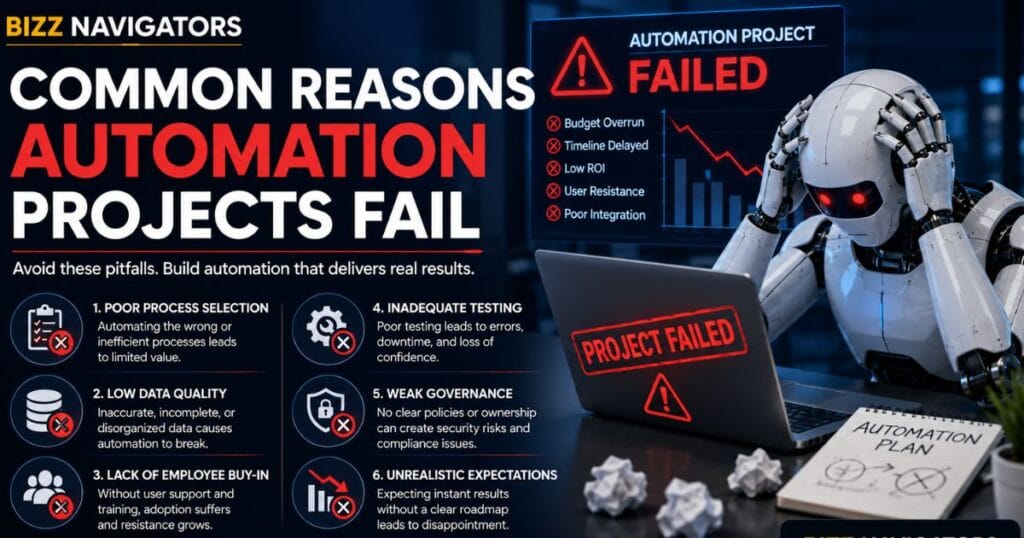
Common Reasons Automation Projects Fail
Technology is rarely the cause of failure.
The most common issues include:
Automating inefficient processes
Poor data quality
Lack of employee training
Unrealistic expectations
Weak governance policies
Organizations that address these issues early usually experience faster adoption and stronger results.
Build Versus Buy: Choosing the Right Automation Strategy
Many businesses face an important decision.
Should they purchase a commercial RPA platform or build internal automation tools?
| Factor | Commercial Platform | Custom Development |
| Deployment Speed | Faster | Slower |
| Customization | Moderate | High |
| Maintenance | Vendor Managed | Internal Team |
| Initial Cost | Higher | Lower |
| Long-Term Flexibility | Moderate | High |
The correct choice depends on budget, technical expertise, and long-term business objectives.
Is Selenium an RPA Tool?
No.
Selenium is primarily a browser automation and testing framework used by software developers and quality assurance teams.
Although Selenium can automate web interactions, it lacks the governance, workflow management, security controls, and enterprise reporting features available in dedicated RPA platforms.
Measuring Automation Success
Organizations often focus heavily on implementation while ignoring performance measurement.
Successful automation projects usually monitor:
Time savings
Error reduction
Operational costs
Employee productivity
Customer response times
Tracking these metrics allows businesses to calculate return on investment accurately.
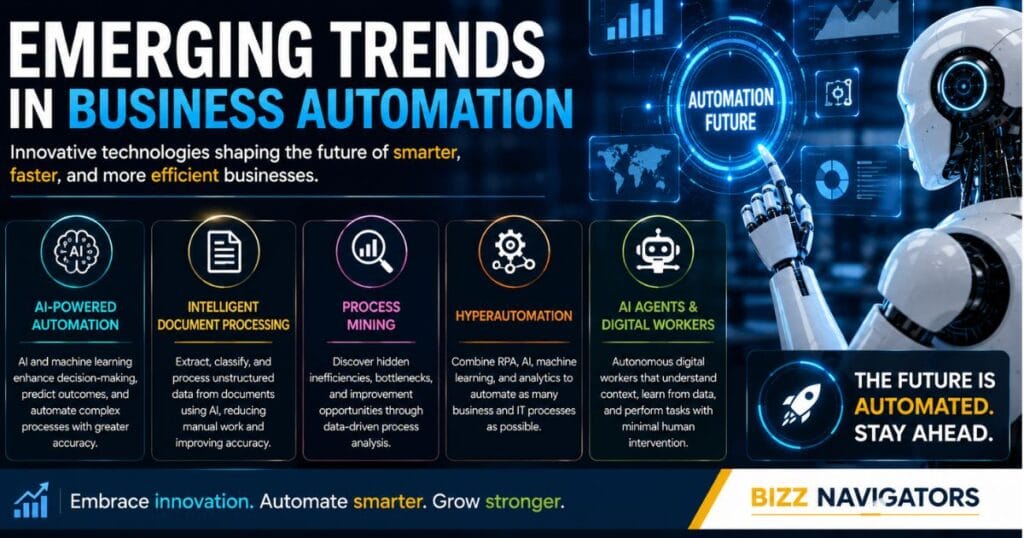
Emerging Trends in Business Automation
Automation technology continues to evolve rapidly.
Several trends are shaping the next generation of digital operations.
Intelligent Document Processing
AI systems can extract information from invoices, contracts, and forms automatically.
Process Mining
Organizations identify inefficiencies before automation begins.
Hyperautomation
Multiple technologies work together to automate complex workflows.
AI Agents
Digital assistants increasingly handle tasks requiring contextual understanding.
These developments indicate that future automation strategies will combine human expertise with intelligent systems rather than replace employees entirely.
Is Droven.Io a Software Vendor?
No.
Droven.Io functions primarily as an independent knowledge platform that helps organizations understand automation technologies and compare available solutions. Its role is educational rather than commercial.
For businesses entering the automation market for the first time, this neutrality can be extremely valuable.
Key Takeaways
RPA automates repetitive tasks.
Business automation optimizes complete workflows.
Successful automation begins with process evaluation.
Droven.Io helps businesses research technologies before investing.
Measuring ROI is as important as implementation itself.
Conclusion
Droven Io RPA and business automation research helps organizations make informed technology decisions in an increasingly competitive digital economy.
Businesses that evaluate their processes before investing in automation software achieve better outcomes, faster implementation, and stronger returns.
As automation continues evolving toward AI-powered workflows and hyperautomation strategies, informed decision-making will become just as important as the technology itself.
Frequently Asked Questions
What is RPA automation used for?
RPA automates repetitive business tasks such as invoice processing, reporting, data entry, and customer onboarding.
What are the four stages of process automation?
The four stages are manual operations, assisted automation, robotic process automation, and intelligent automation.
Is Selenium considered an RPA solution?
No. Selenium focuses on testing and browser automation rather than enterprise workflow automation.
Is RPA the same as business automation?
No. RPA automates individual tasks, while business automation manages complete business processes.
Can small businesses benefit from automation?
Yes. Small businesses often achieve significant efficiency gains because automation reduces manual workload without increasing staffing requirements.

At BizzNavigators, we answer the questions you’re actually searching for, honestly and clearly. We check our facts before we publish anything, and if we’re not sure about something, we tell you instead of guessing. Whatever you’re looking for- a tech fix, a business tip, or a simple how-to- we want to give you an answer you can trust.