
Why Ficus Nitida Is a Top Choice for Modern Landscapes
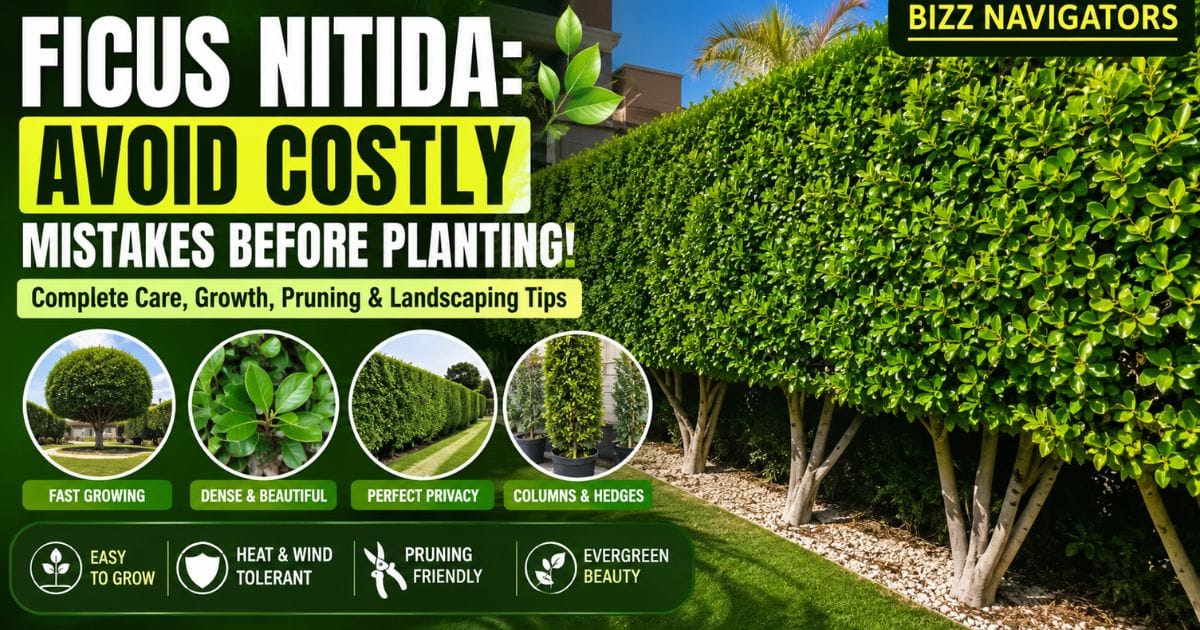
Ficus nitida is one of the most versatile evergreen trees used in residential, commercial, and public landscapes. Known for its dense green foliage, rapid growth, and ability to form beautiful privacy screens, this tree has become a favorite among homeowners, gardeners, and landscape designers alike. Whether you’re looking to create a lush hedge, a shade tree, or an elegant boundary for your property, Ficus nitida offers an attractive and practical solution.
Often referred to as Indian laurel ficus nitida, this species adapts well to warm climates and thrives in full sunlight with proper care. Its naturally dense canopy makes it ideal for reducing noise, blocking unwanted views, and improving outdoor privacy without sacrificing beauty.
This guide explains everything you need to know, from identifying the tree and selecting the right planting location to understanding its growth habits, root system, and landscaping potential.
What Is Ficus Nitida?
Ficus nitida is a fast-growing evergreen tree belonging to the mulberry family (Moraceae). Botanically, it is widely recognized as Ficus microcarpa, although the name “Ficus nitida” continues to be used by nurseries and landscaping professionals in many regions.
The tree is admired for its glossy oval leaves, broad canopy, and ability to tolerate pruning exceptionally well. Because of these qualities, it is commonly shaped into formal hedges, privacy walls, topiary forms, and ornamental shade trees.
Unlike many ornamental trees, Ficus nitida maintains its rich green appearance throughout the year, making it an excellent long-term investment for landscapes that require year-round visual appeal.
Botanical Profile
| Feature | Details |
| Scientific Name | Ficus microcarpa |
| Common Name | Ficus Nitida, Indian Laurel Fig, Chinese Banyan |
| Plant Family | Moraceae |
| Plant Type | Evergreen Tree |
| Native Region | Southeast Asia |
| USDA Hardiness Zones | 9–11 |
| Growth Rate | Moderate to Fast |
| Mature Height | 25–40 feet |
| Mature Spread | 30–40 feet |
Ficus Nitida Common Name and Botanical Information
Many gardeners are surprised to learn that Ficus nitida is not a separate botanical species. Instead, it is a commonly used nursery name for Ficus microcarpa, an evergreen tree native to tropical Asia.
Depending on the region, you may also hear it called:
Indian Laurel Fig
Indian Laurel
Chinese Banyan
Laurel Fig
Cuban Laurel
Although these names differ, they generally refer to the same attractive landscape tree with only slight variations in cultivar characteristics.
Ficus Nitida Tree Identification
Recognizing a healthy Ficus nitida tree is relatively easy because of its distinctive foliage and symmetrical growth habit.
Mature Size and Height
Under favorable conditions, Ficus nitida typically reaches 25 to 40 feet in height. Mature trees may develop an equally impressive canopy spread of 30 to 40 feet, creating generous shade in gardens and outdoor spaces.
When grown as a hedge, regular pruning can maintain the plant at heights ranging from 5 to 12 feet.
Growth Habit
Young trees develop an upright structure before expanding into a broad, rounded canopy. Their naturally dense branching creates a full appearance that works exceptionally well for privacy screens.
Because the tree responds positively to frequent trimming, it can be shaped into formal designs or allowed to grow into a majestic landscape specimen.
Leaves and Bark
The leaves are:
Thick and leathery
Glossy dark green
Oval to elliptical in shape
Approximately 2–5 inches long
New leaves often emerge in a lighter green shade before gradually darkening as they mature.
The bark is smooth and gray during early growth but gradually becomes textured with age.
Flowers and Fruits
Like other figs, Ficus nitida produces small, inconspicuous flowers hidden inside its fruit structure. Tiny fig-like fruits eventually develop and may attract birds and other wildlife, although they are not considered ornamental.
Indian Laurel Ficus Nitida Explained
The term Indian laurel ficus nitida frequently appears in plant catalogs and landscaping guides. While the name suggests an origin in India, the tree naturally occurs across several parts of Southeast Asia.
Its popularity comes from its adaptability, evergreen foliage, and ability to withstand heavy pruning without losing vigor.
Landscape professionals often recommend Indian Laurel Ficus for:
Privacy hedges
Property boundaries
Windbreaks
Commercial developments
Office complexes
Resort landscaping
Large residential gardens
Its polished appearance complements both traditional and contemporary landscape designs.
Ficus Nitida Columns
Another popular nursery form is the Ficus nitida columns variety. Instead of allowing the tree to develop a wide canopy, growers carefully train young plants into tall, narrow columns.
This form is especially useful where horizontal space is limited.
Advantages of Column-Grown Trees
Ideal for narrow side yards
Creates elegant entrances
Requires less lateral space
Easy to maintain
Produces a formal landscape appearance
Because column forms are already trained during nursery production, they establish quickly after planting.
Common Nursery Sizes
Although sizes vary between growers, buyers commonly find:
15-gallon containers
25-gallon containers
36-inch box trees
48-inch box specimens
Large field-grown mature trees
Selecting the appropriate size depends on budget, desired privacy, and the project’s timeline.
Best Uses of Ficus Nitida in Landscaping
Few evergreen trees offer the flexibility of Ficus nitida when designing outdoor spaces.
It can function as a:
Privacy hedge
Shade tree
Living fence
Noise barrier
Windbreak
Property divider
Accent landscape tree
Commercial screening plant
Its dense foliage significantly improves privacy while adding texture and year-round greenery.
For large properties, rows of Ficus nitida create natural green walls that require far less maintenance than many traditional fencing options.

Native Origin and Natural Habitat
Ficus nitida originated in tropical and subtropical regions of Southeast Asia, where warm temperatures, seasonal rainfall, and fertile soils encourage vigorous growth.
In its natural habitat, the tree flourishes in rainforest environments with consistent moisture and abundant sunlight. These conditions explain why it performs exceptionally well in warm coastal regions, urban parks, and irrigated residential landscapes.
Today, it has been successfully cultivated across many parts of the world, including the Middle East, Australia, Southern Europe, and the southern United States.
Best Growing Conditions for Healthy Growth
Providing the right environment helps Ficus nitida develop a stronger root system, healthier foliage, and faster overall growth.
Sunlight Requirements
Ficus nitida performs best in full sun, receiving at least six to eight hours of direct sunlight daily.
While it tolerates partial shade, prolonged low-light conditions can reduce foliage density and slow growth.
Soil Preferences
The tree adapts to a wide range of soils, including sandy, loamy, and clay-based soils, provided they drain well.
Adding organic compost before planting improves soil structure and encourages stronger root establishment.
Water Requirements
Young trees require regular watering during their establishment period.
Once mature, Ficus nitida becomes moderately drought-tolerant, although deep watering during prolonged dry weather helps maintain vigorous growth and lush foliage.
Temperature and Climate
This evergreen species thrives in warm climates and performs best in USDA Hardiness Zones 9–11.
It tolerates intense summer heat remarkably well but may experience leaf damage if exposed to prolonged freezing temperatures.
Coastal and Wind Tolerance
One of the tree’s greatest advantages is its ability to tolerate coastal environments, salty air, and moderate winds. This resilience makes it an excellent option for seaside landscapes and urban developments where many ornamental trees struggle.
How to Plant Ficus Nitida Successfully
Proper planting gives Ficus nitida the best chance to establish quickly and remain healthy for decades.
Choose the Right Location
Select an area with plenty of sunlight and enough space for the tree’s mature canopy and root system. Avoid planting too close to homes, retaining walls, swimming pools, underground utilities, or paved surfaces.
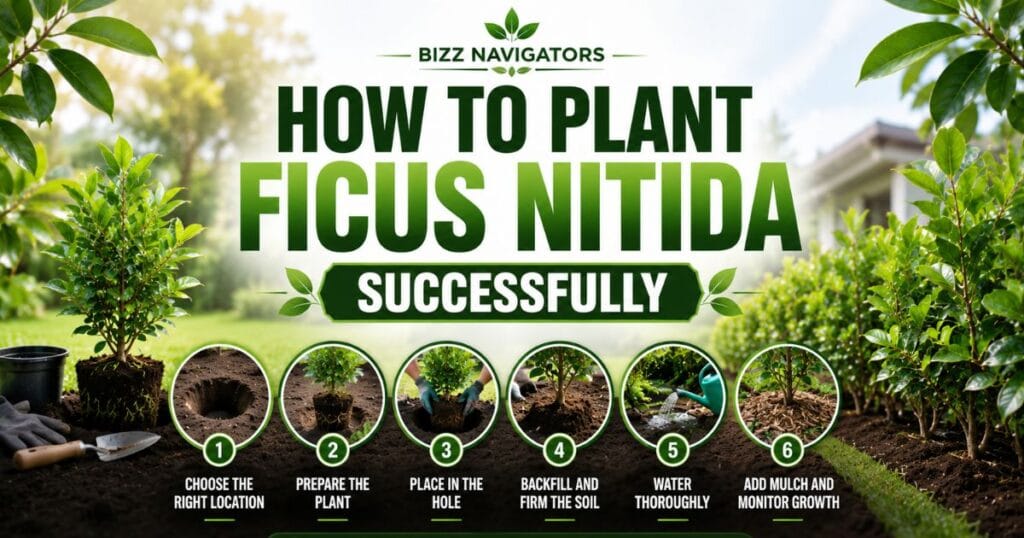
Planting Steps
1. Dig a hole twice as wide as the root ball.
2. Keep the planting depth equal to the nursery container.
3. Mix compost with the existing soil if drainage is poor.
4. Backfill gently and remove air pockets.
5. Water deeply immediately after planting.
6. Apply a 2–3 inch layer of mulch while keeping it away from the trunk.
7. Proper spacing is especially important when creating a Ficus nitida hedge. Most landscapers recommend spacing plants about 5–8 feet apart, depending on how quickly you want a dense screen.
Complete Ficus Nitida Care Guide
Healthy trees require consistent care during their early years but become relatively low maintenance after establishment.
Watering
Water deeply once or twice each week during the first growing season. Mature trees generally require less frequent irrigation, although prolonged drought may increase water needs.
Deep watering encourages stronger roots than frequent shallow watering.
Fertilizing
Apply a balanced slow-release fertilizer during spring. A second light application in early summer can support vigorous leaf growth if soil nutrients are limited.
Avoid excessive nitrogen, which may produce rapid but weak growth.
Mulching
Organic mulch helps retain moisture, regulate soil temperature, and reduce weed competition.
Refresh mulch annually without allowing it to touch the trunk.
Seasonal Maintenance
Routine inspections throughout the year help identify pest activity, damaged branches, or irrigation issues before they become serious.
Pruning and Shaping Tips
One reason Ficus nitida remains so popular is its excellent response to pruning.
Hedge Maintenance
Trim hedges every few weeks during active growth to maintain a dense, uniform appearance.
Frequent light trimming produces better results than occasional heavy pruning.
Tree Form
If growing a single specimen tree, remove crossing branches and lower limbs gradually while preserving a strong central structure.
Best Time to Prune
Late winter or early spring is ideal for structural pruning, while light shaping can continue throughout the growing season.
Root System and Important Considerations
The attractive canopy of Ficus nitida is matched by an equally vigorous root system.
Are Ficus Nitida Roots Invasive?
Yes. Mature trees develop large, aggressive roots capable of lifting sidewalks, damaging irrigation systems, and affecting nearby structures if planted too closely.
Recommended Planting Distance
For safety, plant mature trees at least:
20–30 feet from buildings
15–20 feet from swimming pools
Well away from septic systems
Away from underground utility lines
Where space is limited, installing root barriers before planting can help direct root growth downward.
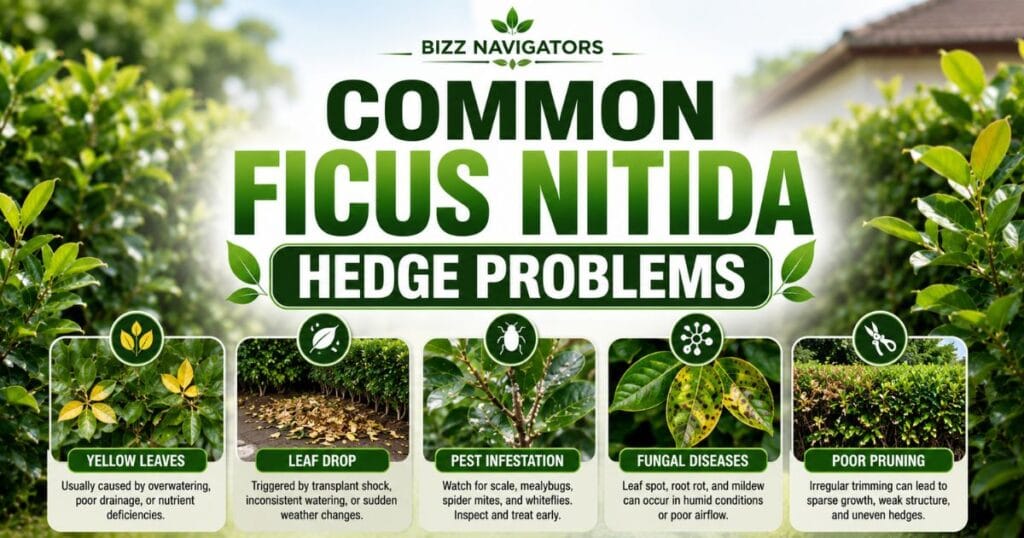
Common Ficus Nitida Hedge Problems
Although generally resilient, some issues may develop without proper maintenance.
Leaf Drop
Temporary leaf drop often occurs after transplanting, weather changes, or inconsistent watering.
Yellow Leaves
Yellow foliage usually indicates:
Overwatering
Poor drainage
Nutrient deficiencies
Root stress
Correcting irrigation practices typically resolves the problem.
Pest Problems
Common pests include:
Scale insects
Mealybugs
Spider mites
Whiteflies
Regular inspections make early treatment much easier.
Diseases
Occasionally, trees experience:
Root rot
Leaf spot diseases
Fungal infections
Good airflow and proper watering significantly reduce disease risk.
Propagating Ficus Nitida
Home gardeners can successfully grow new plants using several propagation methods.
Ficus Nitida Seeds
Growing from Ficus nitida seeds is possible but relatively slow. Germination rates also vary depending on seed quality and environmental conditions.
Stem Cuttings
Semi-hardwood cuttings provide the fastest and most reliable propagation method.
Healthy cuttings placed in a moist rooting medium often establish roots within several weeks.
Air Layering
Air layering produces larger plants more quickly and is commonly used for mature landscape specimens.
Can Ficus Nitida Be Grown as a Bonsai?
Yes. Ficus nitida bonsai is popular because the tree tolerates pruning, develops attractive trunks, and produces compact foliage.
Successful bonsai cultivation requires:
Regular root pruning
Consistent trimming
Bright indirect sunlight
Balanced watering
Well-draining bonsai soil
Its adaptability makes it an excellent option for beginners and experienced bonsai enthusiasts alike.

Ficus Nitida Price Guide
The Ficus nitida price depends on plant size, nursery location, and local demand.
Smaller container-grown plants are generally affordable, while mature field-grown specimens cost significantly more because of transportation and cultivation expenses.
Prices also increase for professionally trained Ficus nitida columns used in premium landscape projects.
When purchasing, prioritize healthy root systems and vigorous foliage rather than choosing solely by price.
Ficus Nitida vs Other Popular Ficus Trees
| Feature | Ficus Nitida | Ficus Benjamina |
| Growth Rate | Fast | Moderate |
| Privacy Hedge | Excellent | Good |
| Heat Tolerance | Excellent | Moderate |
| Wind Resistance | High | Moderate |
| Pruning Tolerance | Excellent | Very Good |
| Shade Production | Excellent | Good |
| Commercial Landscaping | Widely Used | Less Common |
For large outdoor landscapes and privacy screens, Ficus nitida is generally the stronger choice.
Advantages and Disadvantages
Pros
Evergreen throughout the year
Fast-growing privacy tree
Excellent shade producer
Highly tolerant of pruning
Suitable for commercial and residential landscapes
Performs well in hot climates
Attractive glossy foliage
Long lifespan with proper care
Cons
Aggressive root system
Requires regular hedge trimming
Can outgrow small spaces
Sensitive to prolonged freezing temperatures
Needs careful planting location selection
Frequently Asked Questions
How tall does Ficus Nitida grow?
A mature Ficus Nitida height typically ranges from 25 to 40 feet, although favorable conditions may allow even greater growth.
How fast does Ficus Nitida grow?
With proper watering and sunlight, it grows at a moderate to fast rate and establishes quickly.
Can Ficus Nitida grow in containers?
Yes, young trees grow well in large containers, but long-term growth requires regular root pruning or eventual transplanting.
Is Ficus nitida drought-tolerant?
Once established, it tolerates short dry periods better than many ornamental trees, although consistent watering produces healthier growth.
Does Ficus Nitida tolerate coastal conditions?
Yes. It performs well in coastal environments because it handles salt air and moderate winds effectively.
How often should a Ficus Nitida hedge be trimmed?
Most hedges benefit from trimming every 4–8 weeks during the active growing season to maintain a dense appearance.
Key Takeaways
Ficus nitida is a fast-growing evergreen widely used for privacy hedges, shade, and commercial landscaping.
It is commonly known as Indian laurel ficus nitida and is botanically classified as Ficus microcarpa.
Full sun, well-drained soil, and consistent watering promote vigorous growth.
Regular pruning keeps hedges dense and attractive.
Plan carefully before planting because mature roots can become invasive.
Column forms provide an excellent solution for narrow spaces.
With proper care, Ficus nitida delivers year-round greenery, excellent privacy, and long-lasting landscape value.
Conclusion
Whether you’re planting a single Ficus nitida tree, designing elegant Ficus nitida columns, or creating a dense Ficus nitida hedge, this evergreen offers an outstanding combination of beauty, durability, and versatility. Its rapid growth, lush foliage, and adaptability make it one of the best choices for warm-climate landscapes.
By selecting the right planting location, maintaining a regular pruning schedule, and understanding its vigorous root system, you can enjoy a healthy, attractive tree that enhances your property for many years.

At BizzNavigators, we answer the questions you’re actually searching for, honestly and clearly. We check our facts before we publish anything, and if we’re not sure about something, we tell you instead of guessing. Whatever you’re looking for- a tech fix, a business tip, or a simple how-to- we want to give you an answer you can trust.