

Understanding O2 Maximum and Why It Matters
Whether you are training for a marathon, trying to improve your fitness, or simply aiming for a healthier lifestyle, O2 maximum, commonly called VO2 max, is one of the most valuable health and performance measurements to understand. It reflects how efficiently your body uses oxygen during intense physical activity and provides a reliable picture of your cardiovascular fitness.
A higher O2 maximum generally means your heart, lungs, and muscles work together more efficiently. However, this number is not reserved for elite athletes. Anyone can benefit from understanding their O2 maximum because it can help guide exercise intensity, monitor fitness progress, and even support long-term health.
In this guide, you’ll learn what O2 maximum means, how it works, how it is measured, and practical ways to estimate it before exploring improvement strategies later in the article.
What Is O2 Maximum?
The Meaning Behind O2 Maximum
O2 maximum refers to the greatest amount of oxygen your body can absorb, transport, and use during maximum-effort exercise. In sports science, this value is known as VO2 max, where “V” stands for volume, “O2” represents oxygen, and “max” indicates the highest achievable level.
The measurement is typically expressed as milliliters of oxygen used per kilogram of body weight per minute (mL/kg/min).
Instead of focusing only on speed or strength, O2 maximum measures how effectively your body delivers oxygen to working muscles. Since oxygen is essential for producing energy, this value is considered one of the strongest indicators of aerobic fitness.
Why O2 Maximum Is Different From General Fitness
Many people believe they are fit simply because they exercise regularly. While consistent activity is important, O2 maximum provides a more accurate picture of how efficiently your cardiovascular system performs under physical stress.
Someone may lift heavy weights but still have a relatively low O2 maximum if they rarely perform cardiovascular exercise. Likewise, endurance athletes often achieve higher values because their bodies become more efficient at using oxygen over time.
O2 Maximum vs. Aerobic Fitness
Although these terms are often used interchangeably, they are not the same.
| Feature | O2 Maximum | Aerobic Fitness |
| Definition | Maximum oxygen your body can use during intense exercise | Overall ability to perform sustained physical activity |
| Measurement | Scientifically measured value | General fitness level |
| Accuracy | Highly precise | Broader fitness indicator |
| Best Use | Performance evaluation and training | Everyday health assessment |
Think of aerobic fitness as the overall picture, while O2 maximum is one of its most accurate measurable indicators.
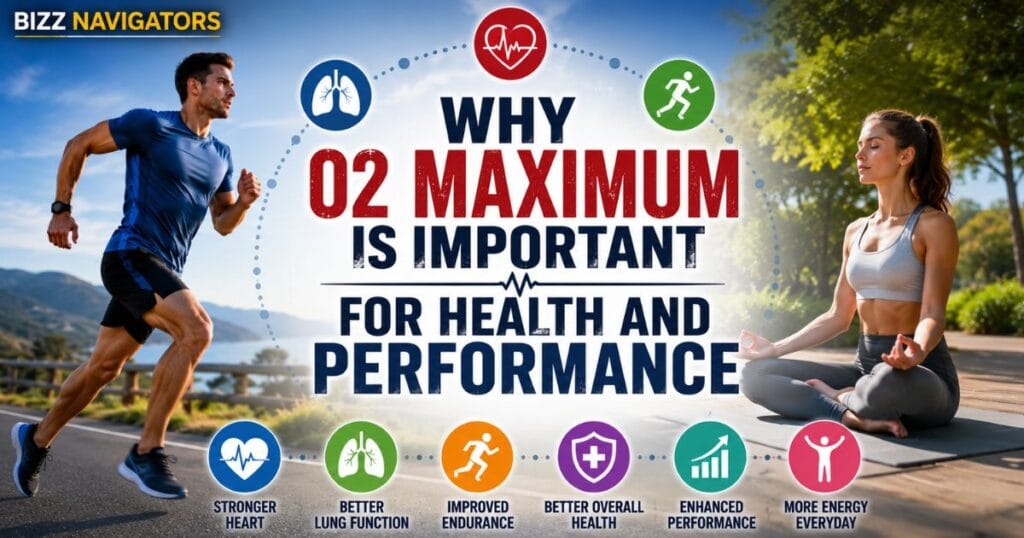
Why O2 Maximum Is Important for Health and Performance
Your O2 maximum affects much more than athletic performance. It influences how your body handles physical effort in daily life and can provide useful insights into your overall health.
Supports Better Endurance
When your muscles receive oxygen more efficiently, they produce energy for longer periods before fatigue sets in. This allows you to walk, cycle, run, swim, or hike with greater comfort.
Improves Heart and Lung Efficiency
A stronger cardiovascular system pumps oxygen-rich blood more effectively throughout the body. As a result, your heart doesn’t have to work as hard during everyday activities.
Helps Monitor Fitness Progress
Unlike body weight or appearance, O2 maximum reflects internal improvements. Even if the scale remains unchanged, an increasing O2 maximum often indicates better cardiovascular conditioning.
Encourages Smarter Training
Knowing your current O2 maximum helps you select exercise intensity that matches your fitness level instead of relying on guesswork.
May Support Long-Term Health
Research has consistently shown that higher cardiorespiratory fitness is associated with better overall health and a lower risk of several chronic conditions. While O2 maximum is not the only factor that matters, it is one of the strongest measurable indicators of cardiovascular health.
How Your Body Uses Oxygen During Exercise
Understanding the journey of oxygen makes it easier to appreciate why O2 maximum is such an important measurement.
Step 1: Breathing Oxygen Into the Lungs
Every breath delivers oxygen into tiny air sacs inside the lungs. From there, oxygen passes into the bloodstream.
Step 2: The Heart Pumps Oxygen-Rich Blood
Your heart acts as a powerful pump, sending oxygen-rich blood throughout the body. During exercise, heart rate increases so muscles receive oxygen more quickly.
Step 3: Muscles Use Oxygen to Produce Energy
Inside muscle cells are tiny structures called mitochondria. These are often called the body’s “powerhouses” because they convert oxygen and nutrients into usable energy (ATP).
The more efficiently your muscles perform this process, the better your endurance becomes.
Step 4: Carbon Dioxide Leaves the Body
After producing energy, muscles release carbon dioxide as a waste product. Blood carries it back to the lungs, where it is removed when you exhale.
Why This Process Matters
O2 maximum depends on how efficiently each step works together:
Healthy lungs absorb oxygen.
A strong heart transports it.
Healthy blood delivers it.
Muscles use it efficiently.
If any part of this system is limited, your O2 maximum may decrease.
Quick Insight: Think of your body as a delivery network. Oxygen is the package, your heart is the delivery truck, blood vessels are the roads, and muscles are the destination. Faster and more efficient deliveries result in better physical performance.
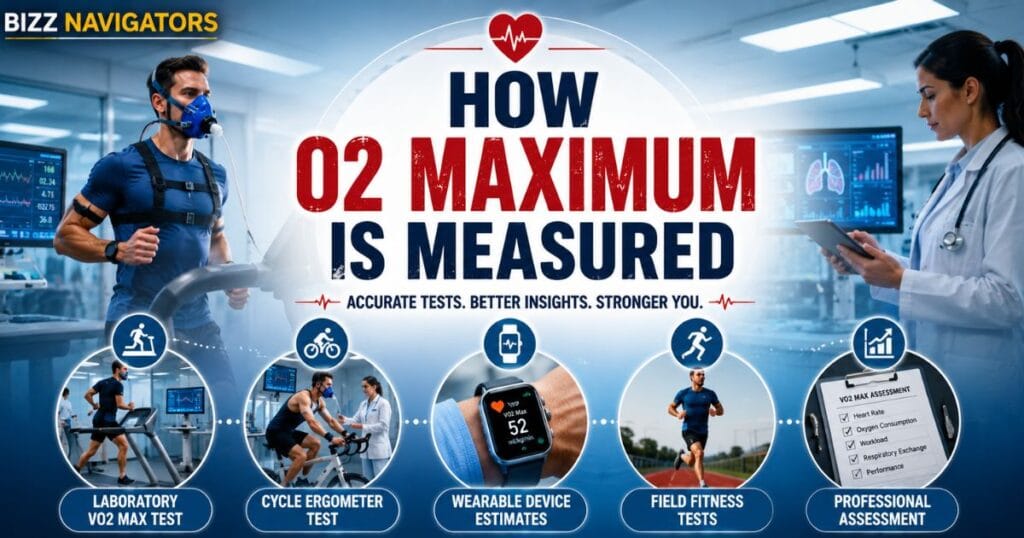
How O2 Maximum Is Measured
Several methods can determine your O2 maximum, ranging from highly accurate laboratory assessments to practical fitness estimates.
Laboratory VO2 Max Test
The gold standard involves exercising on a treadmill or stationary bike while wearing a specialized breathing mask.
During the test, experts measure:
Oxygen inhaled
Carbon dioxide exhaled
Heart rate
Exercise intensity
Breathing efficiency
Because these values are measured directly, laboratory testing provides the most accurate O2 maximum result.
Treadmill Stress Testing
Many sports performance centers use progressively harder treadmill protocols. As speed and incline increase, your body eventually reaches its maximum oxygen consumption.
Athletes and researchers commonly use this method.
Cycling Ergometer Assessment
People with joint limitations or cycling athletes may perform the same evaluation on a stationary bicycle equipped with professional monitoring equipment.
This provides reliable results while placing less impact on the knees and ankles.
Wearable Fitness Devices
Modern smartwatches can estimate O2 maximum using information such as:
Heart rate
Running pace
Walking speed
GPS movement
Exercise history
Although these estimates are useful for tracking trends over time, they should not replace laboratory measurements when precise values are needed.
Practical Ways to Estimate Your O2 Maximum at Home
You don’t always need expensive equipment to gain a reasonable understanding of your aerobic fitness. Several field tests can provide useful estimates when performed correctly.
Cooper 12-Minute Run Test
This classic assessment measures the distance you can cover in 12 minutes. Greater distance generally indicates a higher estimated O2 maximum.
It works best on a flat running track with consistent pacing.
Rockport One-Mile Walk Test
Designed for beginners and individuals who prefer walking, this test estimates O2 maximum using:
Walking time
Heart rate after finishing
Age
Gender
Body weight
Because it requires only a brisk walk, it is suitable for a wide range of fitness levels.
Smartwatch Estimates
Many fitness watches automatically calculate an estimated O2 maximum after several outdoor walks or runs. While results vary between brands, they can help monitor improvement over weeks and months.
Online O2 Maximum Calculators
Several online calculators estimate O2 maximum based on performance tests or personal information. Although they cannot match laboratory accuracy, they offer a convenient starting point for people beginning a fitness journey.
Expert Tip: Rather than focusing on a single number, track your O2 maximum over time. A gradual upward trend often provides a more meaningful indication of improving cardiovascular fitness than one isolated measurement alone.
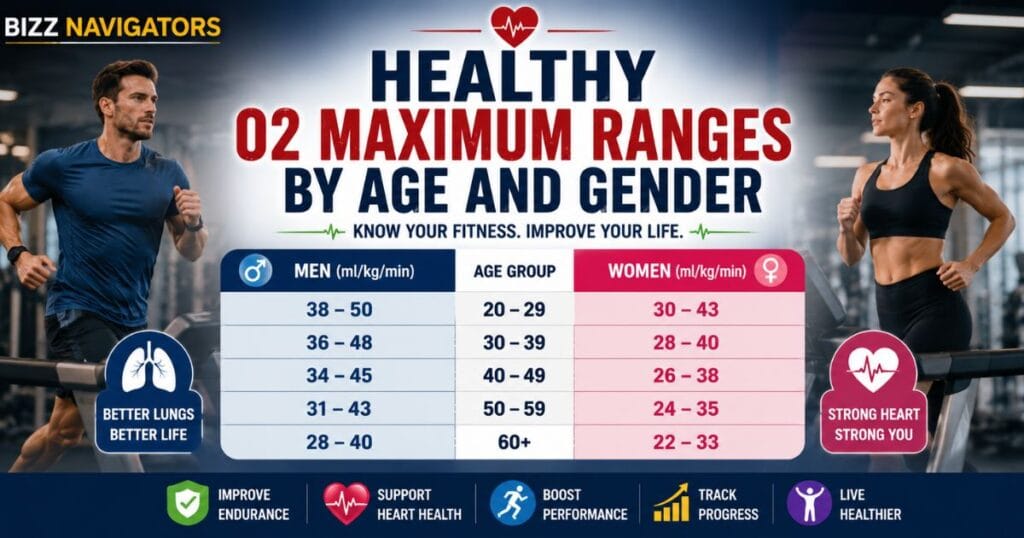
Healthy O2 Maximum Ranges by Age and Gender
No single O2 maximum value is considered ideal for everyone. Your age, fitness level, genetics, and training history all influence the score. Instead of comparing yourself with elite athletes, compare your results with healthy reference ranges for your age group.
General O2 Maximum Reference Chart
| Age Group | Men (mL/kg/min) | Women (mL/kg/min) |
| 20–29 | 38–50 | 30–43 |
| 30–39 | 36–48 | 28–40 |
| 40–49 | 34–45 | 26–38 |
| 50–59 | 31–43 | 24–35 |
| 60+ | 28–40 | 22–33 |
Note: These values are general fitness references. Athletes, especially endurance runners, cyclists, and cross-country skiers, often record significantly higher O2 maximum values.
How to Interpret Your Score
Instead of focusing on whether your score is “perfect,” consider what it means for your current fitness level.
Excellent: Outstanding cardiovascular fitness with exceptional endurance.
Good: Healthy aerobic capacity suitable for most sports and daily activities.
Average: Normal fitness with room for improvement.
Below Average: Indicates that increasing physical activity may improve endurance.
Low: May suggest poor cardiovascular fitness or another underlying issue worth discussing with a healthcare professional if accompanied by symptoms.
Factors That Influence Your O2 Maximum
Many people assume exercise alone determines O2 maximum, but several factors work together.
Age
O2 maximum naturally declines with age. However, regular aerobic exercise can slow this decline and help maintain strong cardiovascular health.
Genetics
Some individuals are naturally gifted with a higher aerobic capacity. Genetics influence your starting point, but consistent training still makes a meaningful difference.
Exercise Habits
Regular endurance training strengthens your heart, improves lung efficiency, and increases your muscles’ ability to use oxygen.
Body Composition
Since O2 maximum is measured relative to body weight, carrying excess body fat may lower your score even if your heart is healthy.
Heart and Lung Health
Healthy cardiovascular and respiratory systems are essential for delivering oxygen throughout the body.
Altitude
Higher elevations contain less oxygen. Initially, your O2 maximum may decrease, although your body gradually adapts over time.
Recovery and Sleep
Poor sleep and inadequate recovery reduce training quality and can limit long-term improvements.
Can You Improve Your O2 Maximum?
The encouraging news is that most people can improve their O2 maximum with consistent training.
Beginners often notice measurable progress within several weeks, while experienced athletes usually improve more gradually because they are already closer to their physiological potential.
Your improvement depends on factors such as:
Current fitness level
Training consistency
Exercise intensity
Nutrition
Recovery quality
Genetics
Rather than chasing dramatic increases, focus on steady progress over months.
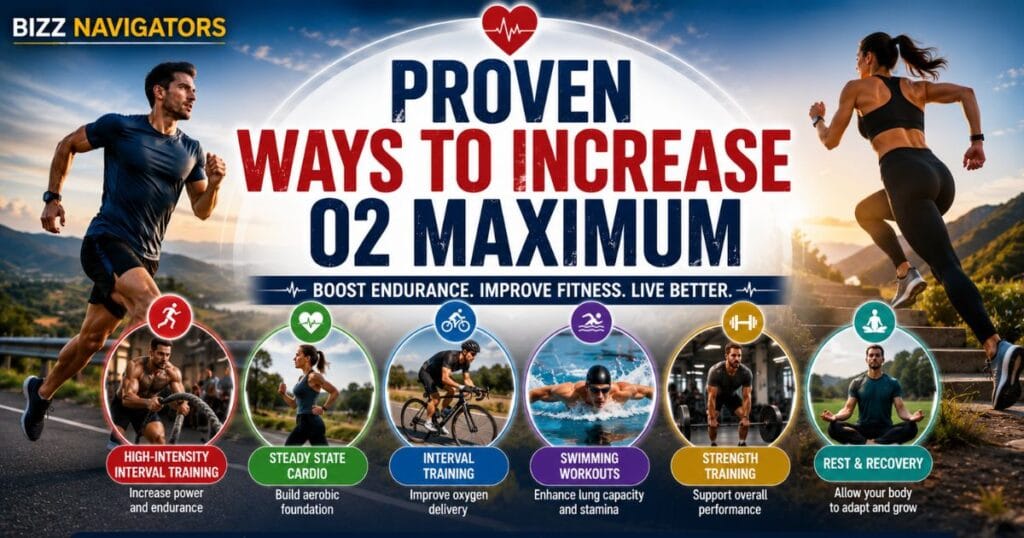
Proven Ways to Increase O2 Maximum
High-Intensity Interval Training (HIIT)
Alternating short bursts of hard effort with recovery periods challenges your cardiovascular system and is one of the most effective methods for improving O2 maximum.
Zone 2 Cardio
Moderate-intensity exercise performed for longer durations helps build a stronger aerobic foundation.
Popular options include:
Brisk walking
Cycling
Swimming
Jogging
Rowing
Interval Running
Alternating fast and slow running intervals improves oxygen delivery while enhancing endurance and speed.
Strength Training
Although resistance training primarily builds muscle, it also supports better athletic performance by improving movement efficiency and reducing injury risk.
Progressive Overload
Gradually increasing workout duration, intensity, or frequency encourages continued adaptation without overwhelming the body.
Information Gain: A balanced weekly routine that combines HIIT, steady-state cardio, strength training, and recovery days is generally more effective than repeating the same workout every day.
Nutrition Habits That Support Better Oxygen Use
Exercise is only part of the equation. Proper nutrition helps your body transport and utilize oxygen efficiently.
Eat Iron-Rich Foods
Iron supports healthy red blood cells that carry oxygen throughout the body.
Good sources include:
Lean meat
Spinach
Lentils
Beans
Prioritize Quality Protein
Protein supports muscle repair after training sessions.
Choose Smart Carbohydrates
Whole grains, fruits, and vegetables provide the energy needed for aerobic exercise.
Stay Hydrated
Even mild dehydration can reduce exercise performance and make workouts feel harder than they should.
Include Nitrate-Rich Vegetables
Foods such as beetroot and leafy greens may support efficient blood flow during exercise.
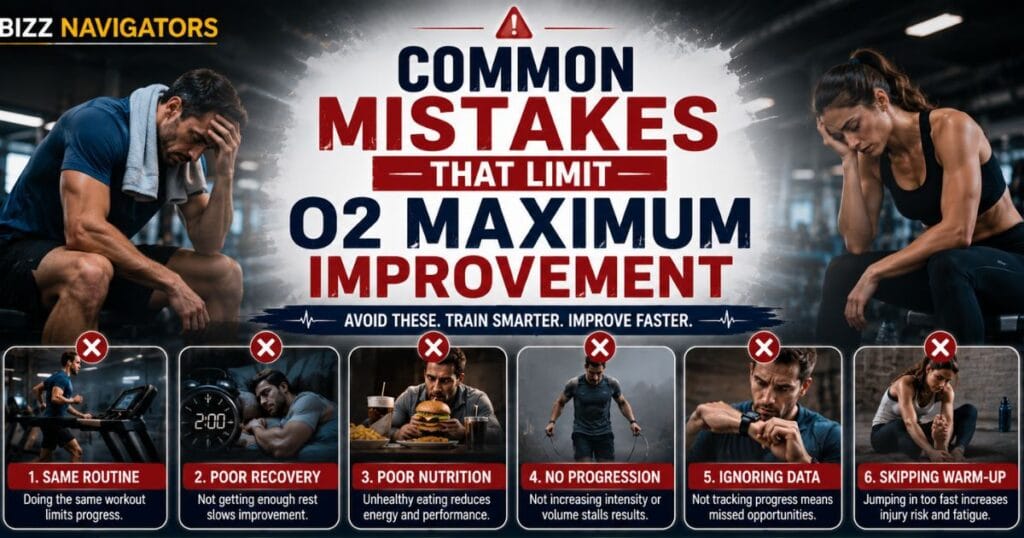
Common Mistakes That Limit O2 Maximum Improvement
Many people train consistently but unknowingly slow their progress.
| Common Mistake | Better Alternative |
| Exercising at the same intensity every session | Mix easy, moderate, and hard workouts |
| Ignoring recovery days | Schedule regular rest days |
| Poor sleep habits | Aim for consistent, quality sleep |
| Skipping warm-ups | Prepare the cardiovascular system gradually |
| Training without a plan | Follow a structured program with progression |
| Expecting instant results | Focus on long-term consistency |
Avoiding these mistakes often produces better results than simply increasing workout volume.
Are Smartwatches Accurate for Measuring O2 Maximum?
Fitness watches have become increasingly sophisticated, but they still estimate rather than directly measure O2 maximum.
Benefits
Easy to use
Tracks long-term trends
Encourages consistent training
No laboratory visit required
Limitations
Accuracy can be affected by:
GPS signal quality
Heart-rate sensor performance
Running terrain
Weather conditions
Fitness algorithm differences between brands
For medical evaluation or professional sports testing, laboratory assessments remain the gold standard.
Low O2 Maximum: Should You Be Concerned?
A low O2 maximum does not automatically indicate a serious health problem.
Possible reasons include:
Physical inactivity
Aging
Recovery from illness
Excess body weight
Limited cardiovascular conditioning
However, if a low score is accompanied by symptoms such as chest pain, unusual shortness of breath, dizziness, or fainting during exercise, consult a qualified healthcare professional promptly.
Is a Higher O2 Maximum Always Better?
Higher values generally indicate better aerobic fitness, but there is a practical limit.
Elite endurance athletes often achieve exceptionally high scores because years of structured training have optimized their cardiovascular systems.
For most people, the goal should not be achieving elite numbers but improving personal fitness, supporting heart health, and increasing everyday stamina.

O2 Maximum vs. VO2 Peak
Although these terms sound similar, they describe different situations.
| Feature | O2 Maximum (VO2 Max) | VO2 Peak |
| Meaning | Highest oxygen use the body can achieve | Highest oxygen use recorded during a specific test |
| Effort Required | True maximum effort | May end before true maximum is reached |
| Accuracy | More precise fitness indicator | Useful estimate when maximum effort isn’t achieved |
| Common Use | Research and athletic assessment | Clinical testing and rehabilitation |
Key Takeaways
O2 maximum measures your body’s maximum ability to use oxygen during intense exercise.
It is one of the strongest indicators of cardiovascular fitness and aerobic endurance.
Age, genetics, training habits, nutrition, recovery, and overall health all influence your score.
Laboratory testing provides the most accurate measurement, while smartwatches and field tests offer useful estimates.
Regular aerobic exercise, interval training, strength work, balanced nutrition, and adequate recovery can gradually improve O2 maximum.
Tracking progress over time is more valuable than focusing on a single measurement.
Frequently Asked Questions
What’s a good VO2 max by age?
A good VO2 max depends on your age. Younger adults generally have higher average values than older adults, and endurance athletes typically score well above average.
How do I raise my VO2 max quickly?
The most effective approach combines HIIT, steady aerobic exercise, progressive overload, proper nutrition, quality sleep, and consistent training. Safe, lasting improvements usually take several weeks rather than a few days.
How do I calculate my VO2 max?
You can calculate or estimate VO2 max using laboratory testing, field tests such as the Cooper Run Test or Rockport Walk Test, smartwatch estimates, or reputable online calculators.
Should I worry if my VO2 max is low?
Not necessarily. A low score often reflects current fitness rather than illness. However, if you experience symptoms like chest pain, dizziness, or severe breathlessness during exercise, seek medical advice.
Can beginners improve O2 maximum?
Yes. Beginners often experience noticeable improvements because their cardiovascular system responds quickly to regular, structured training.
Does losing weight improve O2 maximum?
In many cases, yes. Since O2 maximum is expressed relative to body weight, reducing excess body fat while maintaining muscle mass may improve your score alongside regular exercise.
How often should I measure O2 maximum?
For most people, checking every two to three months is sufficient to monitor meaningful progress without becoming overly focused on short-term fluctuations.
Conclusion
O2 maximum is more than just a performance metric; it is a practical indicator of how efficiently your heart, lungs, and muscles work together. Whether your goal is to run farther, cycle faster, or simply enjoy better everyday health, improving your O2 maximum through regular exercise, balanced nutrition, and proper recovery can deliver lasting benefits.
Focus on gradual improvement rather than comparing yourself with others, and use your progress as motivation to build a stronger, healthier cardiovascular system.

At BizzNavigators, we answer the questions you’re actually searching for, honestly and clearly. We check our facts before we publish anything, and if we’re not sure about something, we tell you instead of guessing. Whatever you’re looking for- a tech fix, a business tip, or a simple how-to- we want to give you an answer you can trust.