Digital Vending Machine: A Smarter Way to Sell Products Anytime
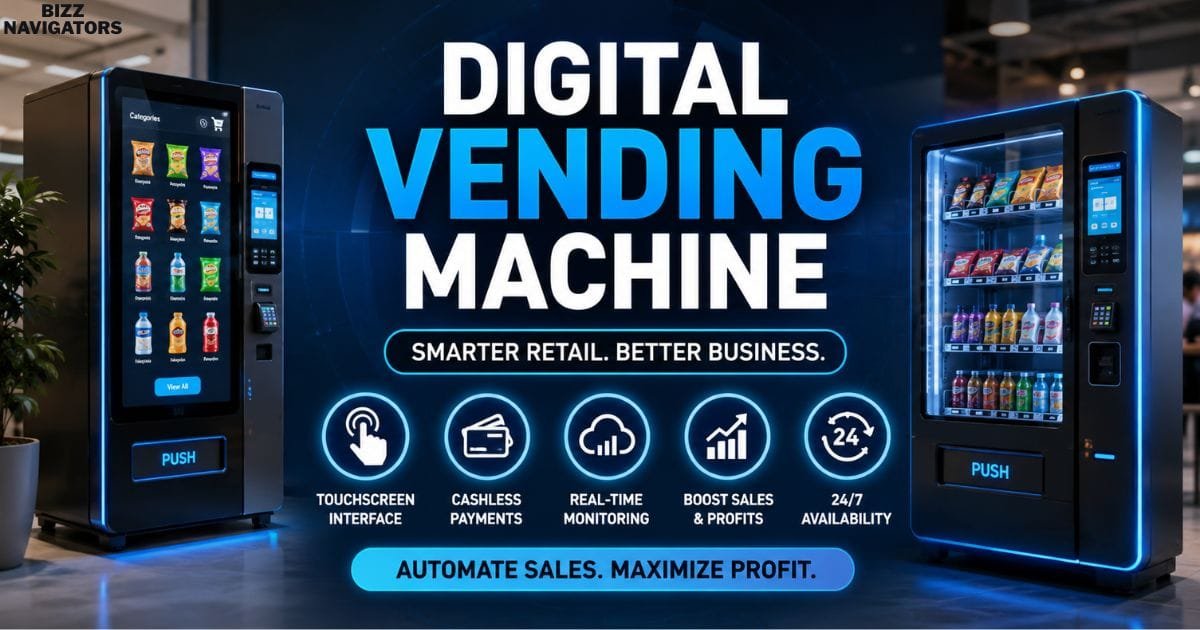
A digital vending machine is transforming automated retail by making product purchases faster, more convenient, and more interactive. Unlike traditional vending machines that rely on physical buttons and limited payment methods, digital models use touchscreen displays, cloud connectivity, and cashless payments to create a modern shopping experience.
Businesses across retail, healthcare, education, transportation, and hospitality are adopting digital vending machines because they improve customer satisfaction while reducing day-to-day management. Operators can monitor inventory remotely, receive sales reports instantly, and restock products before shelves become empty.
As consumer expectations continue to evolve, digital vending technology is becoming more than a convenience it is a practical business solution that supports 24/7 sales, real-time monitoring, and data-driven decisions.
What Is a Digital Vending Machine?
A digital vending machine is an automated self-service retail machine that uses digital technology to display products, process secure payments, and manage operations remotely. Instead of relying only on mechanical buttons and coin slots, these machines feature interactive software that simplifies both purchasing and machine management.
Most modern digital vending machines support multiple payment options, including credit cards, debit cards, mobile wallets, QR codes, and contactless payments. Many models also connect to cloud-based management platforms, allowing owners to track inventory, monitor sales, and receive maintenance alerts from virtually anywhere.
Digital vending machines are commonly used to sell:
Snacks and beverages
Electronics and accessories
Beauty and personal care products
Medical supplies
Office essentials
Fresh food
Specialty retail products
Their flexibility allows businesses to customize inventory based on customer demand and location.
How Does a Digital Vending Machine Work?
Although advanced technology powers these machines, the purchasing process remains simple for customers.
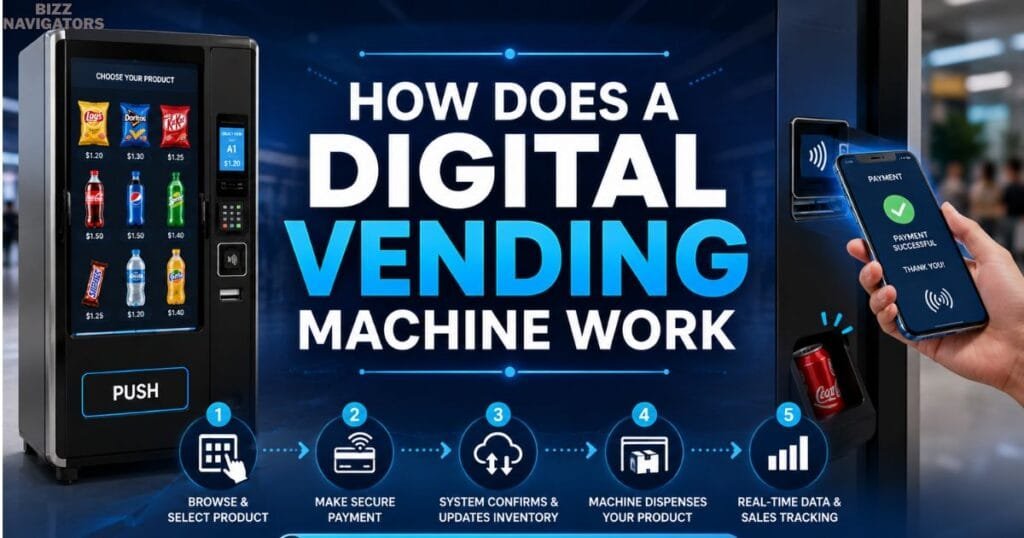
Product Browsing
Customers begin by exploring products on a responsive touchscreen display. High-quality images, pricing, descriptions, and promotional offers help shoppers make informed decisions quickly.
Product Selection
After choosing an item, the machine confirms product availability using its digital inventory system. This reduces the chance of selecting an out-of-stock product.
Secure Payment Processing
Customers complete payment using their preferred method. Depending on the machine, supported options may include:
Contactless cards
Mobile payment apps
QR code payments
Credit and debit cards
Cash (on selected models)
Encrypted payment gateways help protect financial information during every transaction.
Automatic Product Dispensing
Once payment is approved, the machine dispenses the selected product within seconds. Many systems also send digital receipts through email or SMS.
Remote Data Updates
Every transaction updates inventory levels instantly. Machine owners can review sales, stock availability, and performance through an online dashboard without visiting the machine.
Key Features That Make Digital Vending Machines Stand Out
Modern vending solutions offer far more than automated product dispensing. Their digital capabilities create value for both customers and business owners.
Interactive Touchscreen Display
Large digital screens replace traditional push-button controls, making product selection easier and more engaging.
Customers can:
View product images
Read nutritional or technical information
Compare options
Access promotional offers
Browse multiple product categories
The touchscreen interface also allows businesses to update pricing and advertisements remotely without changing physical labels.
Multiple Cashless Payment Options
Today’s consumers increasingly expect flexible payment methods.
Most digital vending machines support:
NFC payments
Apple Pay
Google Pay
EMV chip cards
QR code payments
Mobile wallets
Offering multiple payment options reduces abandoned purchases and improves customer convenience.
Cloud-Based Inventory Management
One of the biggest advantages of digital vending technology is real-time inventory tracking.
Business owners can monitor:
Remaining stock
Best-selling products
Low inventory alerts
Restocking schedules
Machine status
This minimizes unnecessary service visits while helping maintain product availability.
Remote Machine Monitoring
Operators no longer need to inspect every machine manually.
Cloud-connected systems provide instant notifications for:
Technical issues
Power interruptions
Payment errors
Product jams
Door openings
Temperature changes (for refrigerated machines)
Remote monitoring reduces downtime and improves operational efficiency.
Digital Advertising Opportunities
Touchscreens can generate additional revenue by displaying:
Product promotions
Seasonal offers
Brand advertisements
Cross-selling recommendations
Video marketing content
Businesses can schedule promotional campaigns remotely across multiple machine locations.
AI-Assisted Product Recommendations
Some advanced digital vending machines analyze purchasing behavior to recommend complementary products.
For example:
A beverage suggestion after selecting snacks.
A charging cable alongside electronic accessories.
A healthy snack recommendation based on previous purchases.
Although not every machine includes artificial intelligence, recommendation systems can increase average order value.
Benefits of Using a Digital Vending Machine
Digital vending technology benefits customers and operators alike by improving convenience, efficiency, and profitability.
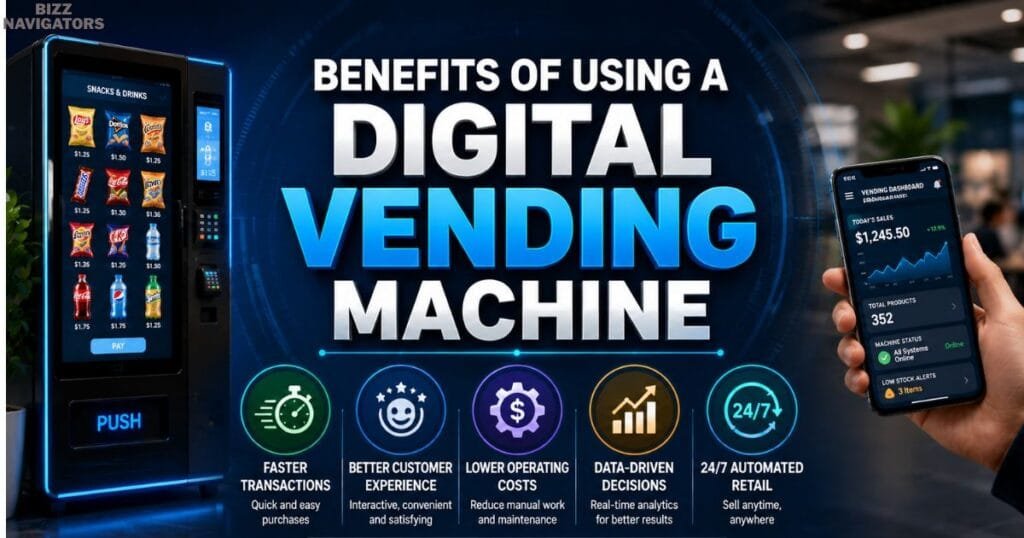
Faster Transactions
Digital interfaces simplify product selection and payment, allowing customers to complete purchases in less time compared to many traditional machines.
Shorter transaction times also reduce waiting lines in busy environments such as airports, hospitals, and office buildings.
Better Customer Experience
Customers appreciate intuitive navigation, modern payment options, and clear product information.
Features such as touchscreen browsing, instant payment confirmation, and reliable dispensing create a smoother shopping experience that encourages repeat purchases.
Lower Operating Costs
Although the initial investment may be higher than a conventional vending machine, digital systems often reduce long-term operating expenses.
Businesses save money through:
Smarter inventory planning
Fewer emergency service visits
Reduced cash handling
Automated reporting
Remote troubleshooting
These efficiencies help improve overall operational performance.
Data-Driven Business Decisions
Every transaction generates valuable information.
Operators can analyze:
Peak purchasing hours
Best-selling products
Seasonal buying trends
Customer preferences
Revenue by location
This data makes it easier to optimize inventory, pricing, and product selection for higher profitability.
24/7 Automated Retail
Digital vending machines never require traditional store hours.
Customers can purchase products anytime, making them ideal for locations with continuous foot traffic such as hospitals, transportation hubs, residential communities, universities, and corporate offices.
Continuous availability creates additional revenue opportunities without requiring full-time retail staff.
Digital Vending Machine Cost: What Influences the Investment?
The digital vending machine cost depends on several factors, including machine size, software features, payment technology, and product capacity. While entry-level machines are suitable for simple snack or beverage sales, premium models include AI features, cloud management, refrigeration, and advanced security systems.
Instead of focusing only on the purchase price, businesses should evaluate the total cost of ownership, including installation, software subscriptions, maintenance, and payment processing fees. A well-equipped machine may cost more initially but often delivers better long-term value through higher efficiency and increased sales.
Factors That Affect Pricing
Several elements influence the final cost of a digital vending machine:
Machine size and storage capacity
Indoor or outdoor installation
Refrigerated or non-refrigerated design
Touchscreen quality and display size
Cashless payment integration
Cloud-based management software
AI-powered inventory and sales analytics
Custom branding and cabinet design
Selecting features that match your business needs helps maximize return on investment without paying for unnecessary functionality.
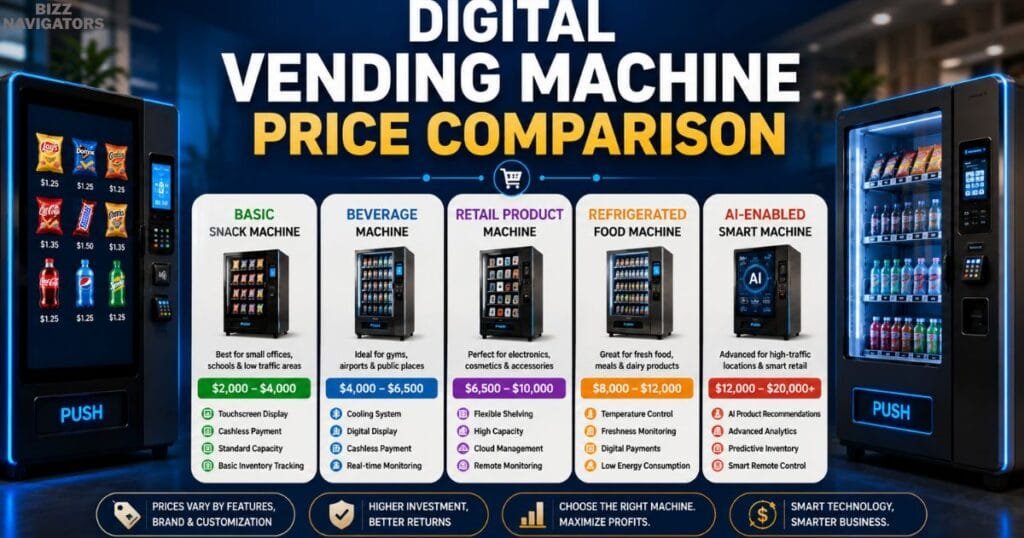
Digital Vending Machine Price Comparison
The table below provides a general comparison of common machine types.
| Machine Type | Best For | Typical Investment | Key Features |
| Basic Snack Machine | Offices, schools | Lower | Touchscreen, cashless payment |
| Beverage Machine | Gyms, airports | Medium | Cooling system, digital display |
| Retail Product Machine | Electronics, cosmetics | Medium to High | Flexible shelving, cloud monitoring |
| Refrigerated Food Machine | Hospitals, campuses | High | Temperature control, freshness monitoring |
| AI-Enabled Smart Machine | High-traffic retail | Premium | AI analytics, personalized recommendations |
Actual pricing varies by manufacturer, customization, and region.
Where Do Digital Vending Machines Perform Best?
Location plays a major role in profitability. Even the most advanced machine cannot reach its full potential without consistent customer traffic.
High-performing locations include:
Airports and Transit Stations
Travelers often need quick access to drinks, snacks, travel accessories, and electronics, making transportation hubs ideal for automated retail.
Hospitals and Healthcare Facilities
Healthcare workers, patients, and visitors require convenient access to food, beverages, hygiene products, and medical essentials throughout the day.
Universities and Educational Campuses
Students value fast, cashless purchasing between classes, especially during evenings when many campus stores are closed.
Corporate Offices
Employees appreciate convenient access to refreshments, office supplies, and quick meals without leaving the workplace.
Hotels, Fitness Centers, and Entertainment Venues
Guests often prefer self-service shopping for convenience, particularly outside normal retail hours.
Digital Vending Machine vs. Traditional Vending Machine
Choosing between a digital and traditional vending machine depends on business goals.
| Feature | Digital Vending Machine | Traditional Vending Machine |
| Product Display | Interactive touchscreen | Physical buttons |
| Payment Options | Cashless and contactless | Mostly cash with limited card support |
| Inventory Tracking | Real-time cloud monitoring | Manual checking |
| Remote Management | Yes | Limited |
| Customer Experience | Modern and interactive | Basic |
| Marketing Features | Digital advertisements | Not available |
Digital machines provide greater flexibility, better customer engagement, and more operational control.
Digital Vending Machine vs. AI Vending Machine
Although these terms are sometimes used interchangeably, they are not identical.
A digital vending machine focuses on touchscreen operation, digital payments, and cloud connectivity.
An AI vending machine goes a step further by using artificial intelligence to analyze customer behavior, predict inventory demand, recommend products, and automate business decisions.
Businesses with multiple locations or high transaction volumes often benefit most from AI-powered solutions.
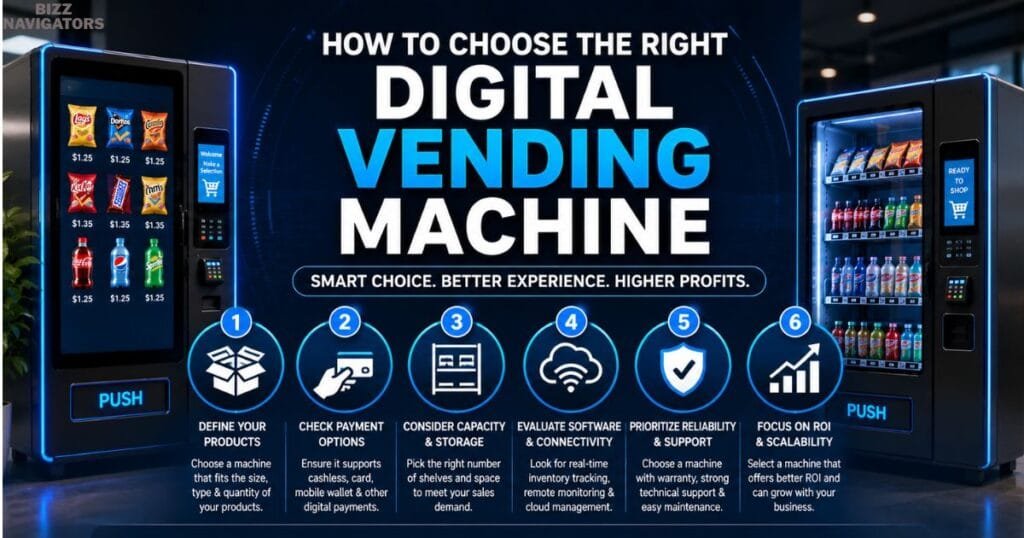
How to Choose the Right Digital Vending Machine
Before purchasing a digital vending machine for sale, consider the following:
Define the products you plan to sell.
Estimate expected daily customer traffic.
Choose a machine with sufficient storage capacity.
Confirm support for popular digital payment methods.
Evaluate software reporting and inventory management tools.
Check warranty coverage and technical support availability.
Consider future scalability if you plan to expand.
Buying based on long-term business requirements usually delivers better value than selecting the lowest-priced model.
Can You Buy a Digital Vending Machine Online?
Yes. Many manufacturers and authorized distributors allow businesses to purchase a digital vending machine online. Before placing an order, compare specifications, software capabilities, warranty terms, customer support, and available customization options.
Requesting a product demonstration or live software walkthrough can help you understand how the machine performs in real-world conditions.
Are Digital Vending Machines Suitable for Vape Products?
Some businesses use digital vending machines for vapes, particularly in regions where local laws permit automated vape sales.
However, operators should carefully review applicable regulations before installation. Important considerations include:
Age-verification requirements
Licensing obligations
Product restrictions
Local retail regulations
Secure payment compliance
Following legal requirements protects both customers and business owners.
Emerging Trends Shaping Digital Vending Machines
Technology continues to improve automated retail at a rapid pace.
Future developments include:
AI-powered demand forecasting
Computer vision for faster purchases
Predictive maintenance using IoT sensors
Personalized product recommendations
Voice-assisted shopping
Energy-efficient hardware
Enhanced cybersecurity for payment protection
These innovations will continue making digital vending smarter, more reliable, and more profitable.
Conclusion
A digital vending machine offers far more than automated product dispensing. It combines modern payment technology, cloud connectivity, real-time analytics, and user-friendly shopping into a single retail solution. Whether you operate a small business or manage a large network of vending machines.
Investing in digital technology can improve operational efficiency, reduce manual work, and create a better customer experience. By selecting the right machine, installing it in a high-traffic location, and using sales data to optimize inventory, businesses can build a scalable and profitable automated retail operation.
Frequently Asked Questions
What is a digital vending machine?
A digital vending machine is a self-service retail machine that uses touchscreen controls, digital payments, and cloud-based management to automate product sales.
How much does a digital vending machine cost?
The cost varies depending on machine size, features, payment technology, refrigeration, and software capabilities. Basic models generally cost less than AI-enabled systems with advanced management tools.
Can I buy a digital vending machine online?
Yes. Many manufacturers and authorized distributors sell digital vending machines online with customization, warranty, and technical support options.
Are digital vending machines profitable?
They can be highly profitable when installed in busy locations, stocked with in-demand products, and managed using sales and inventory analytics.
What products can be sold in a digital vending machine?
These machines can dispense snacks, beverages, electronics, cosmetics, office supplies, medical products, fresh food, personal care items, and many other retail products.
What is the difference between a digital vending machine and an AI vending machine?
A digital vending machine provides touchscreen operation, cashless payments, and remote management, while an AI vending machine adds intelligent features such as customer behavior analysis, demand forecasting, and personalized product recommendations.
Do digital vending machines accept both cash and digital payments?
Many models support both options, although newer machines primarily focus on secure cashless and contactless payment methods for greater convenience.

At BizzNavigators, we answer the questions you’re actually searching for, honestly and clearly. We check our facts before we publish anything, and if we’re not sure about something, we tell you instead of guessing. Whatever you’re looking for- a tech fix, a business tip, or a simple how-to- we want to give you an answer you can trust.