
Introduction
Carpet stains can quickly ruin the look of your home, but the right cleaning method can make all the difference. Rubbing alcohol carpet stains is an effective solution for removing stubborn stains like ink, grease, makeup, and adhesive without leaving heavy residue when used correctly. However, rubbing alcohol is not suitable for every stain or carpet type, and using it improperly may cause discoloration or damage.
Before you start cleaning, it’s important to know where rubbing alcohol carpet stains works best, when to avoid it, and the safest way to apply it. This article explains everything you need to remove tough carpet stains confidently while protecting your carpet, helping you get the best results with rubbing alcohol.
What Makes Rubbing Alcohol Effective for Carpet Stain Removal?
Rubbing alcohol, also known as isopropyl alcohol, acts as a solvent rather than a traditional detergent. Instead of creating soap bubbles that wash away dirt, it breaks down substances that cling tightly to carpet fibers.
How Rubbing Alcohol Loosens Tough Stains
Many stubborn stains contain oils, pigments, or synthetic compounds that resist plain water. Rubbing alcohol penetrates these materials and loosens their bond with the carpet fibers, making them easier to lift with a clean cloth.
Another advantage is its quick evaporation. Because it dries faster than water-based cleaners, it reduces the amount of moisture left inside the carpet, helping lower the risk of mildew or lingering odors.
Choosing the Right Alcohol Strength
Most homeowners will find 70% isopropyl alcohol suitable for routine stain removal. It contains enough water to slow evaporation slightly, allowing the solution to work on the stain before drying.
A 91% solution evaporates much faster and can be useful for particularly stubborn adhesive or ink stains. However, it should be used carefully because stronger concentrations may affect sensitive carpet dyes if applied excessively.
When Rubbing Alcohol Outperforms Other Cleaners
Rubbing alcohol often performs better than standard household cleaners when dealing with:
Permanent marker
Ballpoint pen ink
Grease spots
Cosmetic products
Sticky adhesive residue
Shoe polish
Some paint splatters
Unlike many soap-based cleaners, rubbing alcohol usually leaves little residue behind when used properly, reducing the chance of attracting additional dirt after cleaning.
Rubbing Alcohol for Carpet Stains: Which Stains Respond Best?
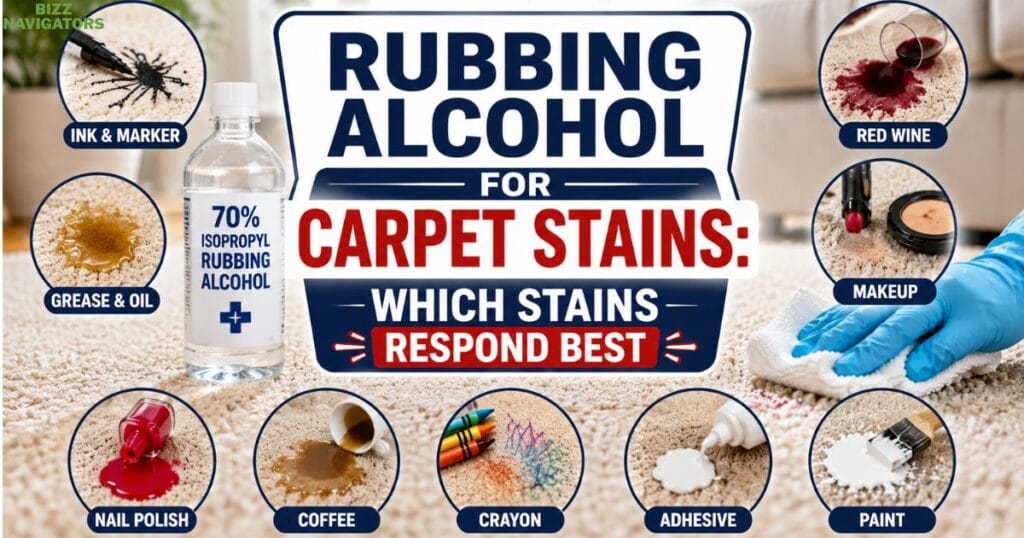
Not every carpet stain behaves the same way. Some dissolve easily with rubbing alcohol, while others require entirely different cleaning methods.
Ink and Permanent Marker
Ink stains are among the most common reasons people reach for rubbing alcohol.
Instead of spreading the ink, alcohol helps dissolve it gradually so it transfers onto a clean cloth. Working from the outside of the stain toward the center helps prevent the stain from expanding.
Grease and Cooking Oil
Oil-based stains can become deeply embedded inside carpet fibers.
Because rubbing alcohol breaks down oily substances, it can loosen fresh grease more effectively than water alone. After blotting the stain, a mild detergent rinse helps remove any remaining residue.
Makeup and Cosmetic Products
Foundation, lipstick, mascara, and liquid cosmetics often contain waxes and oils.
Applying a small amount of rubbing alcohol with a microfiber cloth can lift much of the cosmetic residue before it permanently bonds with the carpet fibers.
Paint and Sticky Adhesives
Certain water-resistant paints, glue residue, and adhesive marks soften when exposed to rubbing alcohol.
The key is patience. Allow a small amount of alcohol to sit briefly before gently blotting instead of scrubbing aggressively.
Shoe Polish and Sticky Residue
Dark shoe polish and sticky residue from labels or tape often contain solvents and waxes.
Rubbing alcohol helps dissolve these substances, making cleanup easier without requiring excessive force.
Stains That Require a Different Cleaning Method
One mistake many homeowners make is assuming rubbing alcohol works on every stain.
It is not the ideal first choice for stains such as:
Blood
Milk
Egg
Pet urine
Vomit
Food containing proteins
These protein-based stains respond much better to enzyme cleaners or cold-water treatments. Applying rubbing alcohol first may actually make complete removal more difficult.
Professional Tip: Always identify the source of the stain before choosing a cleaning solution. Matching the cleaner to the stain often produces better results than using one product for every spill.
When You Should Avoid Using Rubbing Alcohol on Carpets
Although rubbing alcohol is effective, certain carpet materials require extra care.
Natural Fiber Carpets
Carpets made from wool, silk, jute, or other natural fibers may react differently than synthetic materials.
These fibers can lose color or texture if exposed to strong solvents. Always test rubbing alcohol on a hidden area before cleaning a visible stain.
Antique or Hand-Dyed Rugs
Older rugs often use dyes that are less colorfast than modern carpeting.
Even a small amount of rubbing alcohol can cause color transfer if the dye is unstable. Professional cleaning is usually the safer option for valuable rugs.
Rubber-Backed Carpets
Some area rugs contain rubber or latex backing that can weaken after repeated exposure to alcohol-based products.
If the backing begins to deteriorate, the rug may lose its structure or grip.
Carpets with Existing Damage
If the carpet already has worn fibers, loose threads, or previous chemical damage, rubbing alcohol may worsen the affected area.
In these situations, treating the stain conservatively or consulting a carpet cleaning professional is often the better choice.
Essential Safety Checks Before Applying Rubbing Alcohol
Proper preparation helps prevent accidental damage and improves cleaning results.
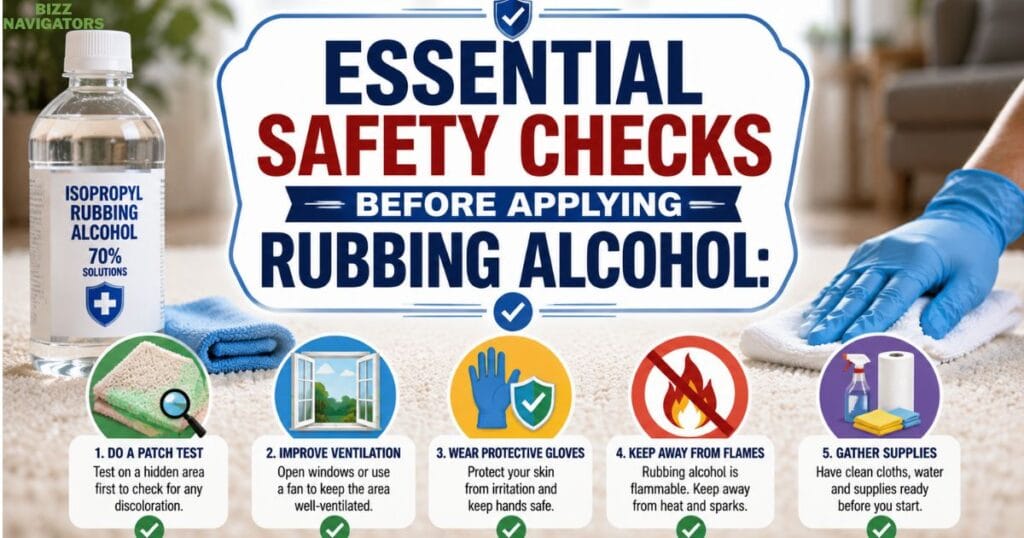
Perform a Hidden Spot Test
Before treating any visible stain, apply a few drops of rubbing alcohol to an inconspicuous section of the carpet.
Wait several minutes and inspect the area for fading, discoloration, or fiber damage. If the carpet remains unchanged, you can proceed more confidently.
Improve Air Circulation
Rubbing alcohol evaporates quickly and produces noticeable fumes.
Open nearby windows or turn on a fan while cleaning to maintain good ventilation and create a safer working environment.
Keep the Product Away from Heat
Isopropyl alcohol is highly flammable.
Never use it near candles, fireplaces, gas appliances, or while smoking. Allow the cleaned area to dry completely before exposing it to any heat source.
Gather the Right Cleaning Supplies
Having the correct tools nearby makes stain removal easier and reduces the temptation to scrub aggressively.
Prepare these items before you begin:
Clean white microfiber cloths
Cotton balls or cotton pads
Spray bottle (optional)
Soft sponge
Mild dish soap
Warm water
Dry towels
Using clean white cloths instead of colored towels also helps prevent unwanted dye transfer during the cleaning process.
Step-by-Step Guide to Removing Carpet Stains with Rubbing Alcohol
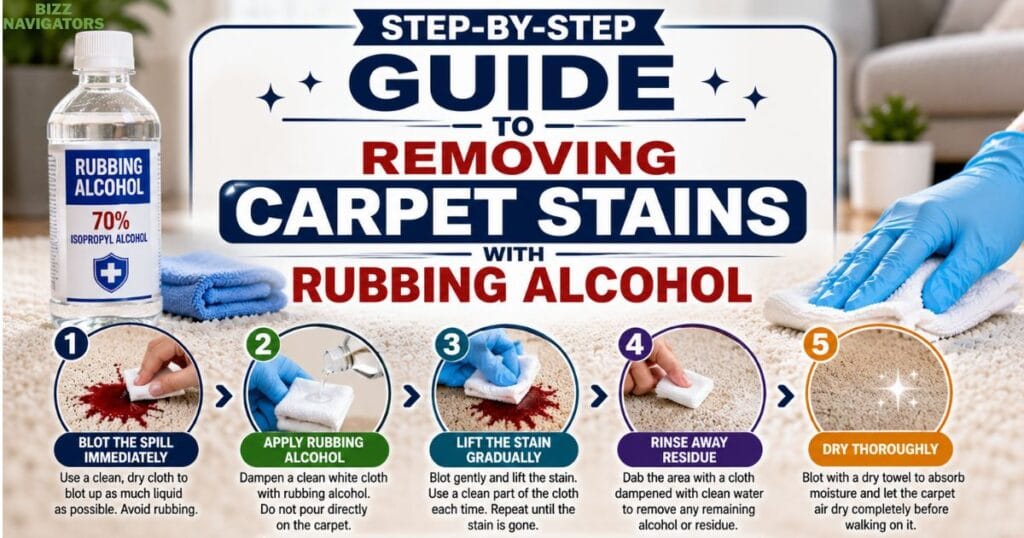
Cleaning a carpet stain successfully depends as much on your technique as it does on the cleaning product. Following a careful process minimizes the risk of spreading the stain or damaging the carpet fibers.
Blot the Spill Immediately
If the stain is fresh, use a clean, dry microfiber cloth to blot away as much liquid as possible.
Avoid rubbing the area. Rubbing pushes the stain deeper into the carpet and can permanently distort the fibers.
Apply Rubbing Alcohol Correctly
Lightly dampen a clean white cloth or cotton pad with rubbing alcohol instead of pouring it directly onto the carpet.
Press the cloth gently onto the stained area and let the alcohol loosen the residue for a few seconds.
Lift the Stain Gradually
Continue blotting with a clean section of the cloth after each pass.
As the stain transfers onto the cloth, replace it with a fresh area to avoid putting the stain back onto the carpet.
Repeat this process until little or no residue appears on the cloth.
Rinse Away Any Remaining Residue
After the stain disappears, lightly dab the area with a cloth dampened in clean water.
This removes any remaining alcohol and helps preserve the carpet’s texture.
Dry the Carpet Thoroughly
Blot the cleaned area with a dry towel to absorb excess moisture.
Allow the carpet to air dry completely before walking on it. Opening windows or using a fan can speed up the drying process.
Expert Tip: Never soak the carpet. Excess liquid can penetrate the carpet padding and lead to unpleasant odors or mold growth.
How to Treat Different Carpet Stains Effectively
Although rubbing alcohol works well on many stains, each stain type benefits from a slightly different approach.
Coffee Stains
Blot the spill immediately with a dry cloth.
If a brown stain remains after cleaning with mild soap, rubbing alcohol may help remove leftover pigments. Finish by rinsing with clean water.
Red Wine Stains
Fresh wine spills respond best when treated immediately.
Blot first, then use an appropriate stain remover before considering rubbing alcohol for any remaining dye.
Blood Stains
Always use cold water first.
Hot water can permanently set blood stains, and rubbing alcohol should not be your primary cleaner for this type of stain.
Chocolate Stains
Carefully scrape away hardened chocolate before cleaning.
After removing solid residue, treat any oily marks with rubbing alcohol if necessary.
Mud Stains
Allow wet mud to dry completely before vacuuming.
Once the loose dirt is removed, spot-clean any remaining discoloration.
Tomato Sauce
Lift excess sauce using a spoon before blotting.
Food-based stains usually respond better to dish soap than rubbing alcohol, although alcohol can help remove stubborn dye residue afterward.
Candle Wax
Place a paper towel over the wax and gently warm it with an iron set to low heat.
Once most of the wax transfers to the paper, rubbing alcohol can help remove any leftover oily residue.
Pet Accidents
Urine, vomit, and similar stains contain proteins that require enzyme-based cleaners.
Rubbing alcohol may reduce surface residue but should not replace a cleaner designed to eliminate bacteria and odors.
Common Mistakes That Can Make Carpet Stains Worse
Even an effective cleaner can produce disappointing results if used incorrectly.
Skipping the Patch Test
Every carpet reacts differently.
Testing a hidden area first reduces the risk of unexpected fading or damage.
Scrubbing Too Hard
Aggressive scrubbing frays carpet fibers and spreads the stain over a larger area.
Blotting always delivers better long-term results.
Using Too Much Alcohol
More is not always better.
Excess rubbing alcohol can soak into the carpet backing and increase drying time.
Mixing Cleaning Chemicals
Never combine rubbing alcohol with bleach or other strong household chemicals.
Certain mixtures may produce hazardous fumes or damage carpet fibers.
Waiting Too Long
Older stains become more difficult to remove because they bond more tightly with the carpet.
Prompt treatment usually delivers the best outcome.
Can Rubbing Alcohol Remove Old Carpet Stains?
Older stains are naturally harder to eliminate, but rubbing alcohol can still improve their appearance in many cases.
Success depends on several factors, including:
The type of stain
How long it has been present
Previous cleaning attempts
Carpet fiber material
For stains that have remained for weeks or months, multiple gentle treatments are generally more effective than one aggressive cleaning session.
If repeated attempts produce little improvement, the stain may have permanently altered the carpet fibers or dye.
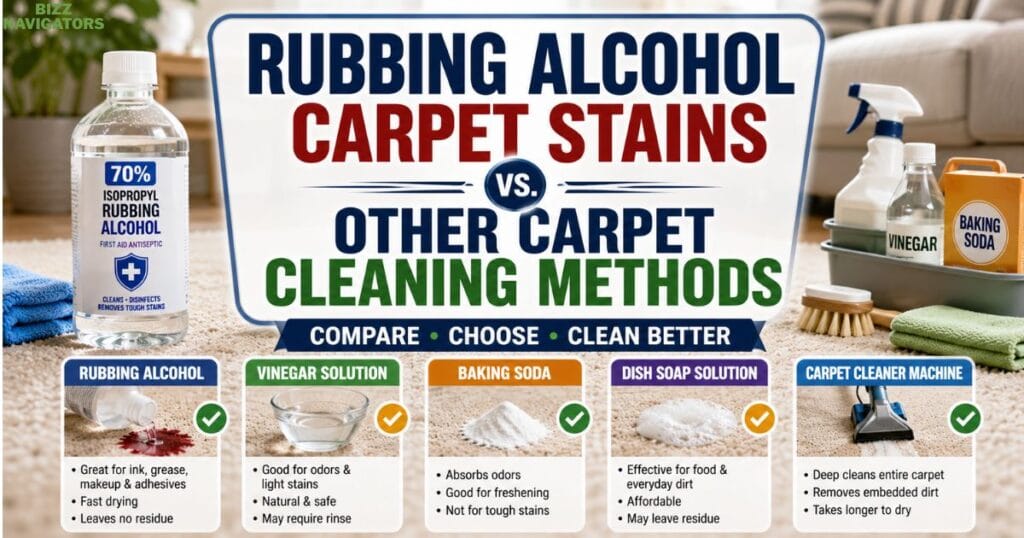
Rubbing Alcohol Carpet Stains vs. Other Carpet Cleaning Methods
| Cleaning Method | Best Used For | Main Limitation |
| Rubbing Alcohol | Ink, grease, adhesive, cosmetics | Not ideal for protein-based stains |
| Dish Soap | Food spills and everyday dirt | Less effective on oily residues |
| White Vinegar | Mild stains and odors | Limited performance on grease |
| Baking Soda | Odor removal and freshening | Does not dissolve heavy stains |
| Enzyme Cleaner | Pet urine, blood, vomit | Requires more time to work |
No single cleaner works for every spill. Choosing the right product based on the stain type delivers faster and safer results.
How to Keep Your Carpet Looking Clean After Stain Removal
Once the stain has been removed, proper aftercare helps maintain the carpet’s appearance.
Brush the Carpet Fibers
Use a soft brush to gently restore the carpet pile after it dries.
This prevents flattened areas from becoming noticeable.
Prevent Sticky Residue
Always rinse away any remaining cleaning solution.
Residue attracts dirt, causing the cleaned spot to become dirty again more quickly.
Dry the Area Completely
Moisture trapped beneath the carpet can encourage mold growth and unpleasant odors.
Good airflow speeds up drying and protects the carpet backing.
Simple Ways to Prevent Future Carpet Stains
Preventing stains is easier than removing them.
Follow these practical habits:
Clean spills as soon as they happen.
Vacuum carpets regularly to prevent dirt buildup.
Use entrance mats to reduce tracked-in debris.
Avoid eating or drinking over valuable rugs whenever possible.
Apply a carpet protector after professional cleaning.
Schedule deep cleaning periodically to extend your carpet’s lifespan.
Small maintenance habits often prevent permanent staining and reduce the need for stronger cleaning products.
Frequently Asked Questions
Is rubbing alcohol safe for all carpet types?
No. It is generally safer for most synthetic carpets but should always be tested on a hidden area first. Natural fibers like wool or silk require extra caution.
Can rubbing alcohol remove permanent marker from carpet?
Yes. It is one of the most effective household products for lifting permanent marker when applied carefully and blotted instead of rubbed.
Will rubbing alcohol bleach carpet fibers?
It usually does not bleach synthetic carpets, but it may affect unstable dyes or delicate materials. A spot test is essential.
Should rubbing alcohol be diluted?
Most household stain removal jobs can be handled with 70% isopropyl alcohol without dilution. Follow the product label and avoid excessive application.
Can rubbing alcohol be mixed with vinegar?
No. Mixing cleaning products rarely improves performance and may produce unwanted reactions. Use one cleaning method at a time.
Does rubbing alcohol leave residue?
When used correctly and followed by a light water rinse, rubbing alcohol typically leaves very little residue.
Can I use rubbing alcohol in a carpet cleaning machine?
No. Carpet cleaning machines are designed for manufacturer-approved cleaning solutions. Using rubbing alcohol may damage the machine or void its warranty.
Final Thoughts
Rubbing alcohol is an effective choice for removing carpet stains like ink, grease, makeup, and adhesive when used correctly. However, rubbing alcohol carpet stains is not suitable for every stain or carpet type, so always perform a patch test and use gentle blotting to avoid damage.
Choosing the right cleaning method for each stain helps protect your carpet, improve cleaning results, and extend its lifespan. If a stain remains after several attempts or your carpet is made from delicate fibers, professional carpet cleaning is the safest solution.

At BizzNavigators, we answer the questions you’re actually searching for, honestly and clearly. We check our facts before we publish anything, and if we’re not sure about something, we tell you instead of guessing. Whatever you’re looking for- a tech fix, a business tip, or a simple how-to- we want to give you an answer you can trust.