
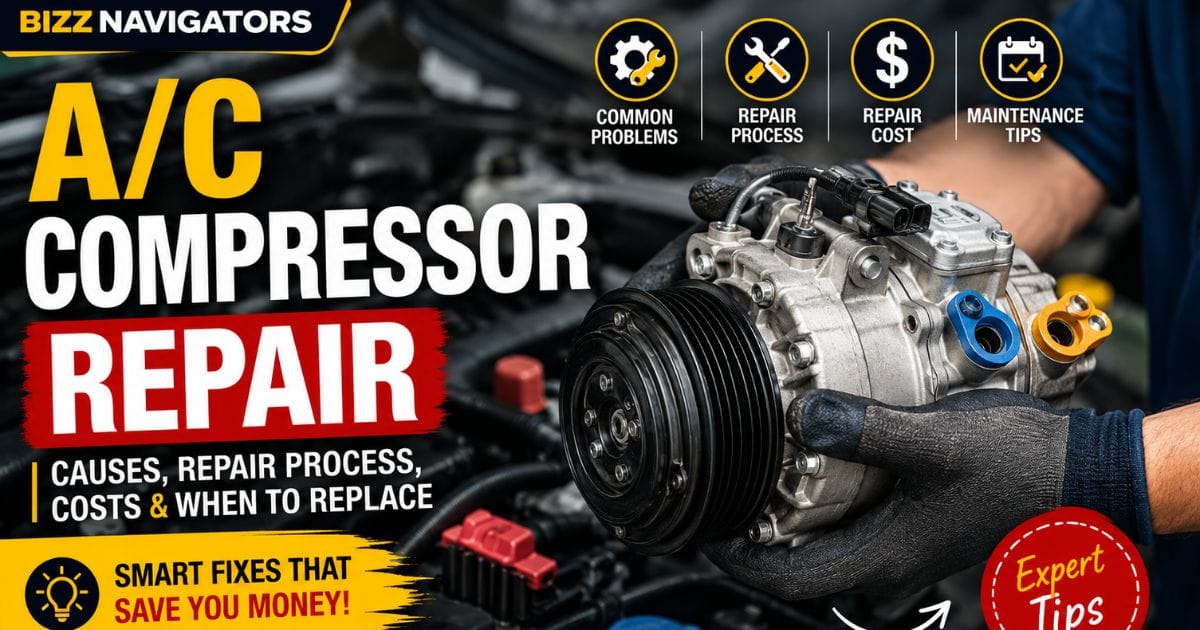
Introduction: Understanding A C Compressor Repair and Why It Matters
A sudden loss of cooling, unusual noises, or warm air from your vents doesn’t always mean you need a new air conditioner. In many cases, A C compressor repair can restore your system’s performance and save you the high cost of a full replacement. Since the compressor is responsible for circulating refrigerant throughout the cooling system, even a minor issue can affect comfort, energy efficiency, and overall performance.
This guide covers everything you need to know about A C compressor repair, including common warning signs, repair options, expected costs, and when replacing the compressor is the smarter investment.
What Is A C Compressor Repair?
A C compressor repair is the process of identifying and fixing issues that prevent the compressor from circulating refrigerant properly. Depending on the fault, the repair may involve replacing electrical components, repairing refrigerant leaks, installing new seals, or servicing external compressor parts.
If the compressor has severe internal damage, replacement is often the safer and more cost-effective solution.
Expert Tip:
HVAC technicians recommend diagnosing the complete cooling system before replacing the compressor. In many cases, a failed capacitor, faulty contactor, or low refrigerant level creates symptoms that closely resemble compressor failure.
What Does an A/C Compressor Do?
The compressor pressurizes refrigerant and moves it through the cooling cycle. As the refrigerant changes pressure and temperature, it absorbs heat from inside your home and releases it outdoors.
Without a properly functioning compressor, refrigerant cannot circulate effectively, which means your air conditioner cannot cool your living space.
The compressor also helps maintain balanced system pressure. Even a small internal fault can reduce cooling efficiency and place extra strain on other HVAC components.
Common Reasons an A/C Compressor Fails
Compressors rarely fail without warning. Most problems develop gradually because of poor maintenance or excessive system stress.
Some of the most common causes include:
Low refrigerant caused by leaks
Dirty condenser coils that trap heat
Electrical problems such as damaged wiring or faulty capacitors
Lack of regular maintenance
Overheating from restricted airflow
Age-related wear on internal components
Incorrect refrigerant charge after previous servicing
Addressing these issues early can often prevent complete compressor failure.
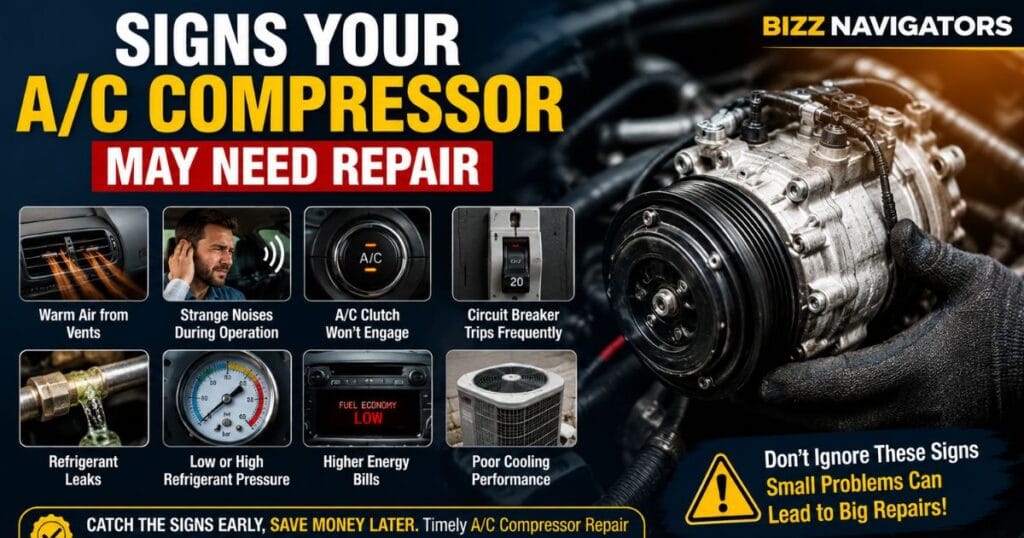
Signs Your A/C Compressor May Need Repair
Recognizing the symptoms of compressor trouble can save both time and money. The earlier the problem is identified, the better the chances of repairing the compressor instead of replacing it.
Warm Air Instead of Cool Air
One of the first signs of compressor trouble is warm air blowing through the vents even though the thermostat is set correctly.
This usually indicates that the refrigerant is no longer circulating as it should or that the compressor cannot build sufficient pressure.
Strange Noises During Operation
A healthy compressor operates with a steady, low-level sound.
If you hear grinding, rattling, squealing, or knocking noises, internal mechanical parts may be worn or damaged. These sounds should never be ignored because they often worsen over time.
Compressor Clutch Will Not Engage
In many air conditioning systems, especially automotive systems, the compressor clutch activates when cooling is required.
If the clutch refuses to engage, possible causes include:
Electrical faults
Low refrigerant pressure
A blown fuse
A failed clutch coil
This issue requires inspection before replacing any major components.
Circuit Breaker Trips Frequently
A compressor drawing excessive electrical current may repeatedly trip the circuit breaker.
While resetting the breaker may temporarily restore power, repeated tripping usually points to an underlying electrical or compressor problem that needs professional attention.
Refrigerant Leaks
Oil stains or refrigerant residue around the compressor housing may indicate a leak.
Low refrigerant reduces cooling efficiency and forces the compressor to work harder, increasing the risk of permanent damage.
Higher Energy Bills
If your electricity bill suddenly increases without changes in usage, an inefficient compressor could be the reason.
As performance declines, the compressor runs longer to reach the desired temperature, consuming more energy.
Can an A/C Compressor Be Repaired or Should It Be Replaced?
Not every compressor problem means the entire unit has reached the end of its life.
Many external components fail before the compressor itself.
Problems That Can Usually Be Repaired
Repair is often possible when the issue involves:
Faulty capacitor
Damaged contactor
Loose electrical wiring
Refrigerant leaks
Compressor clutch problems
Pressure switch failure
These repairs are generally less expensive and restore normal operation without replacing the compressor.
When Replacement Makes More Sense
Replacement becomes the better option when the compressor has suffered severe internal damage.
Examples include:
Burned motor windings
Broken internal valves
Metal contamination inside the refrigerant lines
Locked or seized compressor
Extensive internal wear due to age
In these situations, replacing the compressor, or sometimes the entire air conditioning system, may provide better long-term value.
Repair vs. Replacement at a Glance
| Repair the Compressor | Replace the Compressor |
| Minor electrical faults | Internal mechanical failure |
| Refrigerant leaks | Burned-out compressor motor |
| Faulty clutch assembly | Seized compressor |
| Pressure switch issues | Metal debris throughout the system |
| Capacitor replacement | Repeated compressor breakdowns |
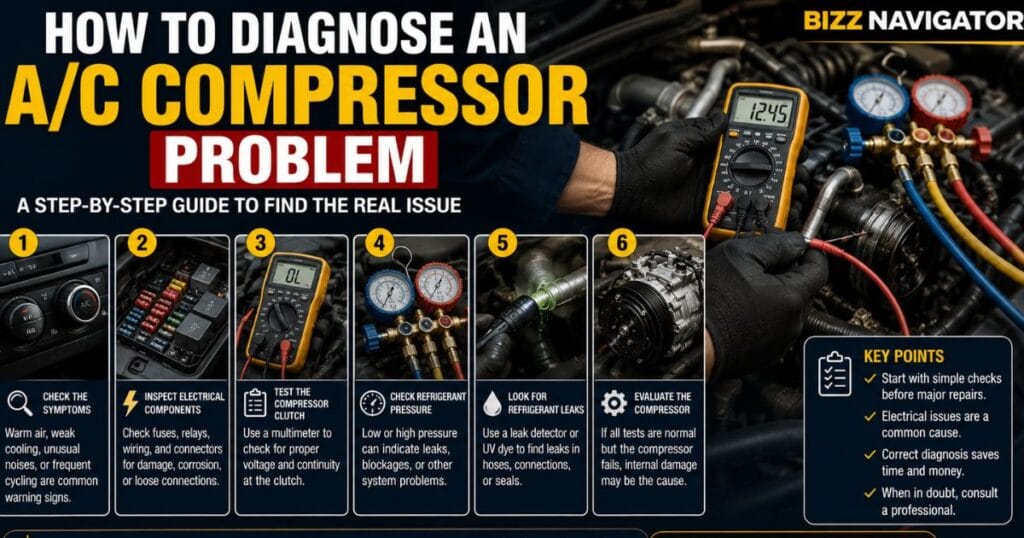
How to Diagnose an A/C Compressor Problem
Proper diagnosis prevents unnecessary repairs and ensures the actual fault is corrected.
Start with a Visual Inspection
Look for obvious signs such as:
Burned wires
Oil leaks
Loose electrical connections
Damaged insulation
Corroded terminals
Sometimes a simple visual inspection reveals the source of the problem.
Check Electrical Components
A multimeter can verify whether the compressor is receiving the correct voltage.
Technicians also test:
Capacitors
Relays
Contactors
Compressor windings
Electrical faults are among the most common causes of compressor failure.
Measure Refrigerant Pressure
Pressure gauges help determine whether refrigerant levels are within the manufacturer’s recommended range.
Abnormally low or high pressure may indicate:
Refrigerant leaks
System restrictions
Expansion valve problems
Compressor inefficiency
Pressure testing should always follow proper safety procedures.
Listen for Internal Damage
Experienced HVAC technicians often identify compressor problems simply by listening to operating sounds.
Grinding, knocking, or loud humming may suggest worn bearings, damaged valves, or internal motor failure.
If unusual noises are accompanied by poor cooling performance, further inspection is recommended before continuing to operate the system.
How to Repair an A/C Compressor Safely
Repairing an A/C compressor starts with identifying the exact cause of the problem. Replacing parts without proper diagnosis can increase repair costs and may even damage the system further.
Gather the Right Tools
Before beginning any repair, make sure you have the appropriate equipment. Basic tools typically include:
Screwdrivers and socket set
Adjustable wrench
Digital multimeter
Manifold gauge set
Vacuum pump
Leak detector
Safety gloves and protective eyewear
Using the correct tools makes the repair process safer and more accurate.
Turn Off the Power
Always disconnect the electrical supply before touching any component of the air conditioning system.
For home HVAC units, switch off the breaker. For vehicle A/C systems, disconnect the negative battery terminal. This reduces the risk of electrical shock and accidental compressor engagement.
Inspect Electrical Connections
Loose wires, corroded terminals, or damaged connectors often prevent the compressor from operating correctly.
Check all visible electrical connections and replace damaged wiring before moving to more complex repairs.
Replace Faulty Components
Some compressor-related problems involve external parts rather than the compressor itself. Components that can often be replaced include:
Capacitor
Contactor
Compressor clutch
Pressure switch
Relay
Replacing these parts is usually more affordable than installing a new compressor.
Evacuate and Recharge the Refrigerant
If the refrigerant circuit has been opened, the system must be evacuated with a vacuum pump before recharging it with the correct refrigerant.
Incorrect refrigerant levels can reduce cooling performance and shorten compressor life. Because refrigerants require careful handling, this step is often best left to a certified HVAC technician.

Safety Tips Before Repairing an A/C Compressor
Working on an air conditioning system involves electricity, pressurized refrigerant, and moving mechanical parts. Following basic safety practices helps prevent injury and equipment damage.
Keep these precautions in mind:
Disconnect power before servicing.
Wear gloves and safety glasses.
Never release refrigerant into the atmosphere.
Use only manufacturer-approved replacement parts.
Avoid operating the compressor when refrigerant levels are low.
Follow the service manual for your specific A/C model.
If you suspect internal compressor damage, professional inspection is usually the safest option.
Should You Use an A C Compressor Repair Kit?
An A/C compressor repair kit can be useful for certain repairs, but it is not a universal solution.
Most repair kits include replacement seals, O-rings, gaskets, valve components, and small hardware needed to fix minor leaks or worn external parts.
A repair kit may be suitable when:
Seals have deteriorated.
Small external leaks are present.
Gaskets need replacement.
Minor wear affects compressor performance.
However, a repair kit cannot repair:
Burned motor windings
Broken pistons
Seized bearings
Severe internal wear
Cracked compressor housing
If the compressor has experienced a major internal failure, replacement is generally the more reliable long-term solution.
Common A/C Compressor Problems and Practical Solutions
| Problem | Possible Cause | Recommended Solution |
| The compressor will not start | Faulty capacitor or relay | Test and replace the defective part |
| Warm air from vents | Low refrigerant or compressor issue | Repair leaks and recharge refrigerant |
| Loud grinding noise | Internal mechanical damage | Professional inspection or replacement |
| Compressor cycles too frequently | Dirty condenser or thermostat issue | Clean the condenser and check the controls |
| Circuit breaker trips | Electrical overload | Inspect wiring and compressor amperage |
| Weak cooling | Restricted airflow or low refrigerant | Replace filters and check system pressure |
A/C Compressor Repair Cost
The A C compressor repair cost varies depending on the type of air conditioning system, the extent of the damage, labor rates, and replacement parts.
Minor electrical repairs are generally the least expensive because they involve replacing small components such as capacitors or relays.
Repairs involving refrigerant leaks, clutch assemblies, or pressure switches typically cost more because they require specialized equipment and additional labor.
If the compressor itself has failed internally, replacement becomes the largest expense. In older systems, replacing the entire outdoor unit may offer better value than installing a new compressor.
Factors that influence repair costs include:
Compressor brand and model
Availability of replacement parts
Labor charges in your area
Refrigerant type
Overall condition of the A/C system
Warranty coverage
Obtaining estimates from qualified HVAC professionals can help you compare repair costs with replacement costs before making a decision.
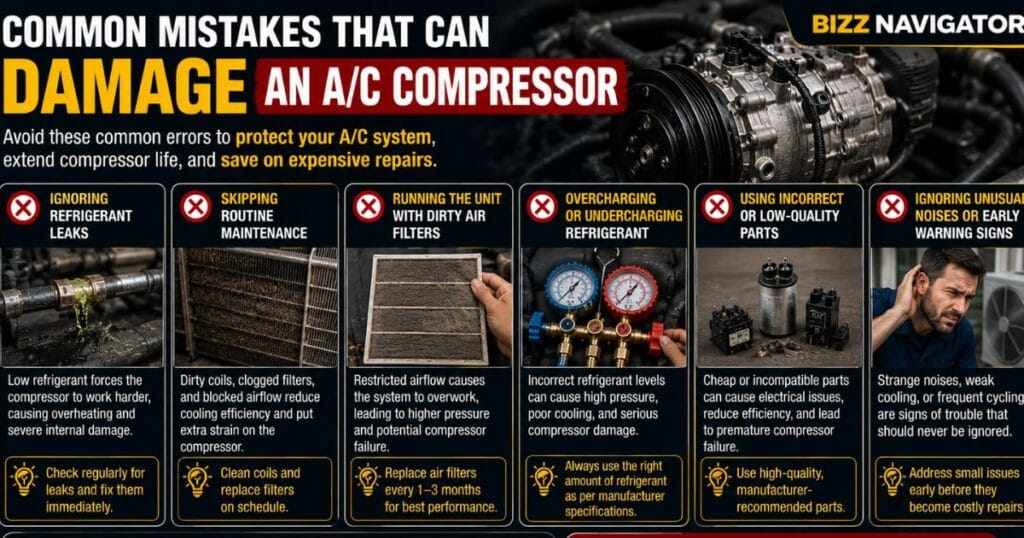
Common Mistakes That Can Damage an A/C Compressor
Many compressor failures are preventable. Avoid these common mistakes to reduce unnecessary repair expenses.
Ignoring Refrigerant Leaks
Low refrigerant forces the compressor to work harder, increasing operating temperatures and accelerating wear on internal components.
Skipping Routine Maintenance
Dirty condenser coils, clogged air filters, and blocked airflow reduce system efficiency and place extra strain on the compressor.
Using Incorrect Replacement Parts
Installing incompatible capacitors, relays, or refrigerants can lead to electrical problems and premature compressor failure.
Delaying Minor Repairs
Ignoring unusual noises, weak cooling, or electrical issues often allows small problems to develop into expensive compressor damage.
DIY Repair or Hire a Professional?
Some maintenance tasks are suitable for homeowners, while others require professional expertise.
DIY Tasks
You can usually handle:
Cleaning the outdoor condenser
Replacing air filters
Tightening visible electrical connections
Inspecting for obvious damage
Cleaning debris around the outdoor unit
Professional Repairs
A licensed technician should perform:
Refrigerant recovery and charging
Compressor replacement
Internal electrical testing
Leak detection inside the sealed system
Major compressor repairs
Professional repairs not only improve safety but also help preserve the manufacturer’s warranty.
Tips to Extend the Life of Your A/C Compressor
Routine maintenance is the best way to avoid expensive compressor repairs.
To keep your compressor operating efficiently:
Replace air filters regularly.
Keep condenser coils clean.
Remove leaves and debris around the outdoor unit.
Schedule annual HVAC inspections.
Repair refrigerant leaks promptly.
Avoid running the system with restricted airflow.
Address unusual noises before they become major problems.
Consistent maintenance reduces wear on the compressor and helps improve overall cooling efficiency.
How to Choose a Reliable HVAC Repair Company
Selecting the right technician is just as important as choosing the correct repair.
Before hiring an HVAC contractor, consider asking:
Are you licensed and insured?
Do you provide a written estimate before starting work?
Is there a warranty on parts and labor?
Will you inspect the entire cooling system before recommending compressor replacement?
Can you explain the cause of the compressor failure?
Conclusion
Choosing the right A C compressor repair at the right time can restore cooling performance, lower energy costs, and help you avoid an expensive system replacement. While many compressor problems can be repaired, severe internal damage may make replacement the better long-term option.
With regular maintenance, early diagnosis, and professional service when needed, A C compressor repair can extend your system’s lifespan and keep it running efficiently for years to come.
Frequently Asked Questions
Can an A/C compressor be repaired?
Yes. Many compressor problems, such as electrical faults, refrigerant leaks, or clutch issues, can be repaired. Internal mechanical damage, however, often requires compressor replacement.
How do I know if my A/C compressor is failing?
Common signs include warm air, loud noises, weak cooling, frequent breaker trips, refrigerant leaks, and unusually high energy bills.
How much does an A/C compressor repair cost?
The cost depends on the specific problem, labor charges, replacement parts, and the type of air conditioning system. Minor repairs are generally much less expensive than replacing a failed compressor.
Can I repair an A/C compressor myself?
Basic maintenance and inspections can often be performed safely. Repairs involving refrigerant, electrical diagnostics, or internal compressor components should be handled by a qualified HVAC technician.
Does an A C compressor repair kit really work?
A repair kit works well for replacing seals, gaskets, and other external components. It cannot repair severe internal compressor damage.
How long should an A/C compressor last?
With proper maintenance, most compressors can provide reliable service for 10 to 15 years, although lifespan varies based on usage, climate, and maintenance practices.

At BizzNavigators, we answer the questions you’re actually searching for, honestly and clearly. We check our facts before we publish anything, and if we’re not sure about something, we tell you instead of guessing. Whatever you’re looking for- a tech fix, a business tip, or a simple how-to- we want to give you an answer you can trust.
1 thought on “A C Compressor Repair: Avoid Costly Mistakes”