
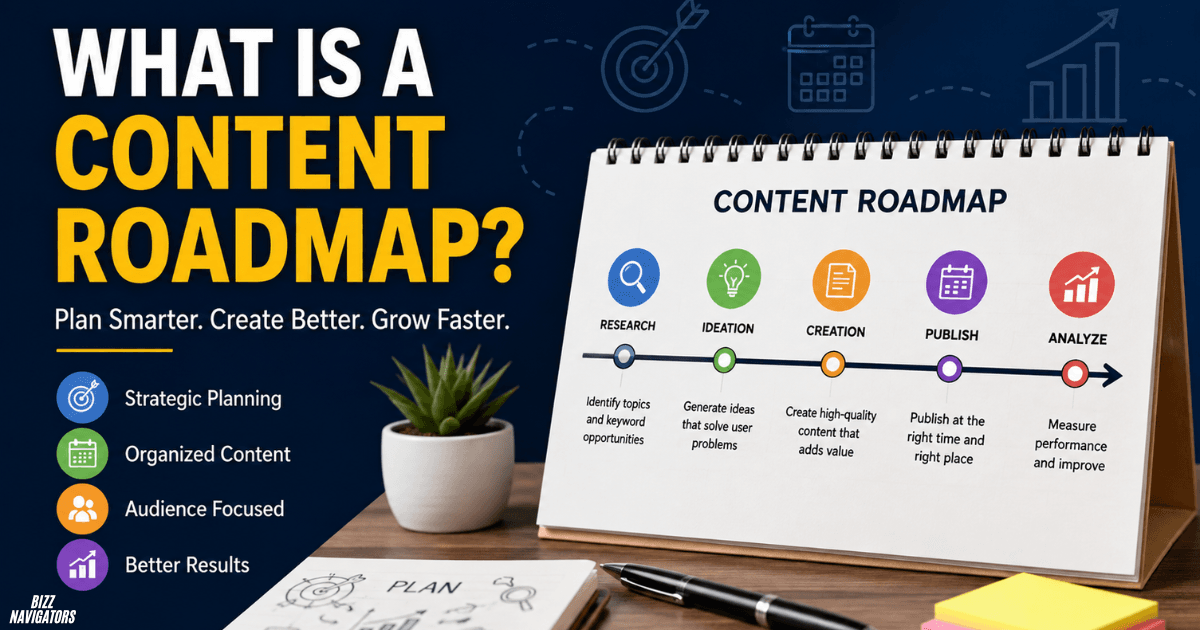
What Is a Content Roadmap?
A content roadmap is a plan that shows what content you will create, who it is for, why you need it, and when you will publish it. It helps businesses and websites organize content around audience needs, SEO goals, and business objectives.
A roadmap can include blog posts, landing pages, videos, guides, social posts, newsletters, and other content.
Unlike a simple list of ideas, a content roadmap explains the purpose and priority of each piece of content.
Why Is a Content Roadmap Important?
A content roadmap helps you stop publishing content randomly. It gives you a clear plan for what to create next and why it matters.
It can help you:
- Organize content ideas
- Target important search queries
- Cover content gaps
- Build topical authority
- Improve internal linking
- Avoid duplicate topics
- Set publishing priorities
- Track content performance
- Connect content with business goals
For SEO, a roadmap is useful because it connects keywords, search intent, topic clusters, and content priorities in one plan.
What Should a Content Roadmap Include?
A useful content roadmap should include the information needed to make content decisions quickly.
Content Topic
Add the main subject you want to cover.
For example, a technology website might plan content around AI tools, Windows problems, cybersecurity, software, and productivity.
Target Keyword
Add the main keyword for SEO content.
Do not choose keywords based only on search volume. Check search intent, competition, relevance, and whether your website can provide a useful answer.
Search Intent
Identify what users want when they search for the topic.
The main types are:
- Informational
- Commercial
- Transactional
- Navigational
For example, someone searching “what is a content roadmap” wants an explanation and practical guidance. They are not necessarily ready to buy something.
Target Audience
Specify who will read the content.
Your audience could include:
- Beginners
- Marketers
- SEO professionals
- Business owners
- Content managers
- Students
This helps you choose the right language and level of detail.
Content Format
Choose the format that best answers the user’s need.
Common formats include:
- Blog posts
- How-to guides
- Tutorials
- Comparison pages
- Case studies
- Videos
- Checklists
- Infographics
Priority
Give each content idea a priority.
High: Important topic with strong value or opportunity.
Medium: Useful topic that can be created later.
Low: Helpful but not urgent.
Publishing Date
Add a planned publishing date so your team knows when the content should go live.
How Do You Create a Content Roadmap?
You can create a content roadmap in seven simple steps.
1. Define Your Goal
First, decide what you want your content to achieve.
Common goals include:
- Increase organic traffic
- Generate leads
- Increase sales
- Build brand awareness
- Educate customers
- Build topical authority
Your content plan should support these goals.
2. Identify Your Audience
Find out what your audience wants to know.
Look for their:
- Questions
- Problems
- Interests
- Pain points
- Buying concerns
This gives you better content ideas than guessing topics.
3. Research Keywords
Find keywords related to your main topic.
Look at:
- Search intent
- Search volume
- Keyword difficulty
- Long-tail keywords
- Related searches
- SERP features
- Competitor coverage
Do not target a keyword only because it has high search volume. The keyword must also fit your website and audience.
4. Create Topic Clusters
Group related topics together.
For example, a content marketing cluster could include:
- What is content marketing?
- What is a content strategy?
- How to create a content calendar
- Content calendar vs content roadmap
- Content distribution
- Content performance metrics
This structure makes your website easier to navigate and creates natural internal linking opportunities.
5. Find Content Gaps
Check what information your existing website does not cover.
A content gap can be:
- An unanswered user question
- An outdated article
- A missing subtopic
- A weak explanation
- A missing comparison
- A missing practical example
Creating content to fill genuine gaps can provide more value than simply publishing more articles.
6. Prioritize Topics
Create the most valuable content first.
Consider:
Audience value + search opportunity + business value + ranking potential.
This helps you focus your resources on topics that have a clear purpose.
7. Create a Publishing Schedule
Turn your roadmap into a realistic schedule.
You can plan content for:
- 30 days
- 60 days
- 90 days
- Six months
- One year
A realistic schedule is better than promising more content than your team can produce well.
What Is the Difference Between a Content Roadmap and a Content Calendar?
A content roadmap defines what content you need and why. A content calendar focuses mainly on when that content will be published.
| Content Roadmap | Content Calendar |
| Defines strategic direction | Defines publishing dates |
| Explains what and why | Focuses on when |
| Helps prioritize topics | Organizes scheduled content |
| Supports long-term planning | Supports day-to-day execution |
A simple way to remember it is:
Roadmap = what and why.
Calendar = when.
What Is the Difference Between a Content Roadmap and a Content Strategy?
A content strategy defines your overall approach to content.
It answers questions such as:
- Who are we targeting?
- What are our goals?
- What topics should we cover?
- What content formats should we use?
- How will we distribute content?
- How will we measure results?
A content roadmap turns that strategy into specific content actions.
In simple terms:
Content strategy = overall direction.
Content roadmap = planned content actions.
Content calendar = publishing schedule.
How Does a Content Roadmap Help SEO?
A content roadmap helps SEO by giving your website a structured publishing plan.
It can help you:
- Organize keyword groups
- Match content with search intent
- Build topic clusters
- Find content gaps
- Plan internal links
- Avoid keyword cannibalization
- Update older content
- Build topical depth
However, a roadmap does not guarantee rankings. Content still needs to satisfy search intent, provide useful information, demonstrate credibility, and compete effectively in the search results.
What Makes a Good Content Roadmap?
A good content roadmap should be clear, focused, flexible, and measurable.
Focus on User Questions
Start with what users actually want to know.
Do not create content only to place keywords on a page.
Prioritize Quality
Create fewer useful pages rather than many thin pages with little value.
Connect Related Content
Link closely related pages when the connection is genuinely useful to readers.
Keep It Flexible
You should be able to change the roadmap when search trends, audience needs, or business priorities change.
Measure Results
Track metrics that match your goals.
These can include:
- Organic clicks
- Impressions
- Rankings
- Engagement
- Leads
- Conversions
Do not judge content only by traffic.
What Does a Content Roadmap Look Like?
A simple roadmap can look like this:
| Topic | Keyword | Intent | Format | Priority | Status |
| Content Marketing | what is content marketing | Informational | Guide | High | Planned |
| Content Strategy | content strategy basics | Informational | Guide | High | Research |
| Content Roadmap | what is a content roadmap | Informational | Article | High | Published |
| Content Calendar | how to create a content calendar | Informational | Tutorial | Medium | Planned |
| Content Metrics | Content performance metrics | Informational | Guide | Medium | Planned |
You can manage this roadmap in a spreadsheet, project management tool, or content management platform.
Common Content Roadmap Mistakes
Targeting Keywords Without Checking Intent
A keyword may look valuable but still attract the wrong audience.
Always understand what users expect to find.
Publishing Too Much
More content does not automatically mean better SEO.
Focus on useful, relevant, well-connected content.
Ignoring Existing Pages
Before creating a new article, check whether an existing page already covers the topic.
Updating or expanding an existing page may be better than creating another URL.
Making the Roadmap Too Rigid
Your roadmap should guide your strategy, not lock you into outdated decisions.
Tracking Only Rankings
Rankings are useful, but they are not the only measure of success.
Look at traffic quality, leads, conversions, and whether the content achieves its intended goal.
How Often Should You Update a Content Roadmap?
Review your content roadmap at least once a month.
During the review, check:
- New keyword opportunities
- Search performance
- Content gaps
- Underperforming pages
- Outdated information
- New audience questions
- Business priorities
Update the roadmap when the data shows that priorities have changed.
Final Answer: What Is a Content Roadmap?
A content roadmap is a structured plan for deciding what content to create, why it matters, who it serves, and when it should be published.
For SEO, the best content roadmaps connect search intent, keywords, topic clusters, content gaps, internal linking, business goals, and content priorities.
You do not need a complicated system. A simple spreadsheet with topics, keywords, search intent, priority, format, publishing date, and status can give you a clear content direction.
The key is simple: create the right content for the right audience at the right time instead of publishing topics randomly.

At BizzNavigators, we answer the questions you’re actually searching for, honestly and clearly. We check our facts before we publish anything, and if we’re not sure about something, we tell you instead of guessing. Whatever you’re looking for- a tech fix, a business tip, or a simple how-to- we want to give you an answer you can trust.