
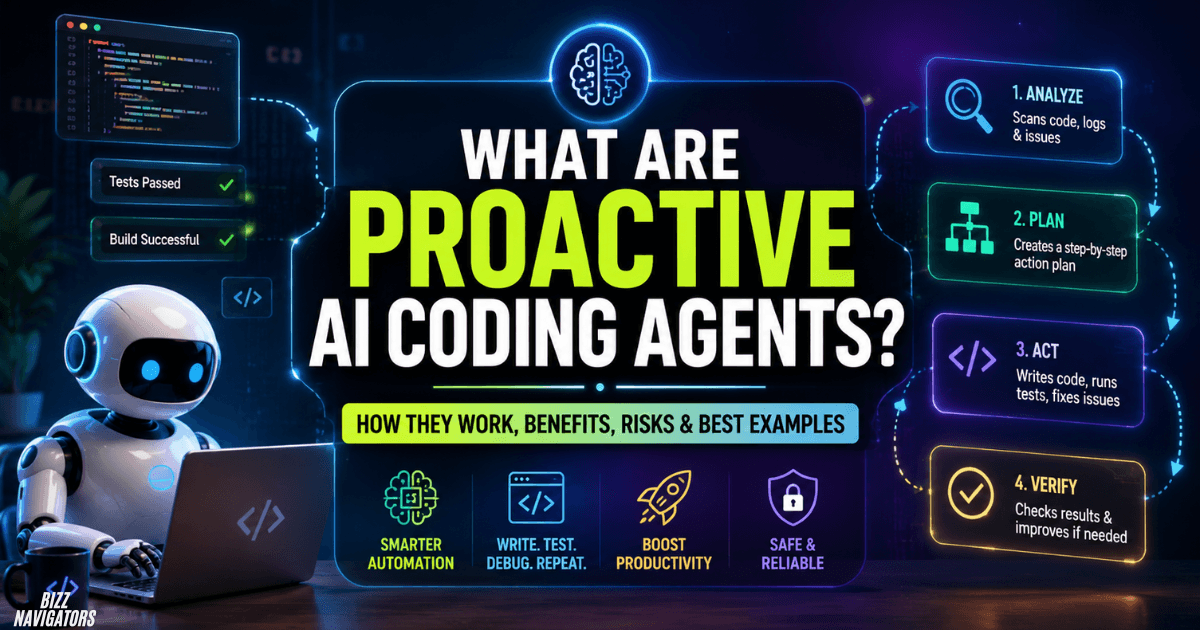
What Are Proactive AI Coding Agents?
Proactive AI coding agents are AI systems that can identify coding tasks, plan the required steps, use development tools, modify code, run tests, and continue working toward a goal without needing a new prompt for every action.
Unlike basic coding assistants, they can take initiative within defined rules. For example, an agent can detect a failed test, investigate the related code, make a change, run the test again, and report the result.
The main idea is simple: a coding assistant waits for instructions, while a proactive coding agent can detect a task and act on it.
How Do Proactive AI Coding Agents Work?
Proactive AI coding agents usually follow a continuous observe-plan-act-check cycle.
1. Observe: The agent receives information from a repository, IDE, issue tracker, CI system, logs, or another connected tool.
2. Identify: It determines whether the available information represents a task, error, change, or condition that requires action.
3. Plan: The agent breaks the objective into smaller coding steps.
4. Act: It searches files, edits code, runs commands, creates tests, or uses other approved development tools.
5. Verify: It runs tests, checks builds, reviews output, or evaluates whether the task succeeded.
6. Iterate: If something fails, the agent can investigate the result and attempt another solution.
This makes agentic coding different from simple AI code generation. The agent is not only producing code; it is participating in a multi-step software development workflow.
What Is an AI Coding Agent?
An AI coding agent is an AI-powered system designed to perform software engineering tasks across a codebase.
It can understand repository context, edit multiple files, execute commands, debug errors, write tests, refactor code, and review changes.
Common coding-agent tasks include:
Writing new features
Fixing bugs
Refactoring existing code
Creating tests
Debugging failed builds
Reviewing code
Explaining repositories
Updating dependencies
Investigating GitHub issues
Running development commands
The important difference is task execution. A traditional AI coding assistant may suggest a function, while an AI coding agent can work through the broader task surrounding that function.
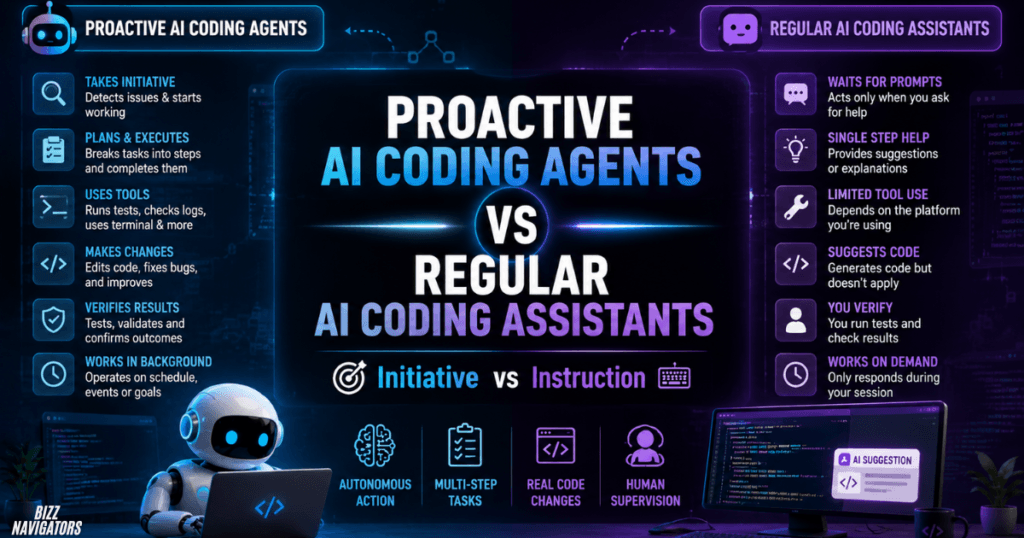
Proactive AI Coding Agents vs Regular AI Coding Assistants
The biggest difference is initiative.
| Feature | AI Coding Assistant | Proactive AI Coding Agent |
| Waits for prompt | Usually | Not always |
| Generates code | Yes | Yes |
| Edits multiple files | Sometimes | Commonly |
| Uses development tools | Limited or varies | Core capability |
| Plans multiple steps | Limited | Yes |
| Runs tests | May assist | Can execute and evaluate them |
| Detects predefined events | Usually limited | Yes |
| Works in background | Limited | Often supported |
| Human supervision | Frequent | Still important, but can be reduced |
A coding assistant is useful when you already know what you want. A proactive agent becomes more valuable when you want software work to continue through several steps with less manual intervention.
GitHub Copilot coding agents
GitHub Copilot’s cloud agent can independently research, plan, and implement coding tasks. Developers can assign an issue to the agent, let it work on the required changes, and then review the resulting pull request. This demonstrates how an AI coding agent can move from a high-level task to actual repository changes.
What Makes a Coding Agent Proactive?
A coding agent becomes proactive when it can initiate an approved workflow in response to an event, condition, schedule, or predefined goal, rather than waiting for a developer to issue another prompt.
Typical triggers include:
Failed Tests
A CI failure can trigger an agent to inspect logs, locate the affected code, and investigate a possible fix.
Repository Changes
An agent can respond to new commits, pull requests, or changes that require review.
Software Issues
An issue tracker can provide the task description and repository context needed to begin an investigation.
Scheduled Maintenance
An agent can perform recurring tasks such as checking dependencies, reviewing code quality, or analyzing open issues.
Monitoring Alerts
Development alerts can trigger an investigation into errors or unexpected application behavior.
The agent should still operate within clearly defined permissions and boundaries.
OpenAI Codex
OpenAI Codex is a practical example of a proactive AI coding agent. It can work on coding tasks in the background, handle issue triage, monitor CI/CD workflows, review code, and perform multi-step engineering work. Its automation features allow developers to schedule recurring tasks and review the results afterward.
What Are the Benefits of Proactive AI Coding Agents?
The primary benefit is reducing repetitive developer work while keeping humans responsible for important decisions.
Major benefits include:
Faster debugging
Automated test investigation
Faster issue triage
Continuous code review
Reduced repetitive coding
Automated maintenance
Better developer productivity
Support for background engineering tasks
Faster iteration on software projects
They are particularly useful for tasks with clear inputs and measurable outputs.
For example, checking why a test failed is easier to automate safely than giving an agent unrestricted control over a production system.
Which AI Agent Is Good for Coding?
A good AI coding agent should understand large codebases, handle multi-step tasks, use development tools, run tests, and provide reliable changes.
Important evaluation factors include:
Code-generation quality
Repository understanding
Debugging performance
Tool integration
Testing capability
Context handling
IDE or terminal support
Security controls
Cost
Usage limits
There is no single AI coding agent that is objectively best for every developer. The right choice depends on the programming language, repository size, development environment, and level of automation required.
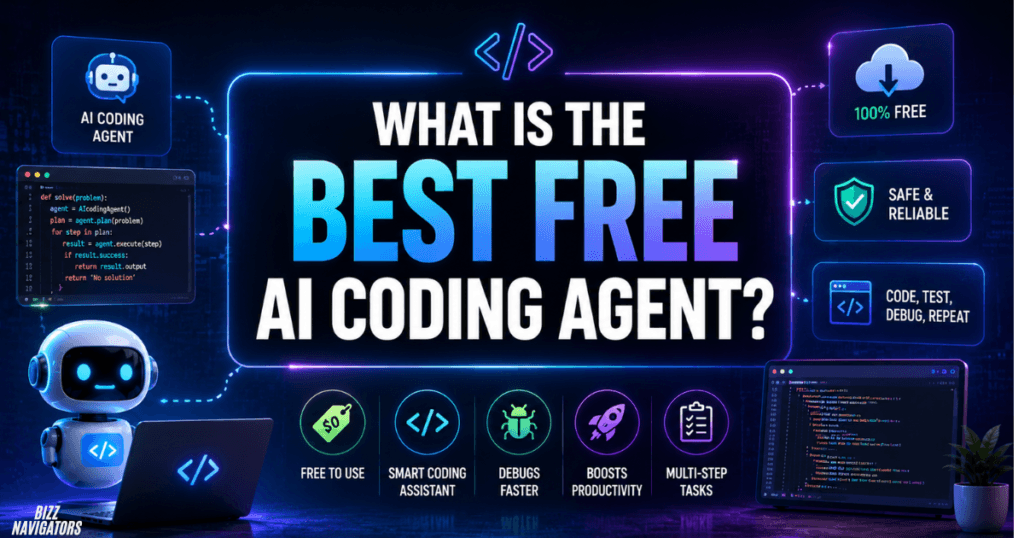
What Is the Best Free AI Coding Agent?
The best free AI coding agent depends on the features and usage limits you need.
A useful free coding agent should provide enough access to:
Generate and modify code
Understand repository context
Run development commands
Debug problems
Test changes
Work inside your preferred environment
Free plans and limits change frequently, so developers should check the current terms before selecting an agent for long-term development.
What Are the Main Types of AI Agents?
A commonly used classification identifies five main types of AI agents:
| Type | What It Does |
| Simple reflex agent | Responds to current conditions |
| Model-based agent | Uses an internal representation of the environment |
| Goal-based agent | Chooses actions to achieve a goal |
| Utility-based agent | Selects actions based on expected usefulness |
| Learning agent | Improves through experience or feedback |
AI coding agents can combine several of these characteristics. Modern coding systems typically require planning, goal-oriented behavior, tool use, and feedback.
Some sources describe seven types of AI agents, but there is no single universal seven-type classification. Different frameworks divide agent architectures differently.
Is ChatGPT an AI Agent?
ChatGPT is not automatically an AI agent simply because it can generate text or code.
A standard conversation follows a request-and-response model. An agentic system can plan and execute multiple actions using tools toward a defined goal.
ChatGPT can demonstrate agentic capabilities when it is equipped with appropriate tools and task-execution features. OpenAI’s Codex, for example, is specifically designed for software engineering tasks such as writing, reviewing, and debugging code.
The distinction is therefore based more on capabilities and workflow than on the name of the AI model.
What Are the Risks of AI Coding Agents?
The biggest risk is that an agent can make changes or execute actions incorrectly at a larger scale than a basic coding assistant.
Common risks include:
Incorrect code
Security vulnerabilities
Data exposure
Destructive commands
Dependency issues
Excessive permissions
Incorrect assumptions
Hidden bugs
Unexpected resource usage
Poorly reviewed changes
The more autonomy an agent receives, the more important access controls, testing, isolation, logging, and human review become.
A practical rule is:
Give an AI coding agent only the permissions it needs to complete its assigned task.
High-impact actions such as production deployment, credential access, database modification, or destructive operations should normally require stronger controls.
Is It Legal to Code With AI?
Yes, using AI to assist with software development is generally legal, but the exact legal requirements depend on the jurisdiction, contracts, licenses, and type of software involved.
Developers should check:
Open-source licenses
Copyright requirements
Employer policies
Client agreements
Confidentiality restrictions
Data-protection rules
Third-party code requirements
AI-generated code should still receive human review before production use.
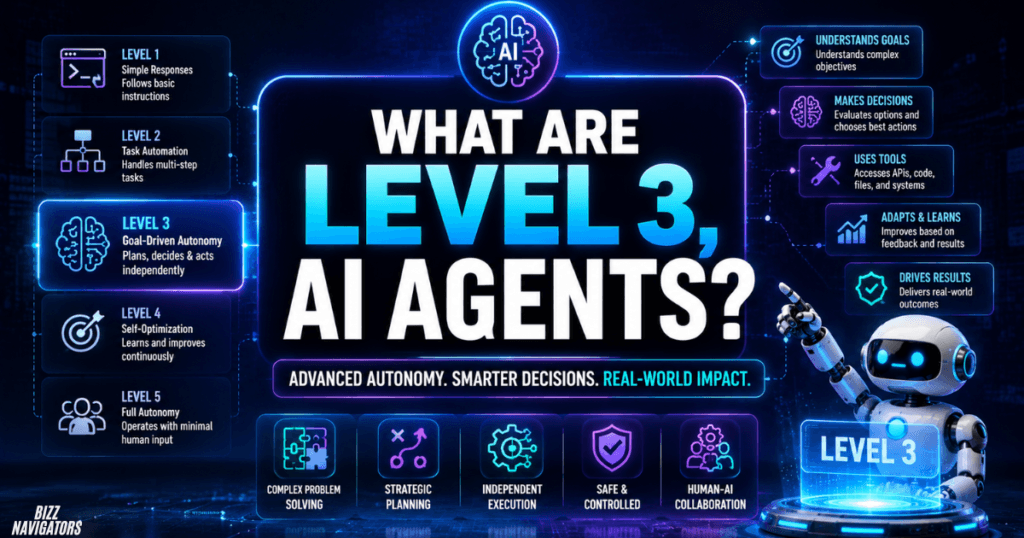
What Are Level 3, AI Agents?
There is no universally accepted technical standard for “Level 3 AI agents.”
The term generally refers to a higher degree of autonomy in some classification systems, where an AI can handle longer sequences of decisions and actions with less human intervention.
The exact meaning depends on the framework being used, so the label should always be evaluated in context.
Are Proactive AI Coding Agents Fully Autonomous?
No. A proactive coding agent does not have to be fully autonomous.
Proactive means the system can initiate approved actions based on triggers, goals, or conditions.
Autonomous means the system can perform decisions and actions with less human intervention.
A coding agent can therefore be proactive while still requiring human approval before important actions.
This distinction is important for production software because controlled autonomy is usually safer than unrestricted access.
What Is the Future of Proactive AI Coding Agents?
Proactive coding agents are moving software development from prompt-based assistance toward goal-based delegation.
Instead of repeatedly telling an AI what to do, developers can increasingly provide:
A goal
Repository access
Development tools
Constraints
Testing requirements
Acceptance criteria
The agent can then handle more of the implementation cycle.
Future coding workflows are likely to include background debugging, automated issue investigation, continuous testing, AI code review, repository maintenance, and multiple agents working on separate engineering tasks.
Human developers will remain important for architecture, product decisions, security, requirements, validation, and high-impact approvals.
Frequently Asked Questions
Which AI is strongest in coding?
There is no permanent winner. Coding performance depends on the model, agent framework, tools, context, programming language, and task complexity.
Which AI agents are the most useful?
The most useful agents are those that automate repeatable tasks with clear goals and measurable results. Coding, research, monitoring, workflow automation, and data analysis are common examples.
What are three dangers of AI?
Three major dangers are inaccurate decisions, security or privacy failures, and excessive autonomy without adequate human oversight.
What is high-risk AI?
High-risk AI generally describes AI applications where failures can create significant harm or affect important rights, safety, or essential services. The exact definition depends on the relevant law or regulatory framework.
Who is the father of AI?
John McCarthy is widely known as the father of artificial intelligence. He helped establish AI as a formal research field and coined the term “artificial intelligence.”
What language is ChatGPT coded in?
ChatGPT is not simply built with one programming language. Large AI systems use multiple technologies and components, so identifying one language as the complete implementation would be misleading.
What did Stephen Hawking say about AI?
Stephen Hawking warned that advanced AI could create serious risks if its development was not managed responsibly. Specific quotations attributed to him should be checked against reliable sources because many simplified versions circulate online.
What did Nikola Tesla say about AI?
Many AI-related statements attributed to Nikola Tesla online lack reliable primary-source verification. Viral quotations should therefore not be treated as authentic Tesla statements without evidence.
Could AI ever become alive?
Current AI systems are not scientifically classified as living organisms. They can simulate intelligent behavior without possessing biological life.
Who said AI will not replace humans?
There is no single authoritative statement proving that AI will never replace humans in any task. AI is more realistically expected to automate some tasks while changing, augmenting, and sometimes reducing demand for certain types of work.
Final Takeaway
Proactive AI coding agents go beyond generating code on request. They can detect defined events, plan tasks, use development tools, modify code, run tests, and continue working toward a specific software goal.
Their biggest advantage is initiative.
Their biggest challenge is control.
For developers, the best approach is not to give an agent unlimited freedom. It is to provide the right tools, permissions, testing environment, and approval rules so the agent can handle useful work while humans remain responsible for important decisions.

At BizzNavigators, we answer the questions you’re actually searching for, honestly and clearly. We check our facts before we publish anything, and if we’re not sure about something, we tell you instead of guessing. Whatever you’re looking for- a tech fix, a business tip, or a simple how-to- we want to give you an answer you can trust.