
Introduction
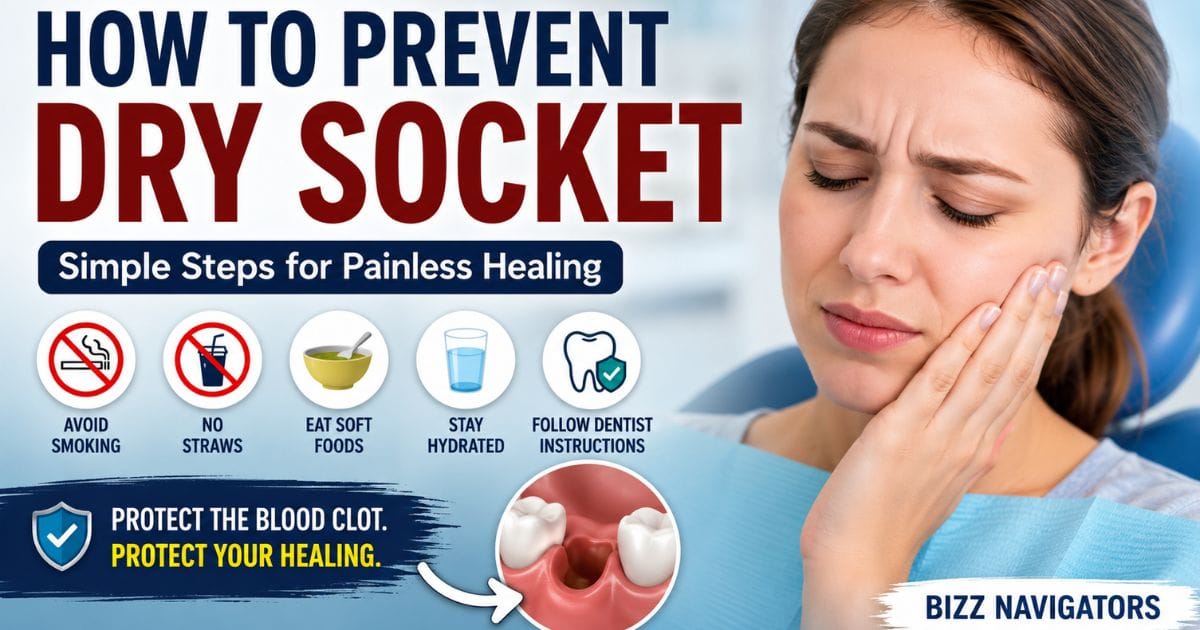
How to prevent dry socket is one of the most uncomfortable complications that can occur after a tooth extraction. It develops when the protective blood clot that forms inside the extraction site becomes dislodged, dissolves too early, or fails to develop properly.
This blood clot acts as a natural shield for the underlying bone and nerves while the gum tissue heals. When the clot disappears, the exposed bone causes severe pain and delays recovery.
The good news is that most cases can be prevented by following the right aftercare instructions during the first few days after the procedure.
What Causes Dry Socket to Happen?
Several factors can interfere with proper healing after an extraction.
Common causes include:
Smoking or using tobacco products.
Drinking through straws.
Spitting forcefully.
Aggressive mouth rinsing.
Touching the extraction area with fingers or the tongue.
Eating hard or crunchy foods too early.
Dental professionals consider the first few days after extraction the most important period for protecting the blood clot.
How to Prevent Dry Socket After Tooth Extraction
Preventing dry socket mainly involves protecting the extraction site until healing begins naturally.
Keep Pressure on the Gauze Pad
Your dentist will place gauze over the extraction site immediately after the procedure.
Bite gently on the gauze for the recommended amount of time to encourage clot formation and reduce bleeding.
Changing the gauze too often can disturb the healing process.
Avoid Creating Suction Inside the Mouth
Suction is one of the biggest enemies of the healing blood clot.
Avoid:
Drinking through straws.
Smoking cigarettes.
Using vaping devices.
Forceful spitting.
Even seemingly harmless actions can create enough pressure to loosen the clot.
Rest During the First Day
Physical activity increases blood pressure and may restart bleeding.
Take it easy for at least 24 hours after the extraction. Avoid heavy lifting, intense exercise, and strenuous activities.
Follow Medication Instructions Carefully
If your dentist prescribes antibiotics or pain medication, take them exactly as directed.
Skipping medications can increase inflammation and slow healing.
How to Prevent a Dry Socket Through Proper Eating Habits
Food choices play an important role in recovery.
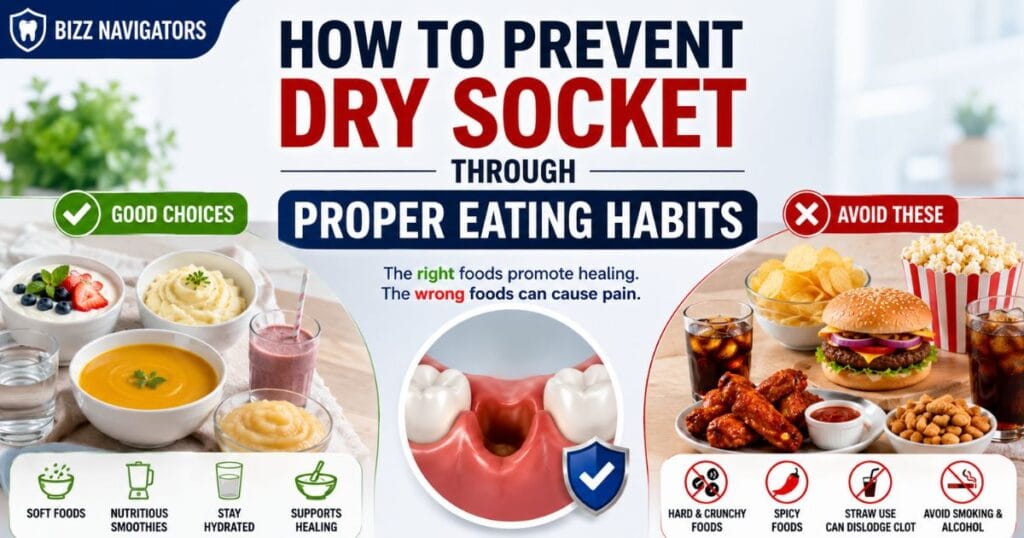
The wrong foods can disturb the extraction site and dislodge the blood clot before healing begins.
Best Foods During Recovery
Choose foods that require minimal chewing, such as:
Yogurt
Mashed potatoes
Applesauce
Soup that is not hot
Scrambled eggs
Smooth oatmeal
Soft pasta
Cool or room-temperature foods often feel more comfortable during the first few days.
Foods to Avoid
Avoid foods that can break apart or get trapped in the socket, including:
Chips
Nuts
Popcorn
Seeds
Crusty bread
Spicy foods
Hot foods and drinks should also be avoided because excessive heat can interfere with clot stability.
How to Avoid Dry Socket by Maintaining Safe Oral Hygiene
Keeping your mouth clean remains important after extraction, but technique matters.
Brush Carefully Around the Area
Continue brushing your teeth normally while avoiding direct contact with the extraction site.
Aggressive brushing near the socket can remove the clot.
Use Salt Water Rinses Correctly
Most dentists recommend gentle salt water rinses after the first 24 hours.
Mix warm water with a small amount of salt and let the solution move gently around the mouth.
Avoid vigorous swishing.
Do Not Use Mouthwash Too Early
Alcohol-based mouthwashes may irritate healing tissue.
Always follow your dentist’s instructions regarding mouthwash use.
How to Prevent Dry Socket After Wisdom Teeth Removal
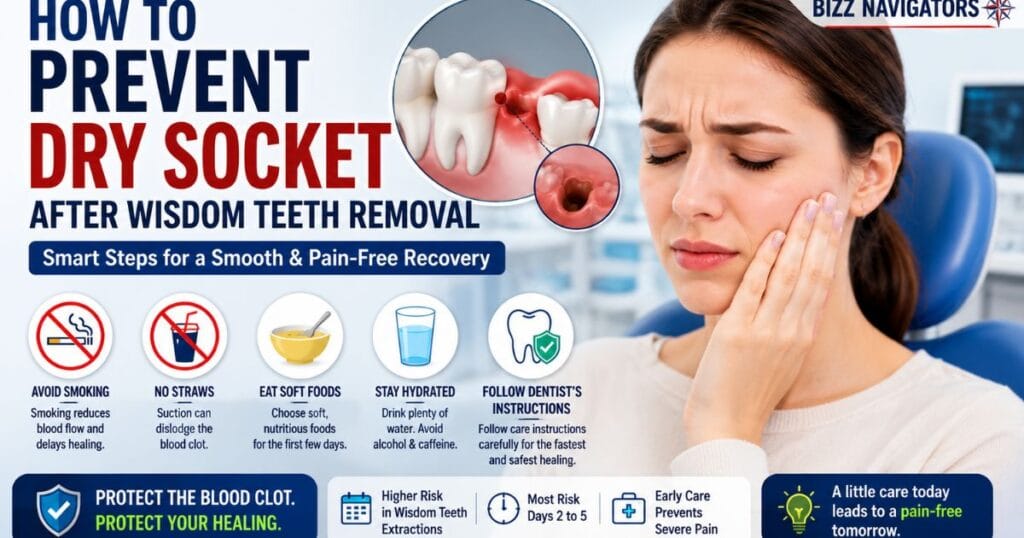
Wisdom tooth extractions carry a higher risk of dry socket than simple tooth removals.
Lower wisdom teeth are especially vulnerable because of their location and the complexity of the procedure.
Keep the Surgical Area Protected
Wisdom tooth removal often involves stitches and deeper surgical sites.
Avoid poking the area with your tongue or attempting to inspect the socket repeatedly.
Stay Hydrated
Drinking enough water supports healing and reduces inflammation.
However, drink directly from a glass rather than using a straw.
Follow Dietary Restrictions Longer
Patients recovering from wisdom tooth surgery may need soft foods for several extra days compared to routine extractions.
Patience during recovery reduces the chance of complications.
Dry Socket Wisdom Tooth: Why Wisdom Teeth Have a Greater Risk
Many patients wonder why dry socket occurs more frequently after wisdom tooth removal.
Several reasons contribute to this increased risk:
| Factor | Standard Extraction | Wisdom Tooth Extraction |
| Surgical complexity | Lower | Higher |
| Healing time | Shorter | Longer |
| Bone exposure risk | Lower | Higher |
| Dry socket likelihood | Lower | Higher |
Complex extractions often leave larger sockets that require additional healing time.
How to Prevent Dry Socket While Sleeping
Sleeping habits can influence recovery more than many people realize.
Sleep With Your Head Elevated
Keeping your head slightly raised reduces swelling and improves circulation.
Using an extra pillow can make a noticeable difference during the first two nights.
Avoid Sleeping on the Extraction Side
Pressure from sleeping directly on the affected side may increase discomfort and irritation.
Whenever possible, sleep on your back or on the opposite side.
Prevent Nighttime Mouth Dryness
A dry mouth can slow healing.
Staying hydrated during the day helps maintain moisture while sleeping.
How to Prevent Dry Socket While Smoking
Smoking remains one of the strongest risk factors for dry socket.
The heat, chemicals, and suction involved in smoking all interfere with clot formation.
Dentists commonly recommend avoiding smoking for at least 72 hours after extraction, although waiting a full week offers even greater protection.
Patients who stop smoking temporarily after surgery often experience faster healing and fewer complications.
Which Day Has the Highest Risk of Dry Socket?
The risk is not equal throughout the healing process.
Most cases develop between the second and fifth day after extraction.
This period represents the time when the blood clot remains fragile and vulnerable to disruption.
Extra caution during these days significantly lowers the chances of complications.
After the first week, the risk decreases considerably.
Can You Guarantee That Dry Socket Will Not Happen?
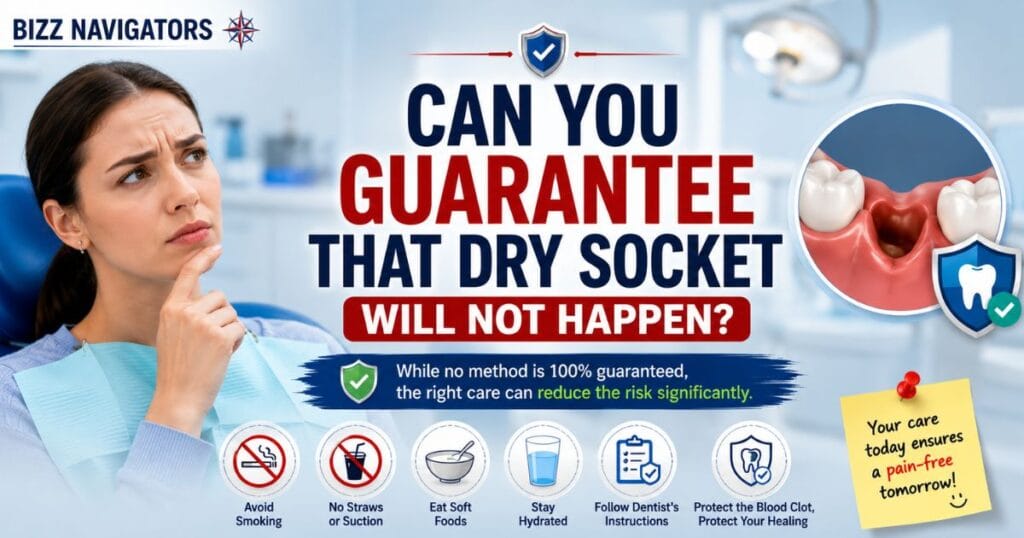
No method offers a one hundred percent guarantee.
However, following professional aftercare instructions dramatically reduces the likelihood of developing dry socket.
Patients who avoid smoking, protect the clot, and maintain gentle oral hygiene have the best outcomes.
Prevention always remains easier than treatment.
Warning Signs That May Indicate Dry Socket
Some discomfort after extraction is completely normal.
However, certain symptoms deserve immediate attention.
Common warning signs include:
Severe throbbing pain that worsens after several days.
Pain spreading to the ear, jaw, or temple.
Bad breath that does not improve.
An unpleasant taste in the mouth.
Visible bone inside the extraction site.
If these symptoms appear, contact your dentist promptly.
When Should You Contact Your Dentist?
Reach out to your dental provider if:
Bleeding continues for an extended period.
Swelling becomes worse after several days.
Pain medications stop providing relief.
Fever develops.
You suspect the blood clot has disappeared.
Early treatment usually provides rapid relief and prevents further complications.
Key Takeaways
Protecting the blood clot remains the most important step in preventing dry socket.
Avoid smoking, straws, aggressive rinsing, and hard foods during recovery.
Patients recovering from wisdom tooth removal should be especially careful because they face a higher risk.
Following your dentist’s instructions closely gives your mouth the best opportunity to heal quickly and comfortably.
Final Thoughts
Learning how to prevent dry socket is far easier than dealing with the severe pain and delayed healing it can cause after an extraction. By protecting the blood clot, avoiding smoking and straws, choosing soft foods, and following your dentist’s instructions, you can greatly reduce your risk.
Patients recovering from wisdom tooth surgery should be especially careful because these procedures carry a higher chance of complications. While no method can guarantee complete prevention.
Understanding how to prevent dry socket and taking the right steps during the first week give your mouth the best chance to heal quickly, comfortably, and without setbacks.
Frequently Asked Questions
How do you stop a dry socket from starting?
Protect the blood clot by avoiding smoking, suction, vigorous rinsing, and hard foods during the first week after extraction.
How common is dry socket after extraction?
Dry socket affects a small percentage of routine extractions but occurs more frequently after wisdom tooth removal.
Is dry socket dangerous?
Dry socket is usually not dangerous, but it can cause severe pain and delay healing if left untreated.
Can drinking through a straw cause dry socket?
Yes. The suction created while drinking through a straw can dislodge the blood clot and increase the risk.
How long does dry socket pain last?
With treatment, symptoms usually improve within a few days and continue to heal over the following week.

At BizzNavigators, we answer the questions you’re actually searching for, honestly and clearly. We check our facts before we publish anything, and if we’re not sure about something, we tell you instead of guessing. Whatever you’re looking for- a tech fix, a business tip, or a simple how-to- we want to give you an answer you can trust.