

Understanding What Is the Pedicure
If you’ve ever wondered what is the pedicure, you’re not alone. It’s much more than a beauty treatment; it’s a complete foot care routine that keeps your feet clean, healthy, and comfortable. A pedicure combines nail care, skin exfoliation, moisturization, and relaxation to improve both the appearance and overall health of your feet.
Whether done at home or by a professional, a pedicure helps remove dead skin, prevent rough heels, maintain healthy toenails, and enhance foot hygiene. It’s suitable for both men and women, especially those who spend long hours walking, standing, or wearing closed shoes.
By the end of this article, you’ll understand how a pedicure works, its key benefits, the different types available, and how to choose the right option for your foot care needs.
Quick Answer:
What is the pedicure? A pedicure is a cosmetic and hygiene-focused foot care treatment that cleans the feet, trims and shapes toenails, removes dead skin, moisturizes rough areas, and improves overall foot health and appearance.
Why Is a Pedicure Important?
Your feet support your body every day, yet they often receive the least attention. Dirt, sweat, pressure, and friction can lead to dry skin, calluses, cracked heels, and unhealthy nails.
A regular pedicure helps:
Maintain clean and healthy feet
Prevent excessive dead skin buildup
Keep toenails properly trimmed
Improve skin softness
Reduce foot odor
Promote relaxation after long days
Enhance confidence when wearing open footwear
Good foot care is not only about beauty, but it is also an important part of personal hygiene.
Who Should Get a Pedicure?
A pedicure is suitable for almost everyone, regardless of age or gender.
It is especially beneficial for:
People who work long hours
Athletes and fitness enthusiasts
Office workers wearing formal shoes daily
Older adults experiencing dry skin
Individuals with rough heels or calluses
Anyone wanting healthier-looking feet
Even if your feet appear healthy, regular maintenance helps prevent future problems before they become uncomfortable.
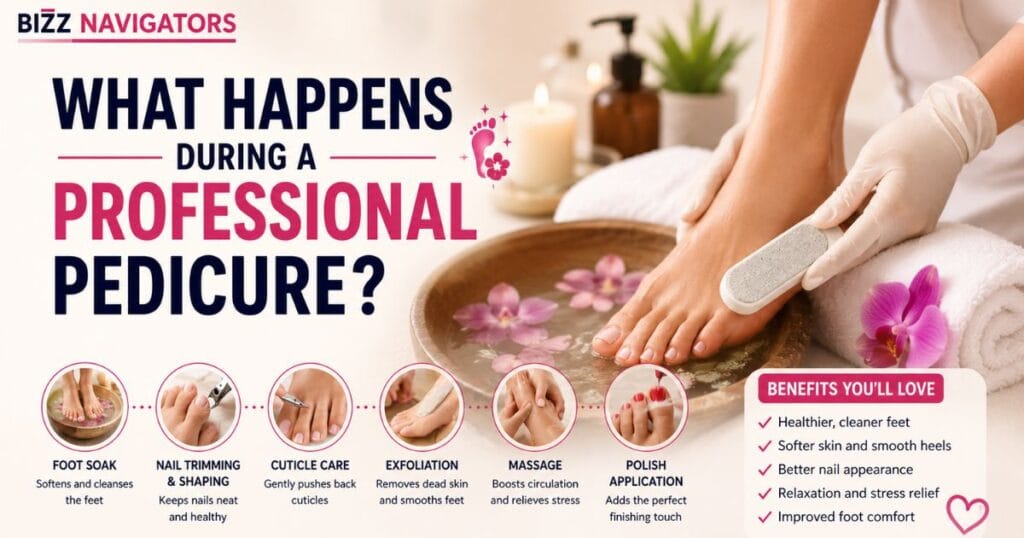
What Happens During a Professional Pedicure?
Although treatments vary between salons, most professional pedicures follow a structured process designed to improve both comfort and foot health.
Foot Cleansing and Soaking
The appointment usually begins with soaking the feet in warm water. This softens the skin, removes surface dirt, and prepares the feet for cleaning.
Many salons also add essential oils or gentle cleansers to improve the experience.
Nail Trimming and Shaping
Once the feet are clean, the toenails are trimmed and carefully shaped.
Proper nail trimming is important because it reduces the risk of broken or ingrown toenails while creating a neat appearance.
The cuticles are then gently pushed back rather than aggressively cut, helping protect the nail from infection.
Exfoliation and Callus Removal
Dead skin naturally builds up on the heels and soles over time.
Using a foot file, pumice stone, or exfoliating scrub, the technician removes rough skin and smooths hardened areas.
This step helps:
Prevent cracked heels
Improve skin texture
Increase comfort while walking
Prepare the feet for moisturization
Moisturizing and Foot Massage
After exfoliation, a nourishing moisturizer is applied to restore hydration.
A relaxing foot massage follows, helping improve circulation while relieving muscle tension and stress.
For many people, this is the most enjoyable part of the treatment.
Nail Buffing or Polish Application
The final stage focuses on the nails.
Some people choose simple buffing for a natural shine, while others prefer colorful nail polish or long-lasting gel polish.
Both options leave the nails looking neat and well cared for.
Benefits of Getting a Pedicure
A pedicure offers much more than cosmetic improvements. Regular treatments contribute to healthier feet and greater everyday comfort.
Supports Better Foot Health
Clean feet are less likely to develop problems caused by dirt, bacteria, or neglected skin.
Routine care also makes it easier to notice unusual nail changes that may require medical attention.
Makes Skin Softer
Removing dead skin allows moisturizers to work more effectively.
This helps reduce rough patches while keeping the feet smooth and hydrated.
Improves Toenail Health
Proper trimming lowers the chance of painful ingrown nails and uneven growth.
Healthy nails also look cleaner and are easier to maintain.
Relieves Stress
Many pedicures include gentle massage techniques that help relax tired muscles.
This makes a pedicure both a beauty treatment and a self-care experience.
Boosts Confidence
Well-maintained feet often make people feel more comfortable wearing sandals, slippers, or going barefoot at the beach or pool.
Healthy feet also create a more polished overall appearance.
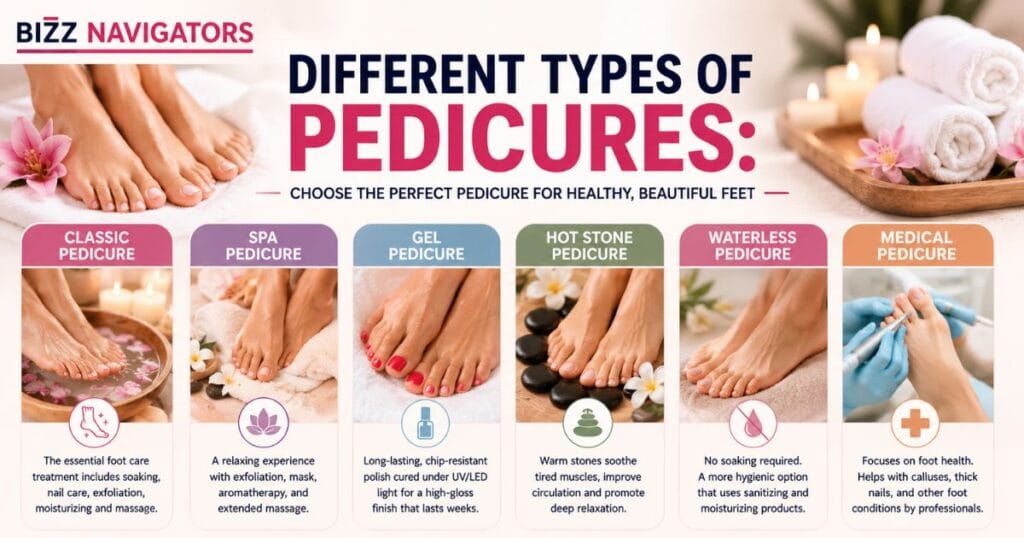
Different Types of Pedicures
Not every pedicure is the same. Different treatments are designed to meet different needs and preferences.
Classic Pedicure
This is the most common option.
It includes soaking, nail trimming, cuticle care, exfoliation, massage, moisturizing, and nail finishing.
It is ideal for regular foot maintenance.
Spa Pedicure
A spa pedicure offers a more luxurious experience.
Additional treatments may include:
Hydrating masks
Aromatherapy
Extended massage
Premium scrubs
Warm towels
It focuses equally on relaxation and foot care.
Gel Pedicure
Instead of traditional nail polish, gel polish is applied and cured under a UV or LED lamp.
Benefits include:
Longer-lasting color
Chip-resistant finish
High-gloss appearance
This option is popular among people who want polished nails for several weeks.
Hot Stone Pedicure
Warm stones are used during the massage portion of the treatment.
The gentle heat helps reduce muscle tension and creates a calming experience.
It is often recommended after long periods of standing or walking.
Waterless Pedicure
Rather than soaking the feet, this method uses sanitizing products and moisturizing treatments.
Many people choose this option because it minimizes the risk of bacteria spreading through shared foot baths.
Medical Pedicure
Unlike cosmetic treatments, a medical pedicure focuses primarily on foot health.
It is usually performed by trained professionals for people with:
Thick toenails
Excessive calluses
Chronic dry skin
Sensitive feet
Certain foot conditions
No decorative nail polish is required, as the goal is healthier feet rather than cosmetic appearance.
Pedicure vs. Manicure: What’s the Difference?
Although both treatments improve personal grooming, they focus on different parts of the body.
| Feature | Pedicure | Manicure |
| Treatment Area | Feet and toenails | Hands and fingernails |
| Main Purpose | Foot hygiene and comfort | Hand and nail care |
| Includes Callus Removal | Yes | No |
| Includes Foot Massage | Yes | No |
| Removes Dead Skin | Mainly on the feet | Mainly around the hands |
| Best For | Healthy feet and smooth heels | Healthy hands and neat fingernails |
Understanding the difference helps you choose the treatment that best suits your personal care needs.
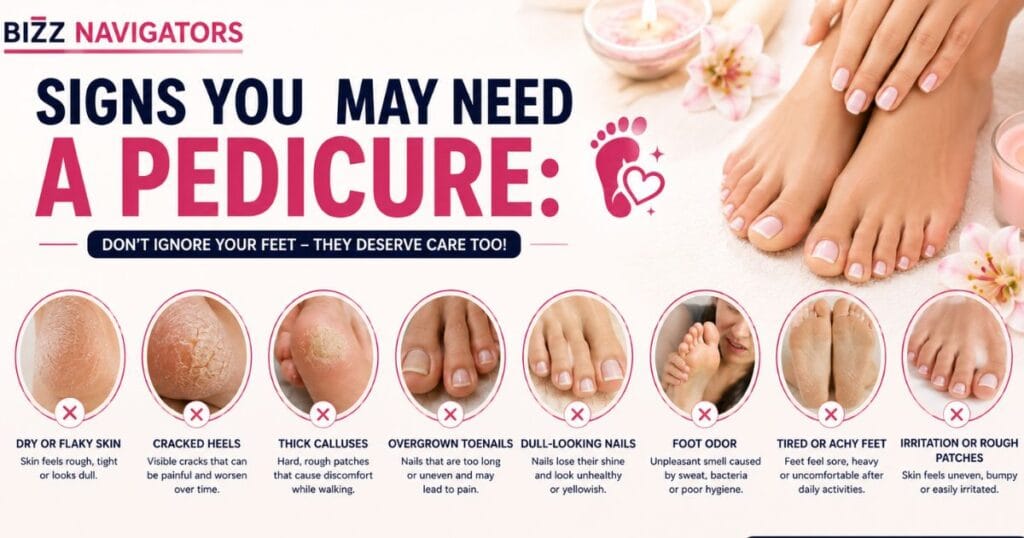
Signs You May Need a Pedicure
Many people wait until their feet become uncomfortable before scheduling a pedicure.
However, these signs indicate it may be time for foot care:
Dry or flaky skin
Rough heels
Thick calluses
Overgrown toenails
Dull-looking nails
Foot odor
Cracked heels
Feet that feel tired after daily activities
Addressing these issues early makes them easier to manage and helps keep your feet healthy throughout the year.
Before and After Pedicure Care
Getting the best results from a pedicure depends on how you care for your feet before and after the treatment.
Before Your Pedicure
Preparing your feet properly helps make the treatment more effective.
Wash your feet before your appointment.
Remove old nail polish if possible.
Avoid shaving your legs on the same day, as freshly shaved skin can be more sensitive.
Inform the technician if you have allergies, cuts, or skin conditions.
After Your Pedicure
Good aftercare keeps your feet healthy and extends the results.
Let nail polish dry completely before wearing closed shoes.
Moisturize your feet daily to prevent dryness.
Wear comfortable footwear for the rest of the day.
Keep your feet clean and dry.
Avoid picking at cuticles or peeling polish.
These simple habits help maintain soft skin and healthy toenails between appointments.
Common Pedicure Mistakes to Avoid
Even a good pedicure can become harmful if it is done incorrectly.
Avoid these common mistakes:
Cutting toenails too short
Trimming nails into rounded corners, which may cause ingrown toenails
Removing too much skin from the heels
Cutting cuticles aggressively
Using unclean or shared tools
Ignoring signs of infection
Skipping moisturizer after exfoliation
A gentle, hygienic approach is always safer than trying to remove too much skin in one session.
Pedicure Safety and Hygiene Tips
A pedicure should never compromise your health. Whether you visit a salon or perform one at home, hygiene should always come first.
Follow these safety practices:
Make sure all tools are properly sterilized.
Choose salons that use clean foot baths or disposable liners.
Never share nail files, pumice stones, or clippers.
Do not get a pedicure if you have open wounds or active fungal infections.
Ask the technician to stop if you feel pain or notice bleeding.
A clean environment greatly reduces the risk of bacterial or fungal infections.
Are There Any Risks of a Pedicure?
Pedicures are generally safe when performed correctly, but poor hygiene or improper techniques can cause problems.
Possible risks include:
Fungal infections
Bacterial infections
Allergic reactions to certain products
Ingrown toenails
Skin irritation from excessive exfoliation
These risks are uncommon and are usually preventable by choosing a reputable salon and following proper aftercare.
How to Choose a Good Nail Salon
Not all salons maintain the same hygiene standards. Choosing the right one protects both your health and your investment.
Look for a salon that:
Sterilizes metal tools after every client
Uses disposable items whenever possible
Maintains clean workstations
Employs trained and experienced technicians
Has positive customer reviews
Follows local health and safety regulations
A professional salon should be willing to answer your questions about cleanliness and sanitation.
How Often Should You Get a Pedicure?
There is no single schedule that works for everyone.
For most people, a pedicure every four to six weeks is enough to maintain healthy feet and well-groomed toenails.
You may benefit from more frequent treatments if you:
Spend long hours on your feet
Exercise regularly
Develop calluses quickly
Experience dry or cracked heels
Regular maintenance is more effective than waiting until foot problems become severe.
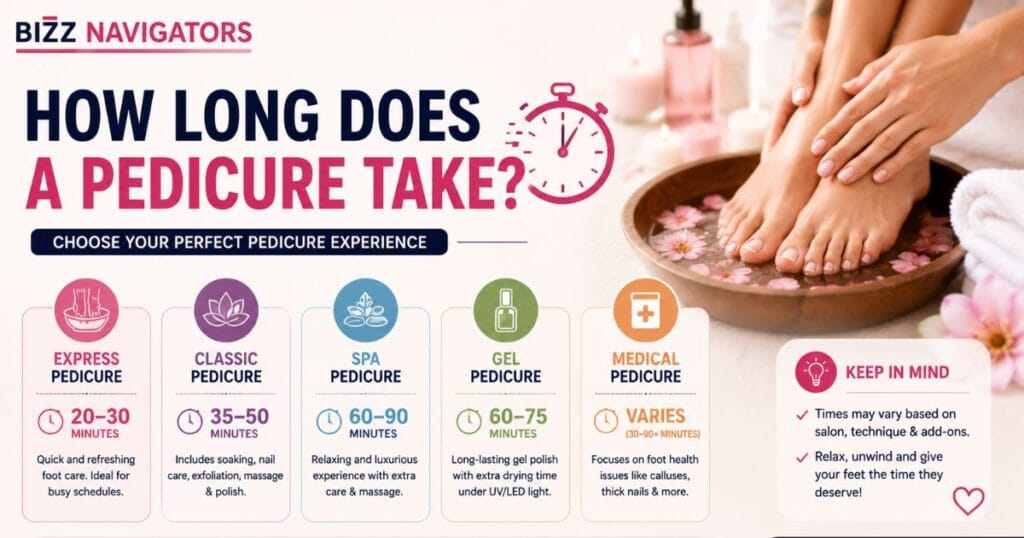
How Long Does a Pedicure Take?
The length of a pedicure depends on the type of treatment you choose.
| Pedicure Type | Average Time |
| Express Pedicure | 20–30 minutes |
| Classic Pedicure | 35–50 minutes |
| Spa Pedicure | 60–90 minutes |
| Gel Pedicure | 60–75 minutes |
| Medical Pedicure | Varies depending on foot condition |
If additional treatments such as nail art or intensive callus removal are included, the appointment may take longer.
How Much Does a Pedicure Cost?
The cost of a pedicure varies based on several factors, including location, salon reputation, and the type of treatment.
Basic pedicures are usually the most affordable, while spa, gel, and medical pedicures cost more because they involve additional products, equipment, or specialized care.
Instead of choosing the cheapest option, focus on hygiene, technician experience, and service quality to ensure a safe and satisfying experience.
Expert Tips for Healthier Feet
Professional foot care does not end when your pedicure is finished. Daily habits play an important role in keeping your feet healthy.
Here are a few expert-backed tips:
Moisturize your feet every day, especially after bathing.
Trim toenails straight across to reduce the risk of ingrown nails.
Wear breathable shoes and clean socks.
Avoid walking barefoot in public places such as pools and locker rooms.
Check your feet regularly for cuts, swelling, or nail discoloration.
Replace worn-out footwear that no longer provides proper support.
Consistent care between pedicures helps maintain healthier feet throughout the year.
Key Takeaways
A pedicure is a complete foot care treatment that improves hygiene, comfort, and appearance.
Regular pedicures help prevent dry skin, rough heels, and poorly maintained toenails.
Different pedicure types are available to suit cosmetic, relaxation, and medical needs.
Good hygiene and sterilized tools are essential for a safe experience.
Both home and professional pedicures can be effective when performed correctly.
Consistent foot care supports long-term foot health and overall confidence.
Final Thoughts
Understanding what is the pedicure shows that it is far more than a cosmetic treatment; it’s an essential part of maintaining healthy, comfortable feet. Regular pedicures improve foot hygiene, keep toenails well-groomed, reduce rough skin, and help prevent common foot problems.
Whether you prefer a professional service or an at-home routine, consistent foot care and proper hygiene will keep your feet looking and feeling their best all year round.
Frequently Asked Questions
Does a pedicure hurt?
No. A properly performed pedicure should feel comfortable and relaxing. If you experience pain, inform the technician immediately.
Can men get a pedicure?
Yes. A pedicure is suitable for everyone. Many men choose regular pedicures to improve foot hygiene, reduce calluses, and keep their toenails healthy.
Can a pedicure help with cracked heels?
Yes. Regular exfoliation and moisturizing can improve mild to moderate cracked heels. Severe cracks or persistent pain should be evaluated by a healthcare professional.
Is nail polish required during a pedicure?
No. Nail polish is completely optional. Many people prefer a natural finish after completing the treatment.
Can people with diabetes get a pedicure?
Yes, but extra care is necessary. People with diabetes should choose experienced professionals and consult their healthcare provider if they have poor circulation, nerve damage, or existing foot problems.
Is it better to get a pedicure at home or in a salon?
Both options have advantages. Home pedicures are convenient and affordable, while professional pedicures provide expert care, advanced tools, and a more relaxing experience.
What should I bring to a pedicure appointment?
Most salons provide everything needed. However, if you prefer, you can bring your own nail tools to reduce the risk of cross-contamination.
Can a pedicure prevent foot problems?
While a pedicure cannot treat every medical condition, regular foot care helps reduce dead skin buildup, maintain healthy nails, and identify minor issues before they become more serious.

At BizzNavigators, we answer the questions you’re actually searching for, honestly and clearly. We check our facts before we publish anything, and if we’re not sure about something, we tell you instead of guessing. Whatever you’re looking for- a tech fix, a business tip, or a simple how-to- we want to give you an answer you can trust.